
Baguette
Long, thin French bread with a crisp crust and soft interior
The baguette is a slender loaf of white bread from France, easily recognized by its length and crunchy crust. Made from wheat flour, water, yeast, and salt, it is a staple of French daily life and often eaten at breakfast or with meals. Its making is protected as part of France’s cultural heritage.
- A baguette is about 65 cm long and 5–6 cm in diameter
- Made from flour, water, yeast, and salt only in its traditional form
- Recognized by UNESCO as part of France’s intangible cultural heritage
- Paris holds an annual contest for the best baguette
- Baguettes are eaten daily in France and many other countries
What is Baguette?
A baguette is a long, narrow loaf of bread, typically about 65 centimeters in length and 5 to 6 centimeters in diameter, though it can be up to a meter long. Its crust is crisp and golden, while the inside is light and airy. The classic version uses only wheat flour, water, yeast, and salt, resulting in a bread with a mild flavor and a chewy texture. The baguette is often sliced for sandwiches or served alongside cheese, pâté, or spreads.
Where does Baguette come from?
The baguette’s history is a mix of fact and legend. Long, stick-shaped breads became more common in France during the 18th century. Innovations like Hungarian-milled flour, steam ovens from Vienna, and compact yeast all influenced French breadmaking in the 19th century. The term 'baguette' for this bread first appeared in 1920 in a Paris regulation. Myths about its invention include stories of Napoleon’s soldiers and Paris metro workers, but these are not proven. The baguette has since become a symbol of French culture and daily life.
How is Baguette made?
Traditional baguettes are made by mixing wheat flour, water, yeast, and salt into a lean dough. The dough is kneaded, shaped into long, thin loaves, and allowed to rise. It is then baked, often in a deck oven with steam, which helps create the signature crisp crust and light crumb. Some versions use a pre-ferment for added flavor, while others may include small amounts of other grains. French law defines what ingredients can be used in a traditional baguette.


How and when is Baguette eaten?
In France, baguettes are eaten throughout the day. At breakfast, slices are spread with butter and jam, sometimes dipped in coffee or hot chocolate. For lunch or dinner, they are served with cheese, pâté, or used for sandwiches. The bread is often torn by hand rather than sliced. Baguettes are also popular in other countries, where they may be adapted for local tastes or used in sandwiches such as the Vietnamese bánh mì.
Kinds of Baguette
There are several types of baguettes. The 'baguette de tradition française' follows strict rules on ingredients, while 'baguette ordinaire' may include additives. Shorter or thinner versions include the ficelle and baton. Other French breads, like the bâtard or flûte, have different shapes and sizes. Outside France, baguettes may be made with whole wheat, multigrain, or rice flour, as in Vietnam’s bánh mì. Some bakeries offer baguettes baked to different levels of doneness, from pale to well-browned.
What Baguette means
The baguette is deeply woven into French daily life and identity. Its making is officially recognized as part of France’s intangible cultural heritage and was added to UNESCO’s list in 2022. Paris holds an annual competition to select the city’s best baguette, with the winner supplying bread to the president. The bread’s image is closely tied to France, and it is widely consumed in other countries, especially Algeria. French law protects the traditional methods and ingredients used to make it.
Questions people ask about Baguette
What is a baguette made of?
A traditional baguette is made from wheat flour, water, yeast, and salt. These simple ingredients create a bread with a crisp crust and soft, airy interior.
Where does the baguette come from?
The baguette comes from France, where it became popular in the 18th and 19th centuries. Its name was first used for this bread in 1920.
How is a baguette different from other breads?
A baguette is long and thin, with a crunchy crust and a light, chewy inside. It is shaped and baked to specific dimensions, which are defined by French law.
When do people eat baguettes?
Baguettes are eaten at breakfast, lunch, dinner, or as a snack. In France, they are often part of breakfast with butter and jam, or used for sandwiches and served with meals.
Are there different types of baguettes?
Yes, there are several types, including the traditional 'baguette de tradition française' and the 'baguette ordinaire.' There are also shorter, thinner, or wider versions, and international adaptations like the Vietnamese bánh mì.
Good reading and sources
- Encyclopaedia BritannicaArticle
- The perfect French baguetteBBC, Article
- Artisanal know-how and culture of baguette breadUNESCO, Article
The facts on this page come from the Wikipedia article "Baguette", written by its contributors and used under the CC BY-SA 4.0 licence, and from its Wikidata record (CC0). Thali rewrote the text in its own words, with AI assistance, and compares every page with the article to make sure no passage is copied. It may be reused under the same CC BY-SA 4.0 licence with a link back.
It may contain mistakes, and it is not dietary or allergy advice: recipes differ from cook to cook. If something is wrong, tell us. Last refreshed 2026-10-03.
More from France
All the food of France PretzelVegetarian
🇩🇪 Germany and 4 moreA baked knot-shaped bread, often topped with salt or seeds
Bread, Snacks
PretzelVegetarian
🇩🇪 Germany and 4 moreA baked knot-shaped bread, often topped with salt or seeds
Bread, Snacks
 BriocheVegetarianune brioche
🇫🇷 FranceFrench bread made with eggs and butter, often shaped in rounds or loaves
Bread, Breakfast, Snacks
BriocheVegetarianune brioche
🇫🇷 FranceFrench bread made with eggs and butter, often shaped in rounds or loaves
Bread, Breakfast, Snacks
 King cake
🇫🇷 France and 5 moreA festive sweet bread or pastry with a hidden token, eaten for Epiphany and Carnival
Pie or savoury pastry, Snacks, Tea time
King cake
🇫🇷 France and 5 moreA festive sweet bread or pastry with a hidden token, eaten for Epiphany and Carnival
Pie or savoury pastry, Snacks, Tea time
Its cousins elsewhere
All breads Tandoor breadVegan
🇮🇶 Iraq and 5 moreFlatbread baked on the walls of a clay tandoor oven
Bread, Breakfast, Lunch
Tandoor breadVegan
🇮🇶 Iraq and 5 moreFlatbread baked on the walls of a clay tandoor oven
Bread, Breakfast, Lunch
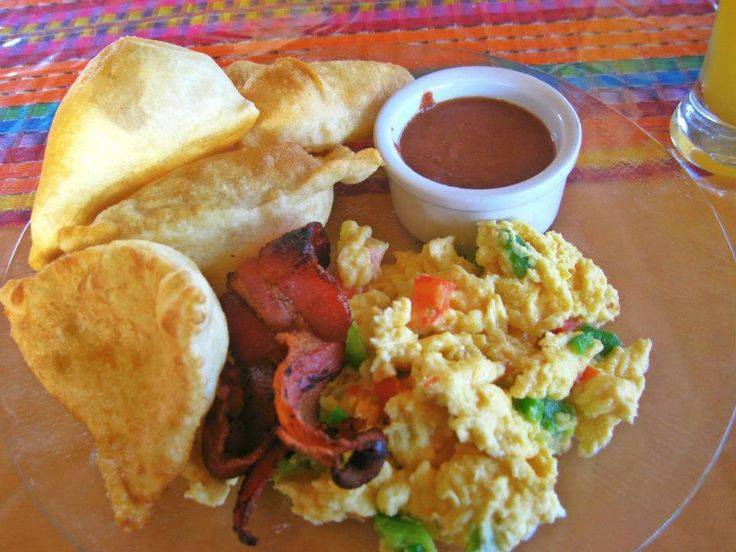 Fry jackVegetarian
🇧🇿 BelizeDeep-fried breakfast dough from Belize, served plain or with sweet or savoury toppings
Bread, Breakfast
Fry jackVegetarian
🇧🇿 BelizeDeep-fried breakfast dough from Belize, served plain or with sweet or savoury toppings
Bread, Breakfast
 PitaVegan
🇪🇬 Egypt and 5 moreRound, leavened flatbread baked from wheat flour, common across the Middle East and Mediterranean
Bread
PitaVegan
🇪🇬 Egypt and 5 moreRound, leavened flatbread baked from wheat flour, common across the Middle East and Mediterranean
Bread
 SimitVegan
🇹🇷 Turkey and 5 moreRing-shaped bread with a sesame seed crust, sold by street vendors
Bread, Breakfast, Snacks
SimitVegan
🇹🇷 Turkey and 5 moreRing-shaped bread with a sesame seed crust, sold by street vendors
Bread, Breakfast, Snacks