
Pita
Round, leavened flatbread baked from wheat flour, common across the Middle East and Mediterranean
Pita is a round, yeast-raised flatbread made mainly from wheat flour, water, yeast, and salt. It is widely eaten in the Middle East, Eastern Mediterranean, and North Africa, often served warm and used to scoop dips or wrap grilled meats and vegetables. Some versions have a pocket inside, while others are thicker and pocketless.
- Pita is a round, yeast-leavened flatbread with origins in the Middle East.
- Some pita breads form a pocket inside when baked at high heat.
- It is made from wheat flour, water, yeast, and salt.
- Pita is used to wrap grilled meats or scoop up dips like hummus.
- Regional versions include Greek, Turkish, and Cypriot styles.
What is Pita?
Pita is a soft, round flatbread that rises with yeast and is baked at high heat. Its dough is made from wheat flour, water, yeast, and salt. Some types puff up in the oven, creating a hollow center that can be split open and filled, while others stay thicker and do not form a pocket. Pita is usually pale golden, with a chewy texture and mild flavor. It is a staple in many Middle Eastern and Mediterranean meals, valued for its versatility.
Where does Pita come from?
Flatbreads similar to pita have been made in the Near East since prehistoric times, with evidence of early bread baking in what is now Jordan dating back over 14,000 years. Wheat and barley, among the first domesticated grains, were used to make breads central to ancient diets. While flatbreads cooked in clay ovens have a long history, the familiar pocket-style pita likely developed later. The word 'pita' has roots in Greek, Hebrew, and Aramaic, and similar breads appear under different names throughout the region.
How is Pita made?
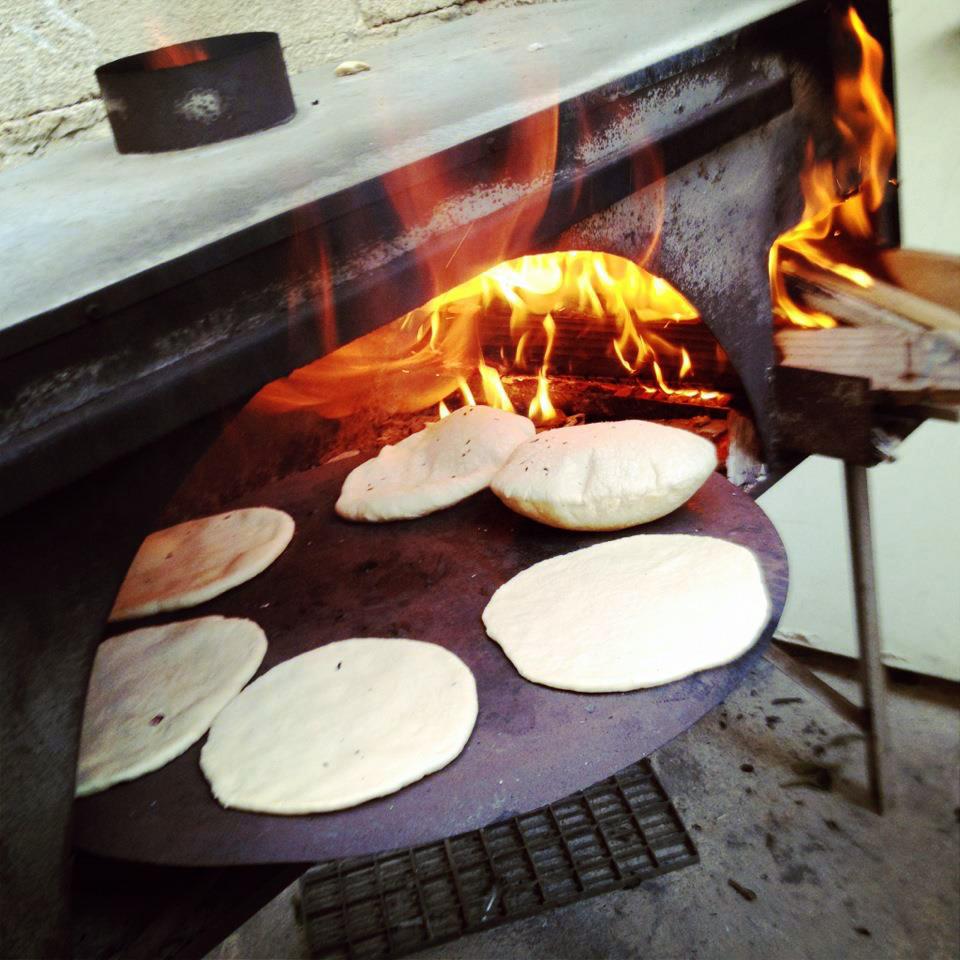
To make pita, wheat flour, water, yeast, and salt are mixed into a dough, which is left to rise. The dough is then shaped into rounds and baked quickly at high temperatures, causing steam to form inside and puff up the bread. This process creates the characteristic pocket in some versions. Pita is often baked in wood-fired or very hot ovens and is best enjoyed fresh and warm. Commercial bakeries use automated lines and hotter ovens to produce large quantities.



How and when is Pita eaten?
Pita is eaten in many ways: as a wrap for grilled meats like souvlaki or kebabs, filled with falafel, or torn and used to scoop up dips such as hummus. In Cyprus and Greece, it is often paired with local cheeses or sausages. In the Balkans, similar breads accompany barbecued meats. Pita can also be sliced and toasted for a crunchy snack. It is a daily bread in many households and appears at both casual meals and festive gatherings.
Kinds of Pita
Regional styles of pita vary in thickness, shape, and whether they form a pocket. Greek pita is usually thicker and does not have a pocket, while the thinner Arab-style pita puffs up to create one. In Turkey, pide refers to several types of flatbreads, some topped with meat or cheese. Cypriot pita is rounder and fluffier, often cooked on a skillet. In the Balkans, breads like lepinja and somun are related but may differ in texture and use.
What Pita means
Pita is woven into the daily food culture of the Middle East and Mediterranean. It is a common bread for family meals and street food alike. The word and style of bread have spread widely, with local names and adaptations in many languages. In Greece, 'pita' can also mean pie or cake, showing how the term has evolved. Pita remains a symbol of shared meals and hospitality across the region.
Questions people ask about Pita
What is pita made of?
Pita is made from wheat flour, water, yeast, and salt. The dough is leavened, shaped into rounds, and baked at high temperature.
Where does pita come from?
Pita has ancient roots in the Middle East and Eastern Mediterranean, with similar breads found in Egypt, Greece, Lebanon, Syria, Jordan, and Iraq.
Does all pita have a pocket?
Not all pita forms a pocket. Some types, especially Greek pita, are thicker and do not separate inside, while others puff up and create a hollow center.
How is pita usually eaten?
Pita is used to wrap grilled meats, hold fillings like falafel, or scoop up dips such as hummus. It can also be toasted for a crunchy snack.
Is pita bread vegan?
Traditional pita bread contains only wheat flour, water, yeast, and salt, so it is vegan.
Good reading and sources
The facts on this page come from the Wikipedia article "Pita", written by its contributors and used under the CC BY-SA 4.0 licence, and from its Wikidata record (CC0). Thali rewrote the text in its own words, with AI assistance, and compares every page with the article to make sure no passage is copied. It may be reused under the same CC BY-SA 4.0 licence with a link back.
It may contain mistakes, and it is not dietary or allergy advice: recipes differ from cook to cook. If something is wrong, tell us. Last refreshed 2026-10-03.
More from Egypt
All the food of Egypt MatzahVeganמצה
🇪🇬 Egypt and 3 moreUnleavened flatbread central to the Jewish Passover festival
Bread, Dinner
MatzahVeganמצה
🇪🇬 Egypt and 3 moreUnleavened flatbread central to the Jewish Passover festival
Bread, Dinner
 SimitVegan
🇹🇷 Turkey and 5 moreRing-shaped bread with a sesame seed crust, sold by street vendors
Bread, Breakfast, Snacks
SimitVegan
🇹🇷 Turkey and 5 moreRing-shaped bread with a sesame seed crust, sold by street vendors
Bread, Breakfast, Snacks
 FattoushVeganفتوش
🇱🇧 Lebanon and 6 moreLevantine salad of toasted pita, mixed greens, and vegetables
Salad or side
FattoushVeganفتوش
🇱🇧 Lebanon and 6 moreLevantine salad of toasted pita, mixed greens, and vegetables
Salad or side
 Candy
🇺🇸 United States and 5 moreSmall sweet treats made mainly from sugar or sweeteners
Sweet or dessert, Snacks
Candy
🇺🇸 United States and 5 moreSmall sweet treats made mainly from sugar or sweeteners
Sweet or dessert, Snacks
Its cousins elsewhere
All breads Bagel
🇵🇱 Poland and 2 moreRing-shaped bread roll, boiled then baked for a dense, chewy texture
Bread, Breakfast, Lunch
Bagel
🇵🇱 Poland and 2 moreRing-shaped bread roll, boiled then baked for a dense, chewy texture
Bread, Breakfast, Lunch
 YoutiaoVegan油條
🇨🇳 China and 5 moreLong, golden-brown strips of deep-fried dough eaten across East and Southeast Asia
Street food, Breakfast, Snacks
YoutiaoVegan油條
🇨🇳 China and 5 moreLong, golden-brown strips of deep-fried dough eaten across East and Southeast Asia
Street food, Breakfast, Snacks
 Ftira
🇲🇹 MaltaRing-shaped Maltese bread, often filled or topped with local ingredients
Bread
Ftira
🇲🇹 MaltaRing-shaped Maltese bread, often filled or topped with local ingredients
Bread