
Bifana
Portuguese sandwich of seasoned pork in a warm bread roll
Bifana is a popular sandwich from Portugal, made with thin slices or pieces of pork simmered with garlic and wine, then served in a warm bread roll. It is eaten across the country, often at festivals, and has regional versions that use different cuts and sauces. The bifana is known for being quick, affordable, and widely enjoyed.
- Bifana is a classic Portuguese pork sandwich.
- It may have started in Vendas Novas but is now found across Portugal.
- The pork is simmered with garlic and wine before serving.
- Northern and southern Portugal have distinct styles of bifana.
- It is a common festival and street food.
What is Bifana?
Bifana is a sandwich from Portugal that features pork as its main filling. The pork, which can be chop, steak, or loin, is pounded thin or sliced and cooked with garlic and wine. The meat is then placed inside a heated bread roll. Some versions add mustard, hot sauce, or sautéed onions. In the north, the pork is shredded and served with a sauce, while in the south, a lighter pork cutlet and marinade are used. The sandwich is known for being quick to prepare and is widely available.
Where does Bifana come from?
Bifana is believed to have originated in Vendas Novas, a city in Portugal, though it is now found throughout the country. It has become a staple of Portuguese street food and is especially common at festivals. Over time, the bifana has spread to other countries, particularly in areas with Portuguese immigrant communities, where it is sometimes adapted to suit local tastes or ingredient availability.
How is Bifana made?
To make a bifana, pork is sliced or pounded thin and simmered with garlic and wine. In some regions, the pork is marinated, grilled, or roasted, and the sauce is made separately to be poured over the meat or bun. The cooked pork is placed in a warm bread roll. Optional toppings include mustard, hot sauce, or sautéed onions, depending on local custom.
How and when is Bifana eaten?
Bifana is commonly eaten as a quick meal or snack, especially at festivals and public gatherings across Portugal. It is served hot, often straight from street vendors or casual eateries. People may enjoy it for lunch, dinner, or as a snack. The sandwich can be eaten on its own or with simple condiments, making it a convenient choice for eating on the go.
Kinds of Bifana
Regional differences shape the bifana. In northern Portugal, the pork is usually shredded and served with a rich sauce. Southern versions tend to use a whole pork cutlet with a lighter marinade. International adaptations exist in European and North American cities, especially where Portuguese communities have settled. These may change ingredients to fit local preferences but keep the core idea of seasoned pork in bread.
What Bifana means
Bifana holds a place in Portuguese daily life as a popular, affordable food. It is especially tied to festivals, where it is a common street offering. The sandwich’s popularity is such that even large chains like McDonald's have created their own versions. Its spread to other countries reflects the movement of Portuguese people and their food traditions.
Questions people ask about Bifana
What is bifana made of?
Bifana is made with pork, usually chops, steak, or loin, cooked with garlic and wine, and served inside a heated bread roll. Some versions add mustard, hot sauce, or sautéed onions.
Where does bifana come from?
Bifana is from Portugal and is believed to have first appeared in Vendas Novas, though it is now eaten throughout the country.
How is bifana usually served?
Bifana is served hot in a bread roll, often as a quick meal or snack. It is popular at festivals and as street food, and may be topped with mustard, hot sauce, or onions.
Are there different types of bifana?
Yes, in northern Portugal, bifana uses shredded pork and sauce, while in the south, it features a pork cutlet with a lighter marinade. International versions may adapt ingredients.
Is bifana a festival food?
Yes, bifana is commonly served at festivals across Portugal and is known for being a fast, easy, and affordable meal.
Good reading and sources
The facts on this page come from the Wikipedia article "Bifana", written by its contributors and used under the CC BY-SA 4.0 licence, and from its Wikidata record (CC0). Thali rewrote the text in its own words, with AI assistance, and compares every page with the article to make sure no passage is copied. It may be reused under the same CC BY-SA 4.0 licence with a link back.
It may contain mistakes, and it is not dietary or allergy advice: recipes differ from cook to cook. If something is wrong, tell us. Last refreshed 2026-10-03.
More from Portugal
All the food of Portugal Churrochurros
🇪🇸 Spain and 5 moreRidged, deep-fried dough sticks often eaten hot with chocolate or coffee
Sweet or dessert, Breakfast, Snacks
Churrochurros
🇪🇸 Spain and 5 moreRidged, deep-fried dough sticks often eaten hot with chocolate or coffee
Sweet or dessert, Breakfast, Snacks
 ChorizoMeat
🇪🇸 Spain and 5 moreA seasoned pork sausage from the Iberian Peninsula, made in many regional styles
Sausage or cured food, Breakfast, Lunch
ChorizoMeat
🇪🇸 Spain and 5 moreA seasoned pork sausage from the Iberian Peninsula, made in many regional styles
Sausage or cured food, Breakfast, Lunch
 Empanada
🇪🇸 Spain and 5 morePastry turnovers filled with meat, cheese, or vegetables, baked or fried
Pie or savoury pastry, Lunch, Dinner
Empanada
🇪🇸 Spain and 5 morePastry turnovers filled with meat, cheese, or vegetables, baked or fried
Pie or savoury pastry, Lunch, Dinner
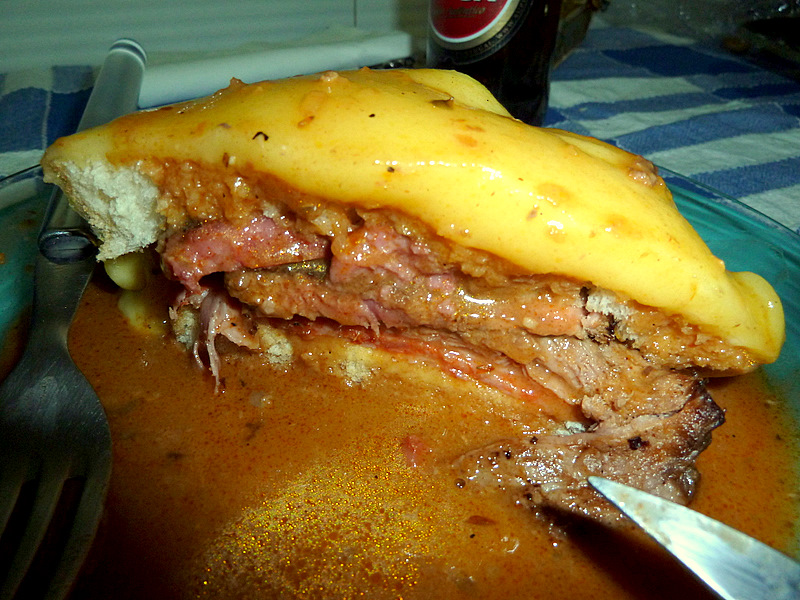 FrancesinhaMeat
🇵🇹 PortugalA layered sandwich from Porto with meats, cheese and a hot beer-tomato sauce
Sandwich or wrap, Lunch, Dinner
FrancesinhaMeat
🇵🇹 PortugalA layered sandwich from Porto with meats, cheese and a hot beer-tomato sauce
Sandwich or wrap, Lunch, Dinner
Its cousins elsewhere
All sandwiches and wraps ShawarmaMeatشاورما
🇸🇾 Syria and 5 moreMeat roasted on a vertical spit and sliced into flatbread with sauces and vegetables
Street food, Lunch, Dinner
ShawarmaMeatشاورما
🇸🇾 Syria and 5 moreMeat roasted on a vertical spit and sliced into flatbread with sauces and vegetables
Street food, Lunch, Dinner
 Vada pavVegetarian
🇮🇳 IndiaDeep-fried spiced potato fritter in a bread bun, served with chutney and chilli
Street food, Snacks
Vada pavVegetarian
🇮🇳 IndiaDeep-fried spiced potato fritter in a bread bun, served with chutney and chilli
Street food, Snacks
 Roujiamo肉夹馍
🇨🇳 ChinaFlatbread filled with stewed meat, a street food from Shaanxi, China
Main dish, Lunch, Dinner
Roujiamo肉夹馍
🇨🇳 ChinaFlatbread filled with stewed meat, a street food from Shaanxi, China
Main dish, Lunch, Dinner
 Lobster rollFish or seafood
🇺🇸 United StatesLobster meat in a split roll, served warm with butter or cold with mayonnaise
Sandwich or wrap, Lunch, Dinner
Lobster rollFish or seafood
🇺🇸 United StatesLobster meat in a split roll, served warm with butter or cold with mayonnaise
Sandwich or wrap, Lunch, Dinner