
Shawarma
In its own language: شاورما
Meat roasted on a vertical spit and sliced into flatbread with sauces and vegetables
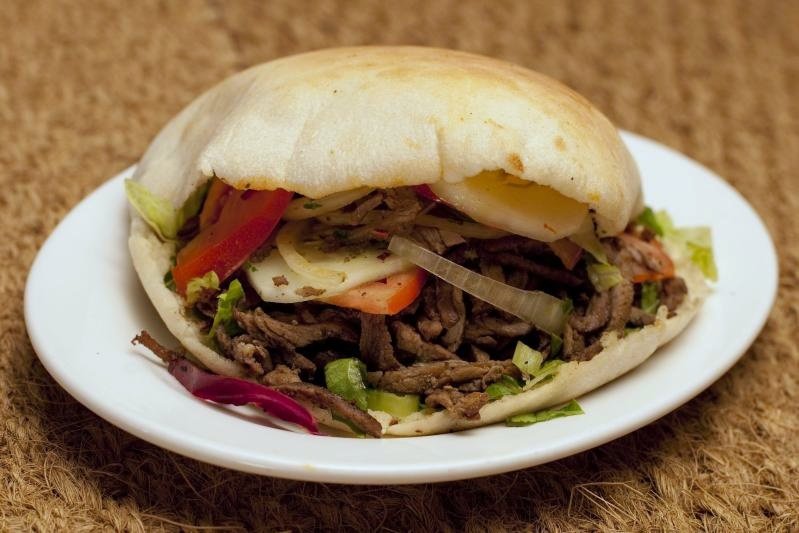
Shawarma is a street food from the Levant, made by stacking seasoned meat in an inverted cone and roasting it on a vertical spit. Slices are shaved off and wrapped in flatbread such as pita or lavash, often with sauces and vegetables. Shawarma is now found worldwide, with regional styles in the Middle East, Africa, and beyond.
- Meat is cooked on a rotating vertical spit and shaved off as it roasts
- Originally from the Levant during the Ottoman Empire
- Popular worldwide with many regional styles and sauces
- Ottawa set a world record for the longest line of shawarma sandwiches in 2026
- Nigerian shawarma often includes cabbage and sausage
What is Shawarma?
Shawarma is made by stacking thin slices of seasoned meat—often lamb, chicken, beef, turkey, or veal—onto a tall skewer. The stack forms an inverted cone, which turns slowly in front of a heat source. As the outer layer cooks, it is shaved off in thin strips. The meat is usually wrapped in flatbread such as pita, laffa, or lavash, and served with sauces like garlic or tahini, plus vegetables such as cabbage or pickles. The result is a hot, juicy sandwich with spiced meat and tangy accompaniments.
Where does Shawarma come from?
Shawarma comes from the Levant, first appearing during the Ottoman Empire in the 19th century. Its method of roasting meat on a vertical spit is derived from the Turkish döner kebab. The word 'shawarma' is related to the Turkish word for 'turning.' The technique spread across the Middle East and later inspired dishes like Greek gyros and Mexican tacos al pastor. Lebanese immigrants helped popularize shawarma in places as far as Nigeria and Canada.
How is Shawarma made?
To make shawarma, thin slices of marinated meat are stacked tightly on a vertical skewer, sometimes with pieces of fat for extra flavor. The stack is slowly rotated in front of a gas or electric heat source. As the outer layer cooks, it is shaved off with a long knife. The meat is then wrapped in flatbread, often with sauces such as garlic or tahini, and a mix of vegetables or pickles. Some regions use a horizontal spit and cook over coals.


How and when is Shawarma eaten?
Shawarma is typically eaten as a quick meal or snack, bought from street vendors or small shops. It is served hot, wrapped in flatbread, and often eaten by hand. Common accompaniments include garlic sauce, tahini, fries, or pickled vegetables. In some places, it is served with hummus or amba (a tangy mango sauce). Shawarma is enjoyed for lunch, dinner, or as a late-night snack.
Kinds of Shawarma
Regional styles differ in meat, sauces, and toppings. In Syria, chicken shawarma is common and served with garlic sauce, while Egypt favors tahini sauce and sometimes uses local bread. Nigerian shawarma often includes cabbage and carrots, and may add sausage or hot dog. In Israel, turkey is popular and shawarma is topped with tahini and pickled vegetables. Armenian and Georgian versions use different spice blends and marinate the meat overnight.
What Shawarma means
Shawarma is seen as a symbol of street food culture and has become a global dish with many local twists. Its popularity in Israel has sparked political debates about food heritage. Ottawa, Canada, declared itself the country's 'shawarma capital' in 2024. In 2026, Ottawa set a world record for the longest line of shawarma sandwiches, highlighting the dish's international appeal.
Questions people ask about Shawarma
What is shawarma made of?
Shawarma is made from thin slices of seasoned meat such as lamb, chicken, beef, turkey, or veal, stacked on a vertical spit and roasted. It is served in flatbread with sauces and vegetables.
Where does shawarma come from?
Shawarma originated in the Levant region during the Ottoman Empire. Its cooking method comes from Turkish döner kebab, and it spread throughout the Middle East and beyond.
How is shawarma served?
Shawarma is served hot, usually wrapped in flatbread like pita or lavash, with sauces such as garlic or tahini and vegetables like cabbage, pickles, or fries.
Are there different types of shawarma?
Yes, regional variations use different meats, sauces, and toppings. For example, Syrian shawarma uses garlic sauce, Egyptian versions use tahini, and Nigerian shawarma may include cabbage and sausage.
Is shawarma always made with meat?
Shawarma is traditionally made with meat, but some places offer versions with falafel as a vegetarian option.
Good reading and sources
- Encyclopaedia BritannicaArticle
- A search for exceptional Syrian-style shawarma leads to the San Fernando ValleyLos Angeles Times, Article
- How Shawarma Became a Soul Food of Syria's Diaspora in BerlinSmithsonian Magazine, Article
- As shawarma snags top spot on World’s Best Sandwiches list, know all about its history and how it became a delight worldwideThe Indian Express, Article
The facts on this page come from the Wikipedia article "Shawarma", written by its contributors and used under the CC BY-SA 4.0 licence, and from its Wikidata record (CC0). Thali rewrote the text in its own words, with AI assistance, and compares every page with the article to make sure no passage is copied. It may be reused under the same CC BY-SA 4.0 licence with a link back.
It may contain mistakes, and it is not dietary or allergy advice: recipes differ from cook to cook. If something is wrong, tell us. Last refreshed 2026-10-03.
More from Syria
All the food of Syria Freekehفريكة
🇵🇸 Palestine and 5 moreRoasted green durum wheat grains, a staple across the eastern Mediterranean
Main dish, Lunch, Dinner
Freekehفريكة
🇵🇸 Palestine and 5 moreRoasted green durum wheat grains, a staple across the eastern Mediterranean
Main dish, Lunch, Dinner
 ShakshukaVegetarian
🇹🇳 Tunisia and 5 moreEggs poached in a spiced tomato and pepper sauce from North Africa
Main dish, Breakfast, Dinner
ShakshukaVegetarian
🇹🇳 Tunisia and 5 moreEggs poached in a spiced tomato and pepper sauce from North Africa
Main dish, Breakfast, Dinner
 Kibbehكبة
🇸🇾 Syria and 5 moreSpiced ground meat and bulgur shaped, stuffed, and fried, baked or served raw
Main dish, Lunch, Dinner
Kibbehكبة
🇸🇾 Syria and 5 moreSpiced ground meat and bulgur shaped, stuffed, and fried, baked or served raw
Main dish, Lunch, Dinner
 LahmacunMeat
🇸🇾 Syria and 3 moreThin flatbread baked with a topping of minced meat, vegetables and herbs
Main dish, Lunch, Dinner
LahmacunMeat
🇸🇾 Syria and 3 moreThin flatbread baked with a topping of minced meat, vegetables and herbs
Main dish, Lunch, Dinner
Its cousins elsewhere
All street food Migas
🇪🇸 Spain and 2 moreA dish of leftover bread or tortillas, cooked with savoury ingredients
Main dish, Breakfast, Lunch
Migas
🇪🇸 Spain and 2 moreA dish of leftover bread or tortillas, cooked with savoury ingredients
Main dish, Breakfast, Lunch
 Taco
🇲🇽 Mexico and 1 moreA folded tortilla filled with meat, beans or vegetables, eaten by hand
Street food, Lunch, Dinner
Taco
🇲🇽 Mexico and 1 moreA folded tortilla filled with meat, beans or vegetables, eaten by hand
Street food, Lunch, Dinner
 ChorizoMeat
🇪🇸 Spain and 5 moreA seasoned pork sausage from the Iberian Peninsula, made in many regional styles
Sausage or cured food, Breakfast, Lunch
ChorizoMeat
🇪🇸 Spain and 5 moreA seasoned pork sausage from the Iberian Peninsula, made in many regional styles
Sausage or cured food, Breakfast, Lunch
 Croquette
🇫🇷 France and 5 moreA deep-fried roll with a creamy or starchy filling, coated in breadcrumbs
Street food, Snacks, Lunch
Croquette
🇫🇷 France and 5 moreA deep-fried roll with a creamy or starchy filling, coated in breadcrumbs
Street food, Snacks, Lunch