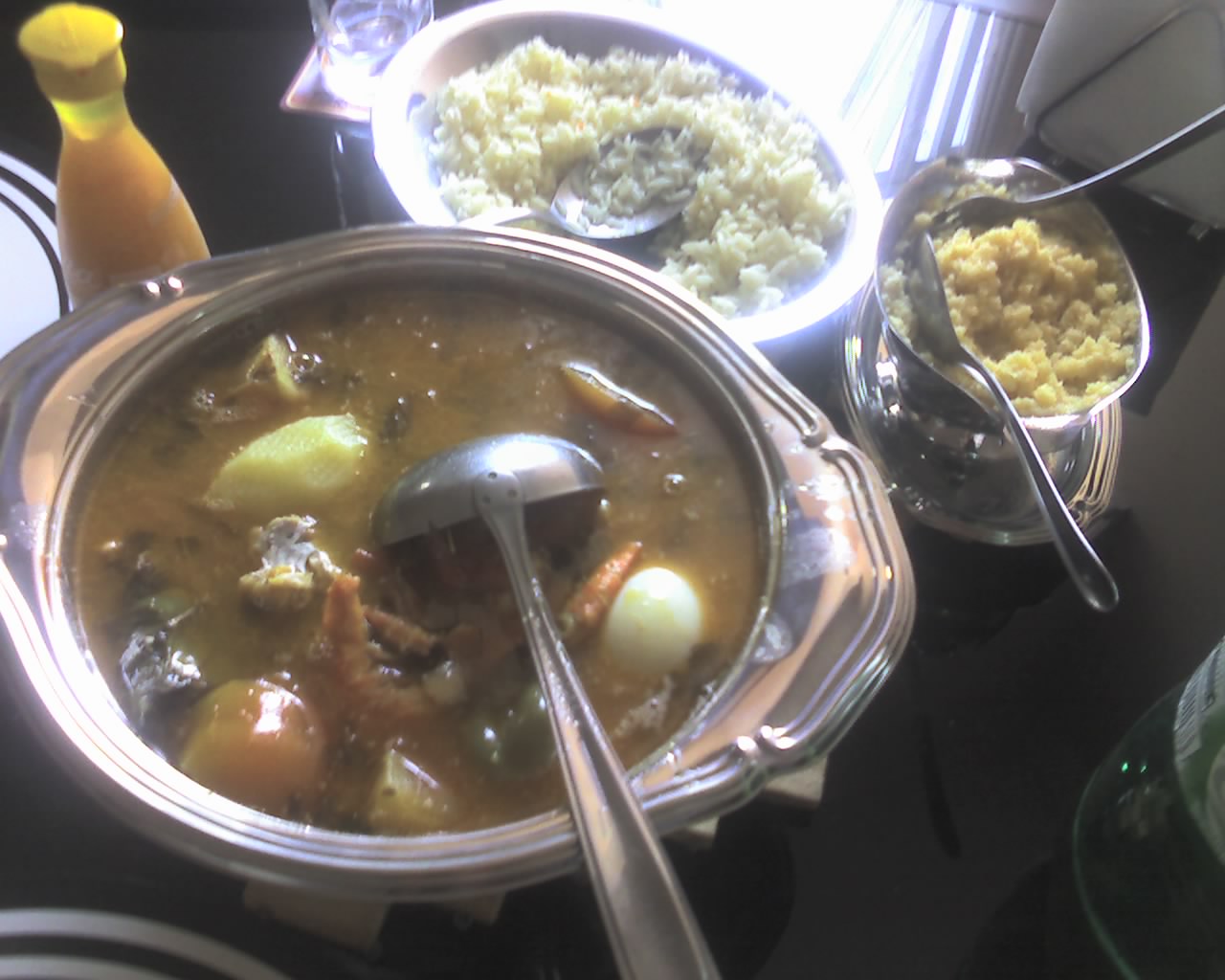
Caldeirada
Portuguese and Galician fish stew with potatoes and mixed seafood
Caldeirada is a fish stew from Portugal and Galicia in northwestern Spain, made with a variety of fish, potatoes, and often shellfish or squid. Traditionally a fishermen’s dish, its ingredients change with the catch and local taste, sometimes including vegetables, spices, and wine. It is also found in Brazil, where river fish and coriander are used.
- Traditionally made with whatever fish the fishermen catch
- Can include both lean and oily fish, plus shellfish and squid
- Vegetables like potatoes, onions, and peppers are common
- Seasoned with herbs, paprika, and sometimes wine or brandy
- Popular in Portugal, Galicia, and also known in Brazil
What is Caldeirada?
Caldeirada is a rustic fish stew that brings together a mix of fish, potatoes, and often shellfish like clams and mussels. Squid, octopus, and shrimp are sometimes added, along with vegetables such as onions, green peppers, and tomatoes. The stew is seasoned with a range of spices and herbs, including bay leaf, coriander, parsley, paprika, and sometimes oregano. Olive oil and wine are common, and some versions include vermicelli or a splash of brandy. The result is a hearty, aromatic dish with flavors shaped by the sea and the cook’s hand.
Where does Caldeirada come from?
Caldeirada comes from Portugal and Galicia, a region in northwestern Spain. It began as a fishermen’s meal, made with whatever the day’s catch provided. The dish is closely tied to coastal communities, where the variety of fish and shellfish available changes from port to port. Its flexible nature has led to many local versions, and it shares similarities with other Mediterranean fish stews like French bouillabaisse and Italian cacciucco. In Brazil, a former Portuguese colony, caldeirada adapted to local river fish and herbs.
How is Caldeirada made?
To make caldeirada, cooks layer pieces of fish—both oily and lean types—along with shellfish, potatoes, and vegetables in a pot. Common fish include mackerel, cod, monkfish, sardines, and sea bass, while shellfish like clams, mussels, and shrimp are often added. Sliced onions, green peppers, and tomatoes go in for flavor and color. The stew is seasoned with salt, pepper, bay leaf, coriander, parsley, and paprika, and moistened with olive oil and sometimes white wine or port. Everything simmers together, letting the flavors mingle.
How and when is Caldeirada eaten?
Caldeirada is usually served as a main course at lunch or dinner. It is a communal dish, often brought to the table in the pot it was cooked in. The stew is eaten hot, with the broth ladled over the fish and vegetables. Bread may be served alongside to soak up the flavorful liquid. The dish is popular in fishing towns and coastal homes, and its ingredients often reflect what is fresh and available that day.
Kinds of Caldeirada
The recipe for caldeirada changes from town to town and even from household to household. Some versions use more shellfish, others add squid or octopus. In Portugal, both sea and river fish may be used, while in Brazil, river fish and coriander are common. The mix of spices and the choice of wine or spirits also vary. Some cooks add vermicelli or use tomato paste for a richer broth. The stew’s flexibility is a hallmark, shaped by local catch and personal taste.
What Caldeirada means
Caldeirada is a symbol of coastal life in Portugal and Galicia, reflecting the resourcefulness of fishing communities. It is not tied to a specific festival or religious event but is a staple of everyday meals, especially in seaside towns. The dish’s adaptability and reliance on local fish make it a living part of regional food culture. In Brazil, it has become part of local cooking, showing the influence of Portuguese traditions abroad.
Questions people ask about Caldeirada
What is caldeirada made of?
Caldeirada is made from a mix of fish (both oily and lean), potatoes, and often shellfish like clams or mussels. Vegetables such as onions, green peppers, and tomatoes are added, along with olive oil, spices, and sometimes wine.
Where does caldeirada come from?
Caldeirada comes from Portugal and Galicia, a region in northwestern Spain. It is also known in Brazil, where it has adapted to local river fish and herbs.
Is caldeirada always made the same way?
No, caldeirada varies widely depending on what fish and shellfish are available and local preferences. Each town or household may use a different mix of seafood, vegetables, and seasonings.
When is caldeirada usually eaten?
Caldeirada is typically served as a main dish at lunch or dinner. It is an everyday meal in fishing communities and coastal areas.
What does caldeirada taste like?
Caldeirada has a rich, savory flavor from the mix of fish, shellfish, vegetables, and spices. The taste can change with the types of fish and seasonings used, but it is always hearty and aromatic.
Good reading and sources
The facts on this page come from the Wikipedia article "Caldeirada", written by its contributors and used under the CC BY-SA 4.0 licence, and from its Wikidata record (CC0). Thali rewrote the text in its own words, with AI assistance, and compares every page with the article to make sure no passage is copied. It may be reused under the same CC BY-SA 4.0 licence with a link back.
It may contain mistakes, and it is not dietary or allergy advice: recipes differ from cook to cook. If something is wrong, tell us. Last refreshed 2026-10-03.
More from Portugal
All the food of Portugal Cataplana
🇵🇹 PortugalSeafood and meat stew cooked in a sealed metal vessel from Portugal's Algarve
Main dish, Lunch, Dinner
Cataplana
🇵🇹 PortugalSeafood and meat stew cooked in a sealed metal vessel from Portugal's Algarve
Main dish, Lunch, Dinner
 ChorizoMeat
🇪🇸 Spain and 5 moreA seasoned pork sausage from the Iberian Peninsula, made in many regional styles
Sausage or cured food, Breakfast, Lunch
ChorizoMeat
🇪🇸 Spain and 5 moreA seasoned pork sausage from the Iberian Peninsula, made in many regional styles
Sausage or cured food, Breakfast, Lunch
 Empanada
🇪🇸 Spain and 5 morePastry turnovers filled with meat, cheese, or vegetables, baked or fried
Pie or savoury pastry, Lunch, Dinner
Empanada
🇪🇸 Spain and 5 morePastry turnovers filled with meat, cheese, or vegetables, baked or fried
Pie or savoury pastry, Lunch, Dinner
 VindalooMeat
🇮🇳 India and 2 moreA spicy curry of meat, vinegar and chili from Goa, now found worldwide
Main dish, Lunch, Dinner
VindalooMeat
🇮🇳 India and 2 moreA spicy curry of meat, vinegar and chili from Goa, now found worldwide
Main dish, Lunch, Dinner
Its cousins elsewhere
All stews and curries CioppinoFish or seafood
🇺🇸 United StatesSan Francisco seafood stew with tomato and wine
Stew or curry, Dinner
CioppinoFish or seafood
🇺🇸 United StatesSan Francisco seafood stew with tomato and wine
Stew or curry, Dinner
 Picadillo
🇲🇽 Mexico and 5 moreGround meat sautéed with vegetables, often served with rice or as a filling
Main dish, Lunch, Dinner
Picadillo
🇲🇽 Mexico and 5 moreGround meat sautéed with vegetables, often served with rice or as a filling
Main dish, Lunch, Dinner
 Machher jholFish or seafoodমাছের ঝোল
🇮🇳 India and 2 moreSpicy fish curry with potatoes, served as a stew with rice in eastern South Asia
Main dish, Lunch, Dinner
Machher jholFish or seafoodমাছের ঝোল
🇮🇳 India and 2 moreSpicy fish curry with potatoes, served as a stew with rice in eastern South Asia
Main dish, Lunch, Dinner
 CaldouFish or seafood
🇸🇳 SenegalSenegalese fish and vegetable stew with a tangy broth, served with rice
Main dish, Lunch, Dinner
CaldouFish or seafood
🇸🇳 SenegalSenegalese fish and vegetable stew with a tangy broth, served with rice
Main dish, Lunch, Dinner