Chiko Roll
A thick, deep-fried Australian snack roll stuffed with cabbage, barley, and beef
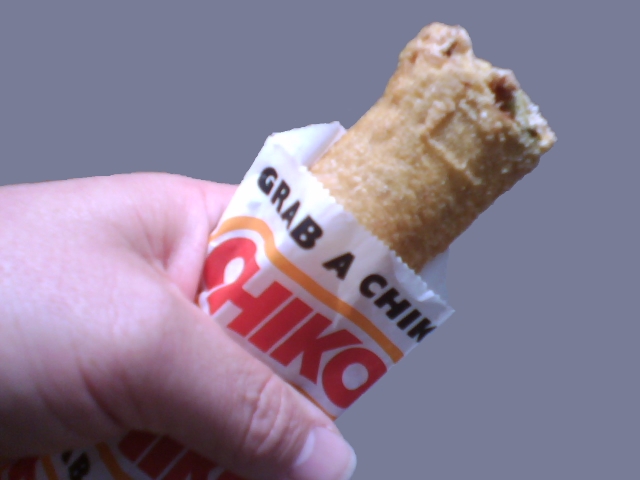
The Chiko Roll is a deep-fried Australian snack made from a thick tube of pastry stuffed with cabbage, barley, and beef. Created in Victoria as sturdy takeaway food for sports matches, it became a fixture of local fish and chip shops.
- Created by Frank McEncroe as a durable snack to eat at football matches without cutlery.
- First sold in 1951 at the Wagga Wagga Agricultural Show under the name Chicken Roll.
- Despite its historical name, the recipe relies on beef and vegetables rather than poultry.
- Domestic consumption reached 40 million units per year during the 1960s and 1970s.
What is Chiko Roll?
The Chiko Roll is a substantial, cylindrical snack encased in a heavy pastry made of flour and egg. Inside, the dense filling consists largely of shredded cabbage and barley, mixed with minced beef, beef tallow, and wheat cereal. Diced vegetables including carrots, green beans, celery, and onions are blended into the partially pulped mixture. Once submerged in hot vegetable oil, the tough outer shell turns crisp and golden, keeping the steaming interior securely contained. Although savoury and rich from meat fats, vegetable and grain textures dominate every bite.
Where does Chiko Roll come from?
Frank McEncroe, a Victorian boilermaker who ran outdoor catering stalls, devised the snack in Bendigo during 1950. Observing chop suey rolls sold near the Richmond Cricket Ground, he found Chinese spring rolls too delicate for spectators to hold outside. He wanted a tougher, larger roll that could serve as a portable hot meal. First sold at the Wagga Wagga Agricultural Show in 1951 under the name Chicken Roll, it quickly took off. McEncroe initially used an altered sausage stuffer before expanding production to a factory in Essendon.
How is Chiko Roll made?
Preparation starts with blending the core ingredients into a coarse paste. Cabbage, barley, and wheat cereal are combined with beef, beef tallow, and chopped vegetables such as carrots and onions. A heavy dough of wheat flour and egg forms the outer casing. In commercial production, automated equipment simultaneously extrudes the stuffing and the wrapper into long cylinders, slicing them to size and crimping the closed ends. To prepare them for customers, the frozen rolls are dropped straight into hot vegetable oil until the outer skin becomes brown and rigid.
How and when is Chiko Roll eaten?
Engineered for effortless eating on the move, the roll requires neither a plate nor cutlery. It became a staple across takeaway counters, particularly local fish and chip shops throughout Australia. Vendors lift the pre-made roll from the freezer, fry it in oil, and slide it directly into a signature paper pouch. Patrons typically eat it piping hot, gripping the package with one hand while watching outdoor spectacles like Australian rules football matches or walking down the street.
Kinds of Chiko Roll
For several years between 2017 and 2022, a meatless edition without beef or animal fat was sold in Victoria and Tasmania, though sluggish sales led to its withdrawal in 2023. Aside from the traditional roll, the brand name has been applied to several other takeaway snacks, such as battered corn on a stick known as Corn Jacks, potato bites called Spudsters, fish cakes, onion rings, vegetable nuggets, and miniature pizza subs.
What Chiko Roll means
Viewed widely as an Australian cultural emblem, the snack reached peak popularity across the 1960s and 1970s, when domestic sales hit 40 million each year alongside exports to Japan. Its fame sparked regional rivalry, culminating in a 2016 parliamentary debate where three politicians claimed the snack originated in their respective electorates. To mark its golden jubilee, manufacturers gifted gilded copies to Wagga Wagga and Bendigo. Decades of promotion also featured the Chiko Chick, a recurring advertising figure pictured alongside a motorcycle.
Questions people ask about Chiko Roll
What is a Chiko Roll made of?
A thick pastry wrapper of flour and egg surrounds a partially pulped filling of cabbage, barley, beef, beef tallow, wheat cereal, carrots, green beans, celery, and onions. It is deep-fried in vegetable oil.
Where did the Chiko Roll come from?
Frank McEncroe invented the snack in Bendigo, Victoria, inspired by Chinese chop suey rolls. It was first offered to the public in 1951 at the agricultural show in Wagga Wagga, New South Wales.
Does a Chiko Roll contain chicken?
No. Even though it debuted under the name Chicken Roll in 1951, the roll has never contained any chicken meat. Its animal ingredients are beef and beef tallow.
Why was the pastry made so thick?
McEncroe wanted a sturdy exterior that would not break apart in crowds. The durable egg-and-flour crust was purposely engineered to be held in one hand during outdoor sports events like football matches.
Good reading and sources
The facts on this page come from the Wikipedia article "Chiko Roll", written by its contributors and used under the CC BY-SA 4.0 licence, and from its Wikidata record (CC0). EveryThali rewrote the text in its own words, with AI assistance, and compares every page with the article to make sure no passage is copied. It may be reused under the same CC BY-SA 4.0 licence with a link back.
It may contain mistakes, and it is not dietary or allergy advice: recipes differ from cook to cook. If something is wrong, tell us. Last refreshed 2026-10-04.
More from Australia
All the food of Australia Fish and chipsFish or seafood
🇬🇧 United Kingdom and 8 moreBattered fried fish served hot with thick-cut chips
Main dish, Lunch, Dinner
Fish and chipsFish or seafood
🇬🇧 United Kingdom and 8 moreBattered fried fish served hot with thick-cut chips
Main dish, Lunch, Dinner
 Pie
🇬🇧 United Kingdom and 5 moreA baked dish with a pastry crust and sweet or savoury filling
Main dish, Lunch, Dinner
Pie
🇬🇧 United Kingdom and 5 moreA baked dish with a pastry crust and sweet or savoury filling
Main dish, Lunch, Dinner
 Chow mein炒麵
🇨🇳 China and 5 moreStir-fried noodles with vegetables and often meat or tofu
Noodle or pasta dish, Lunch, Dinner
Dim sum点心
🇨🇳 China and 5 moreA variety of small Chinese dishes served with tea, often for brunch
Main dish, Breakfast, Lunch
Chow mein炒麵
🇨🇳 China and 5 moreStir-fried noodles with vegetables and often meat or tofu
Noodle or pasta dish, Lunch, Dinner
Dim sum点心
🇨🇳 China and 5 moreA variety of small Chinese dishes served with tea, often for brunch
Main dish, Breakfast, Lunch
Its cousins elsewhere
All street food Japchae잡채
🇰🇷 South KoreaKorean sweet potato noodles stir-fried with vegetables, meat, and mushrooms
Main dish, Lunch, Dinner
Qutab
🇦🇿 Azerbaijan and 2 moreThin dough folded around savory or vegetable fillings and cooked on a griddle
Main dish, Snacks, Lunch
Japchae잡채
🇰🇷 South KoreaKorean sweet potato noodles stir-fried with vegetables, meat, and mushrooms
Main dish, Lunch, Dinner
Qutab
🇦🇿 Azerbaijan and 2 moreThin dough folded around savory or vegetable fillings and cooked on a griddle
Main dish, Snacks, Lunch
 Potato pancakeVegetarian
🇧🇾 Belarus and 5 moreShallow-fried pancakes made from grated or mashed potato, common across Europe
Main dish, Lunch, Dinner
Potato pancakeVegetarian
🇧🇾 Belarus and 5 moreShallow-fried pancakes made from grated or mashed potato, common across Europe
Main dish, Lunch, Dinner
 Steak tartareMeat
🇫🇷 France and 5 moreRaw minced beef, seasoned and often topped with a raw egg yolk
Main dish, Lunch, Dinner
Steak tartareMeat
🇫🇷 France and 5 moreRaw minced beef, seasoned and often topped with a raw egg yolk
Main dish, Lunch, Dinner