
Crème brûlée
Rich vanilla custard with a brittle caramelized sugar top
Crème brûlée is a dessert of smooth custard, usually flavored with vanilla, and finished with a crisp layer of caramelized sugar. It is most closely linked to France, but similar versions exist in Spain and England. The custard is served slightly chilled, with the top caramelized just before serving. It is often enjoyed as a restaurant dessert.
- Custard base topped with crisp caramelized sugar
- Served slightly chilled in small ramekins
- Earliest known recipe dates to 1691 France
- Known as Trinity cream at Cambridge
- Caramelized top made with a hot iron or torch
What is Crème brûlée?
Crème brûlée is a dessert made of a rich, smooth custard base, usually flavored with vanilla, and topped with a thin, brittle layer of caramelized sugar. The custard is creamy and pale yellow, while the top is golden and crisp. It is often served in small, shallow dishes called ramekins. Sometimes fruit is added as a garnish. The contrast between the cool, silky custard and the warm, crackly sugar topping is a key part of its appeal.
Where does Crème brûlée come from?
The earliest known recipe for crème brûlée appears in a 1691 French cookbook by François Massialot. However, the true origin is debated. Similar desserts were described in Spain in 1662 and in England in the 18th century, where it became known as 'burnt cream' or 'Trinity cream' at Trinity College, Cambridge. The method of caramelizing sugar on top with a hot iron was already known in 17th-century French cooking, but the combination of custard and hard caramel seems to have developed over time in several places.
How is Crème brûlée made?
To make crème brûlée, egg yolks are whisked with sugar and combined with cream, then flavored with vanilla. The mixture is poured into ramekins and gently baked in a water bath until set. Once cooled, sugar is sprinkled on top and caramelized using a hot iron or torch, forming a crisp layer. Some methods prepare the custard hot, others cold, but both result in a creamy base with a brittle sugar crust.

How and when is Crème brûlée eaten?
Crème brûlée is typically served as a dessert, often in restaurants. It is brought to the table in its ramekin, with the caramelized sugar freshly torched so the top is still crisp. Diners use a spoon to crack through the hard sugar and scoop up the custard beneath. It is usually enjoyed on its own, but sometimes comes with fruit on top. The dessert is served slightly chilled, with the top just warmed from caramelizing.
Kinds of Crème brûlée
While vanilla is the classic flavoring, other versions use different aromatics or garnishes. In England, it is called 'Trinity cream' and sometimes features the college arms branded on top. Spanish crema catalana is very similar, with slight differences in flavorings and preparation. Some modern versions may use flavored custards or add fruit, but the essential elements remain the same.
What Crème brûlée means
Crème brûlée became widely popular in the 1980s, especially in restaurants, and is seen as a symbol of indulgence from that era. At Trinity College, Cambridge, the dessert is a tradition, with the college arms branded onto the sugar crust. Its origins are the subject of debate among food historians, with France, Spain, and England all laying some claim to its invention.
Questions people ask about Crème brûlée
What is crème brûlée made of?
It is made from cream, egg yolks, sugar, and usually vanilla. The custard is topped with a layer of caramelized sugar, which is made by sprinkling sugar on top and melting it with a hot iron or torch.
Where does crème brûlée come from?
The dessert is most closely associated with France, but similar versions appeared in Spain and England. Its exact origin is disputed, with the earliest known recipe from France in 1691.
How is the caramelized sugar top made?
After the custard is set and chilled, sugar is sprinkled on top and caramelized using a hot iron or a kitchen torch, creating a thin, crisp layer.
Is crème brûlée served hot or cold?
It is usually served slightly chilled. The caramelizing process warms the top, but the custard underneath remains cool.
What does crème brûlée taste like?
It has a creamy, smooth vanilla-flavored custard with a contrasting crunchy, caramelized sugar topping. The combination of textures is a key part of its appeal.
Good reading and sources
The facts on this page come from the Wikipedia article "Crème brûlée", written by its contributors and used under the CC BY-SA 4.0 licence, and from its Wikidata record (CC0). Thali rewrote the text in its own words, with AI assistance, and compares every page with the article to make sure no passage is copied. It may be reused under the same CC BY-SA 4.0 licence with a link back.
It may contain mistakes, and it is not dietary or allergy advice: recipes differ from cook to cook. If something is wrong, tell us. Last refreshed 2026-10-03.
More from France
All the food of France Ice cream
🇺🇸 United States and 5 moreA frozen dessert made from sweetened, flavoured milk or cream
Sweet or dessert, Snacks
Ice cream
🇺🇸 United States and 5 moreA frozen dessert made from sweetened, flavoured milk or cream
Sweet or dessert, Snacks
 Candy
🇺🇸 United States and 5 moreSmall sweet treats made mainly from sugar or sweeteners
Sweet or dessert, Snacks
Candy
🇺🇸 United States and 5 moreSmall sweet treats made mainly from sugar or sweeteners
Sweet or dessert, Snacks
 CroissantVegetarian
🇫🇷 France and 5 moreA crescent-shaped, flaky pastry made from layered yeast dough and butter
Pie or savoury pastry, Breakfast, Tea time
CroissantVegetarian
🇫🇷 France and 5 moreA crescent-shaped, flaky pastry made from layered yeast dough and butter
Pie or savoury pastry, Breakfast, Tea time
 French toast
🇫🇷 France and 5 moreBread soaked in egg and milk, pan-fried and served sweet or savoury
Main dish, Breakfast, Snacks
French toast
🇫🇷 France and 5 moreBread soaked in egg and milk, pan-fried and served sweet or savoury
Main dish, Breakfast, Snacks
Its cousins elsewhere
All sweets and desserts Eggnog
🇺🇸 United States and 5 moreA creamy, sweet drink of milk, eggs, sugar and spirits, served at Christmas
Drink, Snacks
Eggnog
🇺🇸 United States and 5 moreA creamy, sweet drink of milk, eggs, sugar and spirits, served at Christmas
Drink, Snacks
 Suspiro de limeñaVegetarian
🇵🇪 PeruPeruvian dessert with caramelized milk and port wine meringue
Sweet or dessert
Suspiro de limeñaVegetarian
🇵🇪 PeruPeruvian dessert with caramelized milk and port wine meringue
Sweet or dessert
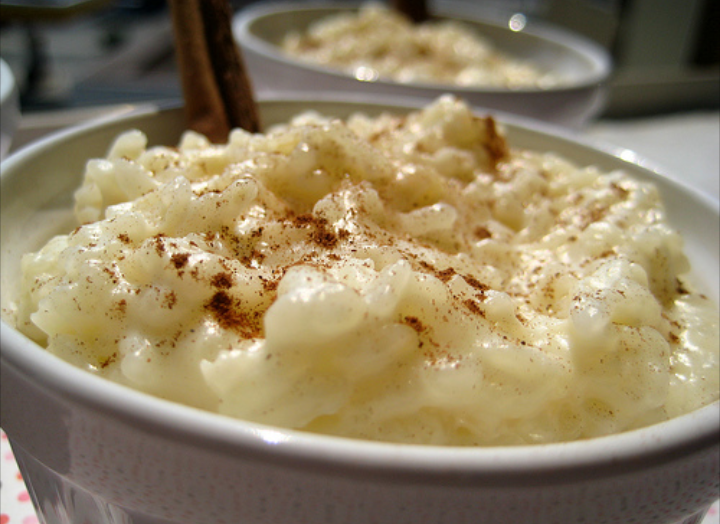 Rice pudding
🇮🇳 India and 4 moreSweetened rice cooked in milk, found in many forms worldwide
Sweet or dessert, Breakfast, Lunch
Rice pudding
🇮🇳 India and 4 moreSweetened rice cooked in milk, found in many forms worldwide
Sweet or dessert, Breakfast, Lunch
 DondurmaVegetarian
🇹🇷 Turkey and 2 moreTurkish ice cream thickened with salep and mastic for a chewy, stretchy texture
Sweet or dessert, Snacks
DondurmaVegetarian
🇹🇷 Turkey and 2 moreTurkish ice cream thickened with salep and mastic for a chewy, stretchy texture
Sweet or dessert, Snacks