
Oblea
Crisp round wafers sandwiched around caramelised milk and sweet toppings
Oblea is a crisp wafer sweet popular across Latin America, especially in Colombia. Two broad, paper-thin wafers enclose sweet fillings such as arequipe, fruit jam, or soft cheese, often finished with drizzled condensed milk, chocolate, or coconut.
- Thin circular wafers are baked between hot iron plates until crisp.
- Caramelised milk, known as arequipe, is the most traditional filling.
- Its name originates from Latin terms for bread presented during church liturgy.
What is Oblea?
An oblea is a light, fragile dessert built from two circular, unleavened wafers. These wafers hold a thick layer of sweet filling. The standard filling is arequipe, a smooth caramelised milk spread. Sellers frequently spread other layers as well, including fruit preserves, sliced fresh fruit, whipped cream, and soft cheese. A finished oblea may also be dressed with chocolate, fruit purees, grated coconut, or a drizzle of sweetened condensed milk. The contrast between brittle, dry wafers and rich, sticky spreads makes it a popular treat to eat by hand.
Where does Oblea come from?
The name traces back through Old French to Late Latin terms that referred to bread presented during the Christian Eucharist. Historically, it designated the plain unleavened bread baked for religious communion. Scholars also note a possible link to an ancient Greek bread called obelias, which was cooked between two heated plates and served at the end of meals. Over time, secular bakers adapted the technique of baking flat wafers, shifting the bread into a sweet confectionery.
How is Oblea made?
Bakers prepare obleas by pouring a thin batter onto specialized flat irons. Pressing the batter between two hot plates bakes it rapidly into a brittle, disc-shaped wafer, much like making a thin waffle. Once the discs cool and become crisp, a vendor smears the chosen spreads across one surface and presses a second wafer on top to create an easily handled sweet sandwich.


How and when is Oblea eaten?
People eat obleas out of hand as an everyday sweet snack. They are widely enjoyed on streets, in public squares, and at casual food stalls across Colombia and other parts of Latin America. The wafers are fragile, so diners usually hold the sandwich carefully to avoid snapping the edges before biting through the crunchy layers into the soft, sweet core.
Kinds of Oblea
While Latin American vendors favor arequipe paired with cheese or fruit spreads, wafer traditions in Europe take different forms. In Germany, similar confections rely on thin, unleavened biscuits layered with varied sweet fillings.
Questions people ask about Oblea
What is an oblea made of?
An oblea consists of two thin, crisp batter wafers holding sweet fillings. The most widespread spread is arequipe, a rich caramelised milk paste. Vendors also layer in jam, soft cheese, whipped cream, fruit, grated coconut, or sweet syrups.
Where does oblea come from?
Obleas are common across Latin America, particularly in Colombia. Their roots lie in European baking traditions that originally produced unleavened sacramental bread before evolving into sweet filled wafer confections.
How is an oblea cooked?
A simple batter is poured between two heated metal plates and pressed firmly. This fast cooking process mimics waffle making and produces very thin, fragile, and dry wafers ready to be filled.
Good reading and sources
The facts on this page come from the Wikipedia article "Oblea", written by its contributors and used under the CC BY-SA 4.0 licence, and from its Wikidata record (CC0). EveryThali rewrote the text in its own words, with AI assistance, and compares every page with the article to make sure no passage is copied. It may be reused under the same CC BY-SA 4.0 licence with a link back.
It may contain mistakes, and it is not dietary or allergy advice: recipes differ from cook to cook. If something is wrong, tell us. Last refreshed 2026-10-04.
More from Colombia
All the food of Colombia Hot chocolate
🇲🇽 Mexico and 5 moreA warm drink made from chocolate or cocoa, milk or water, and sugar
Drink, Breakfast, Snacks
Hot chocolate
🇲🇽 Mexico and 5 moreA warm drink made from chocolate or cocoa, milk or water, and sugar
Drink, Breakfast, Snacks
 Carimañola
🇨🇴 Colombia and 1 moreDeep-fried yuca dough stuffed with meat or cheese
Street food, Breakfast, Snacks
Carimañola
🇨🇴 Colombia and 1 moreDeep-fried yuca dough stuffed with meat or cheese
Street food, Breakfast, Snacks
 Churrochurros
🇪🇸 Spain and 5 moreRidged, deep-fried dough sticks often eaten hot with chocolate or coffee
Sweet or dessert, Breakfast, Snacks
Churrochurros
🇪🇸 Spain and 5 moreRidged, deep-fried dough sticks often eaten hot with chocolate or coffee
Sweet or dessert, Breakfast, Snacks
 Empanada
🇪🇸 Spain and 5 morePastry turnovers filled with meat, cheese, or vegetables, baked or fried
Pie or savoury pastry, Lunch, Dinner
Empanada
🇪🇸 Spain and 5 morePastry turnovers filled with meat, cheese, or vegetables, baked or fried
Pie or savoury pastry, Lunch, Dinner
Its cousins elsewhere
All sweets and desserts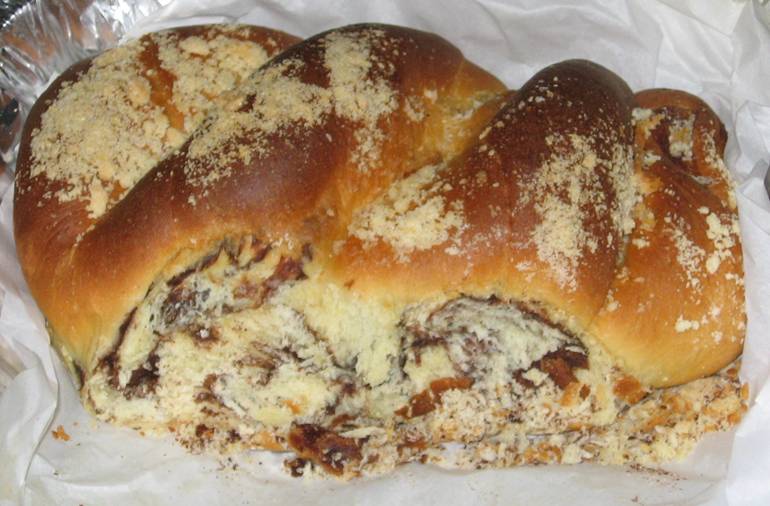 Babkaעוגת שמרים
🇵🇱 Poland and 4 moreSweet braided loaf with rich fillings like chocolate or cinnamon
Sweet or dessert, Breakfast, Tea time
Babkaעוגת שמרים
🇵🇱 Poland and 4 moreSweet braided loaf with rich fillings like chocolate or cinnamon
Sweet or dessert, Breakfast, Tea time
 MarquesitaVegetarian
🇲🇽 MexicoCrisp rolled crepe from Yucatán with sweet and salty fillings
Sweet or dessert, Snacks
MarquesitaVegetarian
🇲🇽 MexicoCrisp rolled crepe from Yucatán with sweet and salty fillings
Sweet or dessert, Snacks
 Soufflé
🇫🇷 FranceA French baked egg dish that puffs up in the oven
Main dish
Soufflé
🇫🇷 FranceA French baked egg dish that puffs up in the oven
Main dish
 Mousse
🇫🇷 FranceLight, airy foam made sweet or savory, often served as dessert
Sweet or dessert
Mousse
🇫🇷 FranceLight, airy foam made sweet or savory, often served as dessert
Sweet or dessert