
Peanut butter and jelly sandwich
A sandwich of peanut butter and fruit preserves on sliced bread
The peanut butter and jelly sandwich is a classic American sandwich made by spreading peanut butter and jelly or jam between slices of bread, most often white bread. It became widely popular in the United States in the 20th century, especially among children, and is often eaten as a snack or quick meal.
- First mentioned in 1901 as a tea sandwich in the US
- Became popular during the Great Depression and World War II
- Often made with white bread and grape jelly
- Does not need refrigeration, making it portable
- National Peanut Butter and Jelly Day is April 2
What is Peanut butter and jelly sandwich?
A peanut butter and jelly sandwich is made by spreading peanut butter and a fruit preserve, such as jelly or jam, between two slices of bread. Grape jelly and white bread are the most common choices, but other breads and preserves can be used. The sandwich is soft and easy to eat, with a sweet and nutty taste. It is known for being filling and portable, making it a staple for school lunches and picnics in the United States.
Where does Peanut butter and jelly sandwich come from?
The sandwich first appeared in the United States in the early 1900s, with a published recipe in 1901 suggesting peanut butter and jelly as a tea sandwich. At that time, peanut butter was considered a delicacy. Its popularity grew as peanut butter and sliced bread became more widely available through mass production. During the Great Depression and World War II, the sandwich became a practical meal due to its nutritional value and long shelf life.
How is Peanut butter and jelly sandwich made?
To make a peanut butter and jelly sandwich, peanut butter is spread on one slice of bread and jelly or jam on another, then the slices are pressed together. Some people use both spreads on one slice before closing the sandwich. While white bread and grape jelly are common, any type of bread or fruit preserve can be used. The sandwich does not require refrigeration, which adds to its convenience.


How and when is Peanut butter and jelly sandwich eaten?
Peanut butter and jelly sandwiches are usually eaten for lunch or as a snack, especially by children in the United States. They are commonly packed for school, work, or outdoor activities like picnics and camping. The sandwich is often eaten on its own, but can be paired with milk or fruit. Its simplicity and portability make it a go-to choice for busy days.
Kinds of Peanut butter and jelly sandwich
There are many variations, including using other nut butters or chocolate spreads in place of peanut butter, and different types of preserves or curds instead of jelly. Some versions use bagels or other breads. Notable variants include the fluffernutter (with marshmallow creme), the CJ (cream cheese and jelly), and the Fool's Gold Loaf (peanut butter, jelly, and bacon in a hollowed loaf). Commercial products like Uncrustables offer sealed, crustless versions.
What Peanut butter and jelly sandwich means
The peanut butter and jelly sandwich is deeply woven into American culture, symbolizing childhood and comfort. It became a staple in school lunches and was featured in popular media and songs. The sandwich is celebrated annually on National Peanut Butter and Jelly Day, April 2. Its image as a simple, affordable meal has made it both beloved and sometimes critiqued as a marker of class or domestic routine. Large-scale versions have set world records, and commercial innovations have kept it in the public eye.
Questions people ask about Peanut butter and jelly sandwich
What is a peanut butter and jelly sandwich made of?
It is made by spreading peanut butter and jelly or jam between slices of bread, most often white bread. Grape jelly is a common choice, but other fruit preserves can be used.
Where did the peanut butter and jelly sandwich come from?
It originated in the United States, with the first published recipe appearing in 1901. Its popularity grew as peanut butter and sliced bread became widely available.
Is a peanut butter and jelly sandwich considered vegetarian?
Yes, the classic version contains no meat or fish, only bread, peanut butter, and fruit preserves, making it vegetarian.
When is a peanut butter and jelly sandwich usually eaten?
It is commonly eaten for lunch or as a snack, especially by children in the United States. It is also popular for picnics and packed meals.
Are there different ways to make a peanut butter and jelly sandwich?
Yes, people use various breads, nut butters, and preserves. Some versions include marshmallow creme, cream cheese, or even bacon, and commercial crustless versions are available.
Good reading and sources
- Peanut butter and jelly sandwich on WikipediaEncyclopedia
- More photos on Wikimedia CommonsPhotos
- Wikidata recordOpen data
The facts on this page come from the Wikipedia article "Peanut butter and jelly sandwich", written by its contributors and used under the CC BY-SA 4.0 licence, and from its Wikidata record (CC0). Thali rewrote the text in its own words, with AI assistance, and compares every page with the article to make sure no passage is copied. It may be reused under the same CC BY-SA 4.0 licence with a link back.
It may contain mistakes, and it is not dietary or allergy advice: recipes differ from cook to cook. If something is wrong, tell us. Last refreshed 2026-10-03.
More from the United States
All the food of the United States HamburgerMeat
🇺🇸 United States and 1 moreA hot ground meat patty in a sliced bun, often with salad and sauces
Main dish, Lunch, Dinner
HamburgerMeat
🇺🇸 United States and 1 moreA hot ground meat patty in a sliced bun, often with salad and sauces
Main dish, Lunch, Dinner
 Hot dogMeat
🇺🇸 United States and 2 moreA sausage in a sliced bun, topped with condiments and eaten hot
Street food, Lunch, Dinner
Hot dogMeat
🇺🇸 United States and 2 moreA sausage in a sliced bun, topped with condiments and eaten hot
Street food, Lunch, Dinner
 CheeseburgerMeat
🇺🇸 United StatesA hamburger topped with melted cheese, often with lettuce, tomato and condiments
Main dish, Lunch, Dinner
CheeseburgerMeat
🇺🇸 United StatesA hamburger topped with melted cheese, often with lettuce, tomato and condiments
Main dish, Lunch, Dinner
 GyrosMeatγύρος
🇬🇷 Greece and 3 moreGreek pita wrap with rotisserie meat, tomato, onion, fries and tzatziki
Sandwich or wrap, Lunch, Dinner
GyrosMeatγύρος
🇬🇷 Greece and 3 moreGreek pita wrap with rotisserie meat, tomato, onion, fries and tzatziki
Sandwich or wrap, Lunch, Dinner
Its cousins elsewhere
All sandwiches and wraps Croque monsieurMeatcroque-monsieur
🇫🇷 FranceHot French sandwich of ham and cheese, baked or fried until crisp
Sandwich or wrap, Lunch, Snacks
Croque monsieurMeatcroque-monsieur
🇫🇷 FranceHot French sandwich of ham and cheese, baked or fried until crisp
Sandwich or wrap, Lunch, Snacks
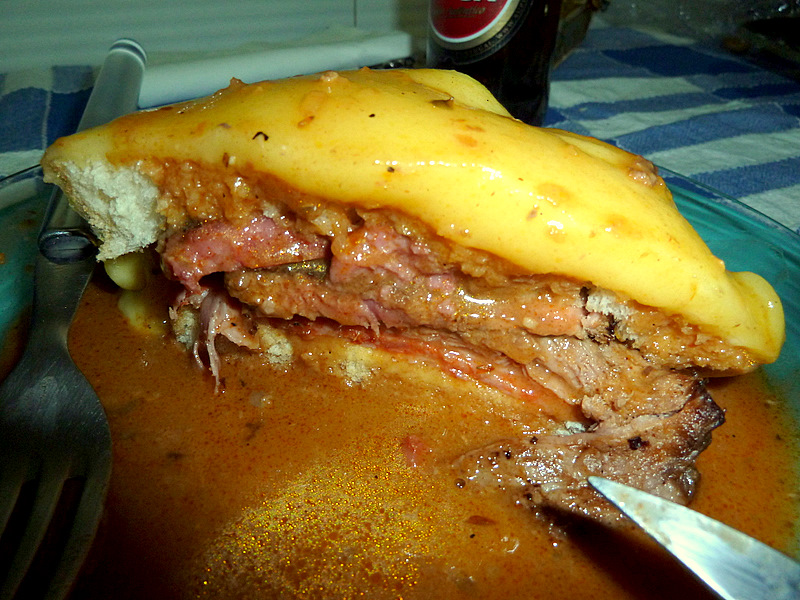 FrancesinhaMeat
🇵🇹 PortugalA layered sandwich from Porto with meats, cheese and a hot beer-tomato sauce
Sandwich or wrap, Lunch, Dinner
FrancesinhaMeat
🇵🇹 PortugalA layered sandwich from Porto with meats, cheese and a hot beer-tomato sauce
Sandwich or wrap, Lunch, Dinner
 FischbrötchenFish or seafood
🇩🇪 GermanyA sandwich of fish and toppings in a bread roll, popular in northern Germany
Sandwich or wrap, Lunch, Snacks
FischbrötchenFish or seafood
🇩🇪 GermanyA sandwich of fish and toppings in a bread roll, popular in northern Germany
Sandwich or wrap, Lunch, Snacks
 ChoripánMeat
🇦🇷 Argentina and 5 moreGrilled chorizo sausage in crusty bread, often topped with sauce
Sandwich or wrap, Snacks, Lunch
ChoripánMeat
🇦🇷 Argentina and 5 moreGrilled chorizo sausage in crusty bread, often topped with sauce
Sandwich or wrap, Snacks, Lunch