
Croque monsieur
In its own language: croque-monsieur
Hot French sandwich of ham and cheese, baked or fried until crisp
Croque monsieur is a classic French sandwich made with ham and cheese, usually Gruyère or Emmental, layered between slices of soft white bread. The sandwich is baked or fried until the cheese melts and the bread turns golden. It is served hot, often as a quick meal in cafés or brasseries.
- First mentioned in French writing in 1891
- Traditionally made with Gruyère or Emmental cheese
- Baked or fried until the cheese forms a crust
- Croque madame adds a poached or fried egg on top
What is Croque monsieur?
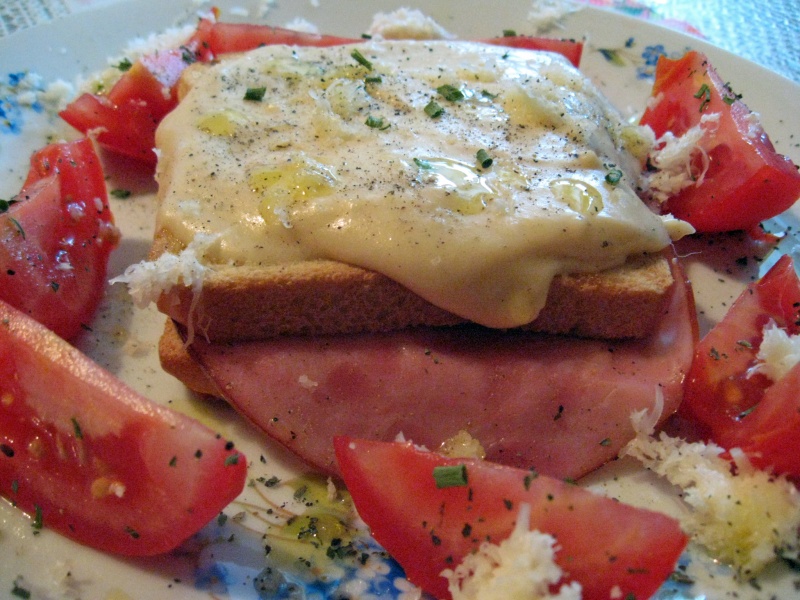
A croque monsieur is a hot sandwich from France, built from slices of soft white bread, ham, and cheese. Gruyère is the traditional cheese, but Emmental or Comté are also used. The sandwich is topped with more grated cheese, sometimes with a little salt and pepper, and then baked or fried until the cheese melts and forms a crisp crust. Some versions include a layer of béchamel sauce. The result is a rich, savory sandwich with a crunchy top and a soft, melting center.
Where does Croque monsieur come from?
The croque monsieur appeared in French writing by the late 19th century. An 1891 magazine describes hungry diners assembling ham, Gruyère, butter, and bread, then frying the sandwiches in a pan. The name means 'mister crunch,' hinting at its crisp texture. Over time, it became a staple in French cafés and brasseries, enjoyed for its simplicity and satisfying flavor.
How is Croque monsieur made?
To make a croque monsieur, slices of pain de mie (a soft, square French loaf) are spread with butter. Ham and cheese are layered between the bread, then the sandwich is topped with more grated cheese and seasoned. It is baked in the oven or fried in a pan until the cheese melts and browns. Some cooks dip the bread in beaten egg before grilling, and a few add béchamel sauce for extra richness.



How and when is Croque monsieur eaten?
Croque monsieur is usually eaten hot, often for lunch or as a snack. It is a common choice in French cafés, where it is served on its own or with a simple salad. The sandwich is meant to be eaten fresh, while the cheese is still melted and the bread crisp. It is a casual, everyday food, enjoyed without ceremony.
Kinds of Croque monsieur
A croque madame is a croque monsieur topped with a poached or fried egg, though some claim it uses chicken instead of ham. In Normandy, it may be called croque-à-cheval. A lighter, vegetarian version with cheese, chives, cucumber, and lettuce is known as croque-mademoiselle. In the United States, the Monte Cristo is a related sandwich, often dipped in egg and fried.
What Croque monsieur means
The croque monsieur is a fixture of French café culture, valued for its quick preparation and comforting taste. Its name and variations have inspired playful takes in France and abroad. The sandwich is not tied to any festival or religious practice, but is part of everyday eating, especially in brasseries and casual restaurants.
Questions people ask about Croque monsieur
What is a croque monsieur made of?
It is made from slices of soft white bread, ham, and cheese—usually Gruyère, Emmental, or Comté—topped with more cheese and sometimes béchamel sauce, then baked or fried.
Where does croque monsieur come from?
Croque monsieur comes from France and has been mentioned in French sources since the late 19th century. It is now a staple in French cafés and brasseries.
How is croque monsieur cooked?
The sandwich is assembled with ham and cheese between buttered bread, topped with more cheese, and then baked in the oven or fried in a pan until the cheese melts and the bread is crisp.
What is the difference between croque monsieur and croque madame?
A croque madame is a croque monsieur with a poached or fried egg on top. Some sources say it may use chicken instead of ham.
Is croque monsieur eaten for a special occasion?
It is an everyday food in France, commonly eaten for lunch or as a snack in cafés, not tied to festivals or religious events.
Good reading and sources
- Croque monsieur on WikipediaEncyclopedia
- More photos on Wikimedia CommonsPhotos
- Wikidata recordOpen data
The facts on this page come from the Wikipedia article "Croque monsieur", written by its contributors and used under the CC BY-SA 4.0 licence, and from its Wikidata record (CC0). Thali rewrote the text in its own words, with AI assistance, and compares every page with the article to make sure no passage is copied. It may be reused under the same CC BY-SA 4.0 licence with a link back.
It may contain mistakes, and it is not dietary or allergy advice: recipes differ from cook to cook. If something is wrong, tell us. Last refreshed 2026-10-03.
More from France
All the food of France Bánh mì
🇻🇳 Vietnam and 5 moreA Vietnamese baguette sandwich with savory fillings and pickled vegetables
Sandwich or wrap, Breakfast, Snacks
Bánh mì
🇻🇳 Vietnam and 5 moreA Vietnamese baguette sandwich with savory fillings and pickled vegetables
Sandwich or wrap, Breakfast, Snacks
 WineVegan
🇬🇪 Georgia and 5 moreAlcoholic drink made by fermenting grape juice in many styles and colors
Drink
WineVegan
🇬🇪 Georgia and 5 moreAlcoholic drink made by fermenting grape juice in many styles and colors
Drink
 Ice cream
🇺🇸 United States and 5 moreA frozen dessert made from sweetened, flavoured milk or cream
Sweet or dessert, Snacks
Ice cream
🇺🇸 United States and 5 moreA frozen dessert made from sweetened, flavoured milk or cream
Sweet or dessert, Snacks
 French friesVeganpommes frites
🇫🇷 France and 5 moreDeep-fried strips of potato, served hot and salted
Street food, Lunch, Dinner
French friesVeganpommes frites
🇫🇷 France and 5 moreDeep-fried strips of potato, served hot and salted
Street food, Lunch, Dinner
Its cousins elsewhere
All sandwiches and wraps Lobster rollFish or seafood
🇺🇸 United StatesLobster meat in a split roll, served warm with butter or cold with mayonnaise
Sandwich or wrap, Lunch, Dinner
Lobster rollFish or seafood
🇺🇸 United StatesLobster meat in a split roll, served warm with butter or cold with mayonnaise
Sandwich or wrap, Lunch, Dinner
 SincronizadaMeat
🇲🇽 MexicoHam and cheese between flour tortillas, grilled and served with salsa or guacamole
Sandwich or wrap, Lunch, Snacks
SincronizadaMeat
🇲🇽 MexicoHam and cheese between flour tortillas, grilled and served with salsa or guacamole
Sandwich or wrap, Lunch, Snacks
 HamburgerMeat
🇺🇸 United States and 1 moreA hot ground meat patty in a sliced bun, often with salad and sauces
Main dish, Lunch, Dinner
HamburgerMeat
🇺🇸 United States and 1 moreA hot ground meat patty in a sliced bun, often with salad and sauces
Main dish, Lunch, Dinner
 Hot dogMeat
🇺🇸 United States and 2 moreA sausage in a sliced bun, topped with condiments and eaten hot
Street food, Lunch, Dinner
Hot dogMeat
🇺🇸 United States and 2 moreA sausage in a sliced bun, topped with condiments and eaten hot
Street food, Lunch, Dinner