
Po' boy
A Louisiana sandwich on crusty French bread with meat or fried seafood fillings
The po' boy is a sandwich from Louisiana, especially New Orleans, made with a split French bread roll and a variety of fillings such as roast meats, hot sausage, or fried seafood. It is often served 'dressed' with lettuce, tomato, pickles, and mayonnaise, and is a staple of casual eating in the region.
- Born in New Orleans, Louisiana in the 1920s
- Made with a special local French bread roll
- Fillings include roast meats or fried seafood
- Often served 'dressed' with lettuce, tomato, and pickles
- Honored each year at the Oak Street Po'Boy Festival
What is Po' boy?
A po' boy is a sandwich built on a long, airy French bread roll with a crisp outer crust and soft inside. The bread is split lengthwise and filled with a choice of meats like roast beef, ham, or hot sausage, or with fried seafood such as shrimp, oysters, or catfish. Toppings often include lettuce, tomato, pickles, and mayonnaise, and cheese is sometimes added. The sandwich can be served plain or 'dressed' with these extras. The fillings and toppings vary, but the bread's light texture and the generous fillings are always central.
Where does Po' boy come from?
The po' boy originated in Louisiana, with New Orleans as its heart. Its name is linked to the 1929 streetcar strike, when the Martin brothers, former conductors turned restaurant owners, served free sandwiches to striking workers, referring to them as 'poor boys.' The bread, developed in the Gulf South due to the humid climate and wheat shortages, was made with more water and less flour, giving it its signature texture. Although the Martin brothers' story is widely repeated, some historians question its accuracy, noting that similar sandwiches like the 'oyster loaf' existed earlier.
How is Po' boy made?
To make a po' boy, a special local French bread is used, known for being light and not too chewy. The roll is sliced open and filled with options such as roast beef (sometimes cooked with gravy or sliced thin and dipped in jus), fried seafood, or other meats like hot sausage or chicken. The sandwich can be 'dressed' with lettuce, tomato, pickles, and mayonnaise, or with melted butter and pickles for seafood versions. Creole mustard and Louisiana hot sauce are also common condiments. Cheese has been a standard addition since the 1930s.


How and when is Po' boy eaten?
Po' boys are eaten throughout the day, often as a quick meal for lunch or dinner, or as a filling snack. They are sold in dedicated sandwich shops, delis, and convenience stores, and are a fixture in New Orleans' casual dining. The sandwich is usually eaten by hand, and locals often have strong opinions about their favorite shops or fillings. At festivals, po' boys are celebrated with music and awards for creative versions. The sandwich is also commonly made at home for everyday meals.
Kinds of Po' boy
The po' boy has many regional and creative versions. Along the Gulf Coast, authentic styles can be found from Houston to the Florida Panhandle. Houston has a version with chowchow, ham, salami, and provolone, created by Lebanese American restaurateurs. In New Orleans, the 'oyster loaf' is a distinct type, and a sandwich with both shrimp and oysters is called a 'peacemaker.' Vietnamese immigrants have influenced some modern po' boys, blending them with bánh mì.
What Po' boy means
The po' boy is a symbol of New Orleans' food culture, representing both its working-class roots and its culinary creativity. It is celebrated annually at the Oak Street Po'Boy Festival, where vendors and chefs showcase new and classic versions. The sandwich is part of daily life, found everywhere from home kitchens to restaurants. Local bakeries like Leidenheimer and Binder are known for their po' boy bread, and debates over the best po' boy shop are common among residents.
Questions people ask about Po' boy
What is a po' boy made of?
A po' boy is built on a long French bread roll and filled with options like roast beef, ham, hot sausage, or fried seafood such as shrimp, oysters, or catfish. It is often topped with lettuce, tomato, pickles, and mayonnaise.
Where did the po' boy originate?
The po' boy comes from Louisiana, especially New Orleans. Its name is linked to a story about feeding striking streetcar workers in 1929, though similar sandwiches existed earlier.
Are there different types of po' boys?
Yes, po' boys come with many fillings, including various meats and seafood. Some versions are called 'oyster loaf' or 'peacemaker,' and Houston has its own style with chowchow and cold cuts.
How is the bread for a po' boy different?
Po' boy bread is a local French bread made with more water and less flour, resulting in a lighter, fluffier texture and a crisp crust. This style was developed in the Gulf South due to the climate and flour shortages.
When do people eat po' boys?
Po' boys are eaten for lunch, dinner, or as a snack. They are a common everyday food in New Orleans and are also celebrated at local festivals.
Good reading and sources
The facts on this page come from the Wikipedia article "Po' boy", written by its contributors and used under the CC BY-SA 4.0 licence, and from its Wikidata record (CC0). Thali rewrote the text in its own words, with AI assistance, and compares every page with the article to make sure no passage is copied. It may be reused under the same CC BY-SA 4.0 licence with a link back.
It may contain mistakes, and it is not dietary or allergy advice: recipes differ from cook to cook. If something is wrong, tell us. Last refreshed 2026-10-03.
More from the United States
All the food of the United States Pizza
🇮🇹 Italy and 4 moreFlatbread topped with tomato, cheese and baked at high heat
Main dish, Lunch, Dinner
Pizza
🇮🇹 Italy and 4 moreFlatbread topped with tomato, cheese and baked at high heat
Main dish, Lunch, Dinner
 HamburgerMeat
🇺🇸 United States and 1 moreA hot ground meat patty in a sliced bun, often with salad and sauces
Main dish, Lunch, Dinner
HamburgerMeat
🇺🇸 United States and 1 moreA hot ground meat patty in a sliced bun, often with salad and sauces
Main dish, Lunch, Dinner
 French friesVeganpommes frites
🇫🇷 France and 5 moreDeep-fried strips of potato, served hot and salted
Street food, Lunch, Dinner
French friesVeganpommes frites
🇫🇷 France and 5 moreDeep-fried strips of potato, served hot and salted
Street food, Lunch, Dinner
 Hot dogMeat
🇺🇸 United States and 2 moreA sausage in a sliced bun, topped with condiments and eaten hot
Street food, Lunch, Dinner
Hot dogMeat
🇺🇸 United States and 2 moreA sausage in a sliced bun, topped with condiments and eaten hot
Street food, Lunch, Dinner
Its cousins elsewhere
All sandwiches and wraps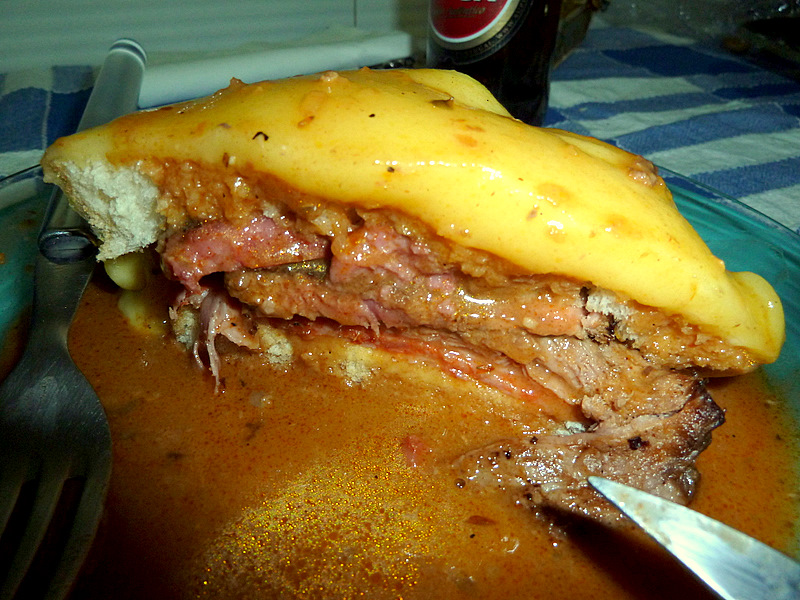 FrancesinhaMeat
🇵🇹 PortugalA layered sandwich from Porto with meats, cheese and a hot beer-tomato sauce
Sandwich or wrap, Lunch, Dinner
FrancesinhaMeat
🇵🇹 PortugalA layered sandwich from Porto with meats, cheese and a hot beer-tomato sauce
Sandwich or wrap, Lunch, Dinner
 GyrosMeatγύρος
🇬🇷 Greece and 3 moreGreek pita wrap with rotisserie meat, tomato, onion, fries and tzatziki
Sandwich or wrap, Lunch, Dinner
GyrosMeatγύρος
🇬🇷 Greece and 3 moreGreek pita wrap with rotisserie meat, tomato, onion, fries and tzatziki
Sandwich or wrap, Lunch, Dinner
 Croque monsieurMeatcroque-monsieur
🇫🇷 FranceHot French sandwich of ham and cheese, baked or fried until crisp
Sandwich or wrap, Lunch, Snacks
Croque monsieurMeatcroque-monsieur
🇫🇷 FranceHot French sandwich of ham and cheese, baked or fried until crisp
Sandwich or wrap, Lunch, Snacks
 ChivitoMeat
🇺🇾 Uruguay and 1 moreUruguay’s signature sandwich with beef, cheese, ham and more in a bun
Sandwich or wrap, Lunch, Dinner
ChivitoMeat
🇺🇾 Uruguay and 1 moreUruguay’s signature sandwich with beef, cheese, ham and more in a bun
Sandwich or wrap, Lunch, Dinner