
Poutine
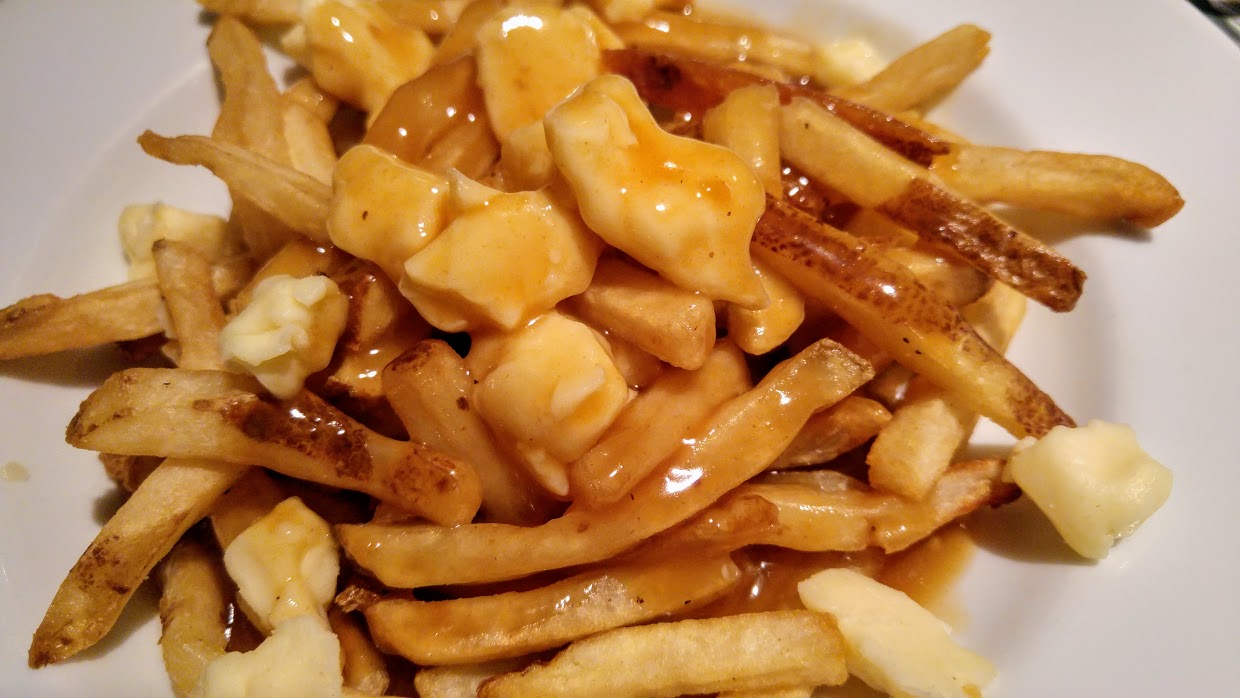
Fries topped with cheese curds and hot brown gravy from Quebec
Poutine is a Quebecois dish made by layering fresh cheese curds and hot brown gravy over crispy French fries. It first appeared in rural Quebec in the late 1950s and is now eaten across Canada, both as a main meal and a side. Its signature is the mix of textures: soft fries, squeaky curds, and savory sauce.
- Created in rural Quebec in the late 1950s
- Made with fries, cheese curds, and brown gravy
- Fresh curds are key for the squeaky texture
- Served hot in diners, fast food, and specialty shops
- Many regional and creative versions exist
What is Poutine?
Poutine is a dish where hot, crisp French fries are covered with fresh cheese curds and finished with a ladle of warm brown gravy. The cheese curds are soft and squeaky, giving a unique texture that stands out against the fries. The gravy, made from beef or chicken stock, is poured on just before serving so the curds soften but do not fully melt. The combination creates a rich, salty, and satisfying plate, with each bite offering a mix of crunchy, gooey, and smooth.
Where does Poutine come from?
Poutine began in rural Quebec during the late 1950s, with several small towns claiming to be its birthplace. Restaurants in Warwick, Drummondville, and Princeville each tell a different story about how fries, cheese curds, and gravy came together. Some say it started when customers asked for cheese curds to be added to their fries, while others credit the first full combination to a Drummondville drive-in. The name 'poutine' likely comes from local slang for 'mess' or from the English word 'pudding', but its exact roots are debated.
How is Poutine made?
To make poutine, cooks start with fries that are golden and crisp on the outside but soft inside. Fresh cheese curds, ideally less than a day old for their signature squeak, are scattered over the fries. Hot brown gravy, thin and lightly seasoned, is poured over the top just before serving. The timing is important: the heat from the gravy warms the curds without melting them completely, preserving their texture. The dish is served in a bowl or deep plate to keep everything warm.


How and when is Poutine eaten?
Poutine is eaten hot, often as a quick meal or snack. It is found in diners, fast-food chains, and specialty shops called poutineries. In Quebec, it is a familiar sight at roadside stands, hockey arenas, and late-night eateries. People enjoy it on its own or as a side, and it is sometimes paired with other comfort foods. The dish is popular at gatherings and festivals, especially in Quebec, but has spread throughout Canada and beyond.
Kinds of Poutine
Many versions of poutine exist. Some add meats like sausage, chicken, or smoked brisket, while others swap fries for sweet potato or use different cheeses when curds are hard to find. Vegetarian gravies are common, and toppings can range from green peas to pulled pork or even foie gras. In cities with diverse populations, poutine may be inspired by global flavors, with sauces and toppings from various cuisines. Fast-food chains and gourmet restaurants alike have created their own takes.
What Poutine means
Once seen as simple rural fare, poutine is now a symbol of Quebec identity and pride. It features at annual festivals in cities like Montreal and Quebec City, and has become a staple across Canada. Its popularity has sparked debates about cultural ownership and national identity. Poutine is celebrated for its humble origins and adaptability, and some consider it a food category in its own right, much like sandwiches or dumplings.
Questions people ask about Poutine
What is poutine made of?
Poutine is made by layering hot French fries with fresh cheese curds and pouring warm brown gravy over the top. The cheese curds are usually made from cheddar and should be very fresh for the right texture.
Where did poutine originate?
Poutine started in Quebec, Canada, in the late 1950s. Several towns in the Centre-du-Québec region claim to have invented it, but there is no single agreed origin story.
Is poutine always made with meat gravy?
Traditional poutine uses a beef or chicken-based brown gravy, but vegetarian versions are common, especially outside Quebec. The key is that the gravy is hot and poured over the fries and curds just before serving.
Can you get poutine outside Quebec?
Yes, poutine is now served across Canada and in some parts of the United States, especially in areas near the Canadian border. Many fast-food chains and restaurants offer their own versions.
What makes the cheese curds in poutine special?
The cheese curds are fresh, usually less than a day old, which gives them a soft, squeaky texture. This freshness is important for the authentic poutine experience.
Good reading and sources
- Encyclopaedia BritannicaArticle
- Where to Find NYC’s Newest PoutineEater, Article
- There's No Drunk Food Like Disco FriesSaveur, Article
The facts on this page come from the Wikipedia article "Poutine", written by its contributors and used under the CC BY-SA 4.0 licence, and from its Wikidata record (CC0). Thali rewrote the text in its own words, with AI assistance, and compares every page with the article to make sure no passage is copied. It may be reused under the same CC BY-SA 4.0 licence with a link back.
It may contain mistakes, and it is not dietary or allergy advice: recipes differ from cook to cook. If something is wrong, tell us. Last refreshed 2026-10-03.
More from Canada
All the food of Canada ShawarmaMeatشاورما
🇸🇾 Syria and 5 moreMeat roasted on a vertical spit and sliced into flatbread with sauces and vegetables
Street food, Lunch, Dinner
ShawarmaMeatشاورما
🇸🇾 Syria and 5 moreMeat roasted on a vertical spit and sliced into flatbread with sauces and vegetables
Street food, Lunch, Dinner
 Fish and chipsFish or seafood
🇬🇧 United Kingdom and 8 moreBattered fried fish served hot with thick-cut chips
Main dish, Lunch, Dinner
Fish and chipsFish or seafood
🇬🇧 United Kingdom and 8 moreBattered fried fish served hot with thick-cut chips
Main dish, Lunch, Dinner
 MuktukMeat
🇬🇱 Greenland and 1 moreWhale skin and blubber eaten by Inuit and other Arctic peoples
Main dish, Snacks
MuktukMeat
🇬🇱 Greenland and 1 moreWhale skin and blubber eaten by Inuit and other Arctic peoples
Main dish, Snacks
 Thanksgiving dinnerMeat
🇺🇸 United States and 2 moreA holiday meal centered on roast turkey with a variety of side dishes and desserts
Main dish, Dinner
Thanksgiving dinnerMeat
🇺🇸 United States and 2 moreA holiday meal centered on roast turkey with a variety of side dishes and desserts
Main dish, Dinner
Its cousins elsewhere
All main dishes Shepherd's pieMeatcottage pie
🇬🇧 United Kingdom and 5 moreBaked dish of minced meat under a layer of mashed potato
Main dish, Lunch, Dinner
Shepherd's pieMeatcottage pie
🇬🇧 United Kingdom and 5 moreBaked dish of minced meat under a layer of mashed potato
Main dish, Lunch, Dinner
 Meat pieMeat
🇦🇺 Australia and 1 moreHandheld savoury pie with meat and gravy in a pastry crust, popular in Australia and New Zealand
Main dish, Lunch, Dinner
Meat pieMeat
🇦🇺 Australia and 1 moreHandheld savoury pie with meat and gravy in a pastry crust, popular in Australia and New Zealand
Main dish, Lunch, Dinner
 Pizza
🇮🇹 Italy and 4 moreFlatbread topped with tomato, cheese and baked at high heat
Main dish, Lunch, Dinner
Pizza
🇮🇹 Italy and 4 moreFlatbread topped with tomato, cheese and baked at high heat
Main dish, Lunch, Dinner
 Sushi寿司
🇯🇵 JapanVinegared rice paired with seafood, vegetables or other toppings
Main dish, Lunch, Dinner
Sushi寿司
🇯🇵 JapanVinegared rice paired with seafood, vegetables or other toppings
Main dish, Lunch, Dinner