
Roast goose
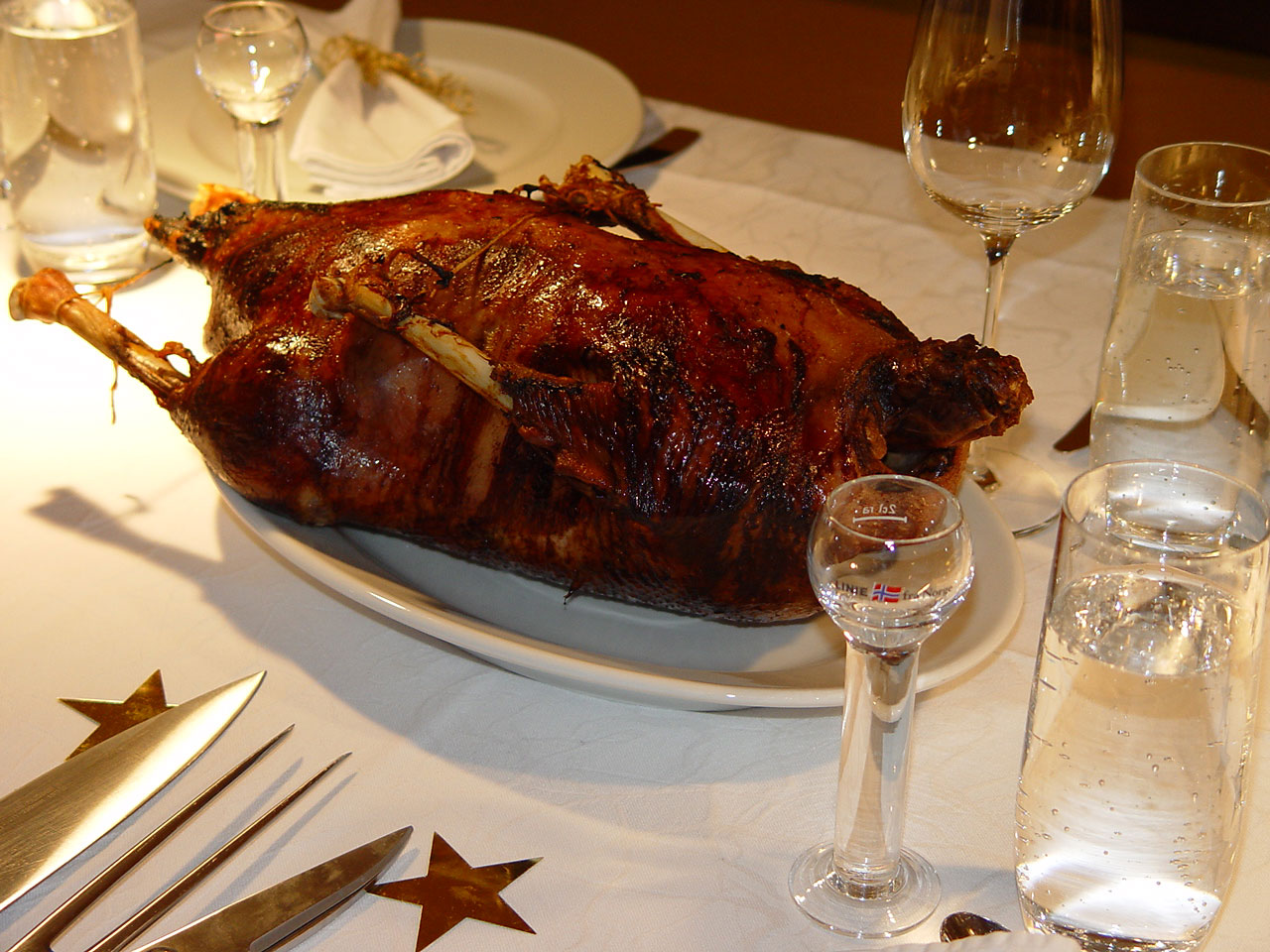
Whole goose roasted until the skin is crisp and the meat tender
Roast goose is a dish where a whole goose is cooked using dry heat, often until the skin is crisp and the meat juicy. It is found in Cantonese cuisine as well as in European holiday meals, especially in Germany and the UK. Stuffings and seasonings vary, and it is often served with sauces or gravies.
- A classic main dish for Christmas in Germany and other parts of Europe
- Cantonese roast goose is famous for its crisp skin and juicy meat
- Often stuffed with apples, chestnuts, prunes, or onions in Europe
- Rendered goose fat is saved for roasting potatoes or making pastry
- Kars style roast goose is a specialty of the Kars region in Turkey
What is Roast goose?
Roast goose is made by cooking a whole goose using dry heat, so that hot air surrounds the bird and cooks it evenly. The result is a dish with crisp, golden-brown skin and tender, juicy meat. In Cantonese cuisine, it is often roasted over charcoal and served with plum sauce. In Europe, it is commonly stuffed with fruit or chestnuts and seasoned with herbs. The rendered goose fat is prized for its rich flavor and is sometimes saved for other dishes.
Where does Roast goose come from?
Roast goose appears in several food traditions. In China, especially in Guangdong and Hong Kong, it is a popular variety of siu mei, or roasted meats. In Europe, roast goose has long been a festive centerpiece, especially for Christmas and St. Martin's Day, with Germany being particularly known for this custom. In Turkey, Kars style roast goose is a well-known regional specialty. In the United States, it is less common and often replaced by turkey for holiday meals.
How is Roast goose made?
The goose is cleaned and often stuffed with apples, chestnuts, prunes, or onions. It is seasoned with salt, pepper, and sometimes herbs like marjoram or mugwort. In Cantonese cooking, the goose is roasted over high heat, often in a charcoal furnace, to achieve a crisp skin. In European kitchens, it is typically roasted in an oven. The process renders a large amount of goose fat, which can be collected and used in other recipes.



How and when is Roast goose eaten?
Roast goose is usually served hot as a main dish, especially at festive dinners. In Germany and other parts of Europe, it is a traditional Christmas or St. Martin's Day meal, often accompanied by red cabbage, dumplings (Klöße), and gravy. In China, it is enjoyed year-round but is especially popular in Guangdong and Hong Kong, where it is served with plum sauce. Leftover roast goose is sometimes used in meals after Christmas, such as on Boxing Day.
Kinds of Roast goose
Stuffings and seasonings differ by region. European versions often use apples, chestnuts, prunes, and onions, with herbs like marjoram or mugwort. Cantonese roast goose is known for its crisp skin and is typically unstuffed, served with plum sauce. Kars style roast goose from Turkey is a local specialty with its own preparation methods. Some recipes focus on collecting the rendered fat for use in other dishes.
What Roast goose means
Roast goose holds a special place in holiday traditions, especially in Germany and other European countries, where it is tied to Christmas and St. Martin's Day. In China, it is a beloved dish in Cantonese cuisine, with surveys showing it as a favorite in Guangzhou. The rendered fat is valued for cooking, and the dish is often seen as a festive or luxurious meal due to the size and cost of the bird.
When Roast goose is on the table
Questions people ask about Roast goose
What is roast goose made of?
Roast goose is made from a whole goose, often seasoned with salt, pepper, and herbs. European versions may include stuffing such as apples, chestnuts, prunes, or onions. In Cantonese cuisine, it is usually served with plum sauce.
Where does roast goose come from?
Roast goose is found in several cuisines, including Cantonese (China), European (especially Germany and the UK), and Turkey. It is a traditional dish for holidays in Europe and a popular roasted meat in southern China.
When is roast goose usually eaten?
In Europe, roast goose is commonly served for Christmas and St. Martin's Day. In China, particularly in Guangdong and Hong Kong, it is enjoyed year-round and is a favorite dish in local cuisine.
What does roast goose taste like?
Roast goose has a distinct, rich flavor. The skin becomes crisp during roasting, while the meat stays juicy and tender. The taste can be enhanced by seasonings, stuffing, or sauces like plum sauce.
What are common side dishes or accompaniments?
In Europe, roast goose is often served with red cabbage, dumplings (Klöße), and gravy. In Cantonese cuisine, it is typically paired with plum sauce.
Good reading and sources
The facts on this page come from the Wikipedia article "Roast goose", written by its contributors and used under the CC BY-SA 4.0 licence, and from its Wikidata record (CC0). Thali rewrote the text in its own words, with AI assistance, and compares every page with the article to make sure no passage is copied. It may be reused under the same CC BY-SA 4.0 licence with a link back.
It may contain mistakes, and it is not dietary or allergy advice: recipes differ from cook to cook. If something is wrong, tell us. Last refreshed 2026-10-03.
More from China
All the food of China Pasta
🇮🇹 Italy and 1 moreUnleavened dough shaped and cooked, a staple of Italian cuisine
Main dish, Lunch, Dinner
TofuVegan豆腐
🇨🇳 China and 5 moreSoft white blocks made by curdling soy milk and pressing the curds
Main dish
Pasta
🇮🇹 Italy and 1 moreUnleavened dough shaped and cooked, a staple of Italian cuisine
Main dish, Lunch, Dinner
TofuVegan豆腐
🇨🇳 China and 5 moreSoft white blocks made by curdling soy milk and pressing the curds
Main dish
 Tofu skin roll
🇨🇳 ChinaTofu skin wrapped around a savoury filling, served steamed or fried as dim sum
Main dish, Lunch, Dinner
Tofu skin roll
🇨🇳 ChinaTofu skin wrapped around a savoury filling, served steamed or fried as dim sum
Main dish, Lunch, Dinner
 Mu kropMeat
🇹🇭 Thailand and 4 moreThai-style fried pork belly with a crunchy golden skin
Main dish, Lunch, Dinner
Mu kropMeat
🇹🇭 Thailand and 4 moreThai-style fried pork belly with a crunchy golden skin
Main dish, Lunch, Dinner
Its cousins elsewhere
All main dishes Steak tartareMeat
🇫🇷 France and 5 moreRaw minced beef, seasoned and often topped with a raw egg yolk
Main dish, Lunch, Dinner
Steak tartareMeat
🇫🇷 France and 5 moreRaw minced beef, seasoned and often topped with a raw egg yolk
Main dish, Lunch, Dinner
 ĆevapiMeatћевапи
🇧🇦 Bosnia and Herzegovina and 5 moreGrilled minced meat rolls served with flatbread and onions in Southeast Europe
Main dish, Lunch, Dinner
ĆevapiMeatћевапи
🇧🇦 Bosnia and Herzegovina and 5 moreGrilled minced meat rolls served with flatbread and onions in Southeast Europe
Main dish, Lunch, Dinner
 BratwurstMeat
🇩🇪 Germany and 3 moreGerman sausage made from pork, veal, or beef, often grilled and served in a bread roll
Main dish, Lunch, Dinner
BratwurstMeat
🇩🇪 Germany and 3 moreGerman sausage made from pork, veal, or beef, often grilled and served in a bread roll
Main dish, Lunch, Dinner
 SosatieMeat
🇿🇦 South AfricaSouth African skewers of marinated meat, often cooked over a fire
Main dish, Dinner, Lunch
SosatieMeat
🇿🇦 South AfricaSouth African skewers of marinated meat, often cooked over a fire
Main dish, Dinner, Lunch