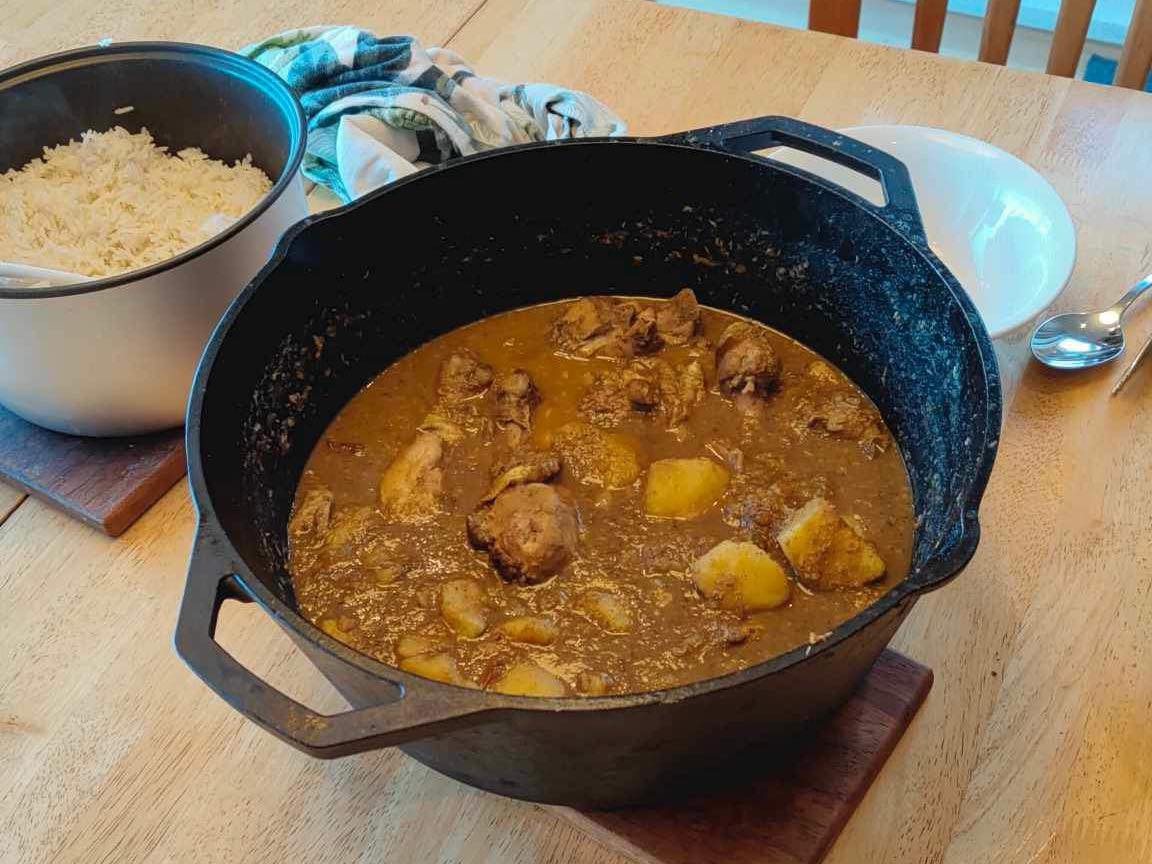
Xacuti
In its own language: शागोती
Goan curry with coconut, poppy seeds and a blend of spices
Xacuti is a richly spiced curry from Goa, India, made with meats like chicken, crab, lamb or beef. Its sauce combines toasted coconut, white poppy seeds, onions, dried red chillies and a mix of spices, creating a complex and aromatic dish often enjoyed with rice.
- Originated in Goa, India, especially Arambol village
- Made with toasted coconut, poppy seeds and a blend of spices
- Commonly prepared with chicken, crab, lamb or beef
- Known as 'chacuti' in Portuguese
What is Xacuti?
Xacuti is a curry from Goa, India, known for its deep, layered flavors. The dish features a sauce made by blending toasted grated coconut, white poppy seeds, onions and dried red chillies with a range of spices such as black peppercorns, turmeric, nutmeg, cinnamon and cloves. It is usually cooked with chicken, crab, lamb or beef, resulting in a thick, aromatic stew. The curry has a warm yellow-brown color and a rich, spicy aroma, with a balance of heat and earthiness from the coconut and spices.
Where does Xacuti come from?
Xacuti is believed to have originated in Harmal village (now Arambol) in the Pernem region of Goa. The dish began as a fishermen’s preparation, where a spiced sauce was made using local ingredients like coconut, poppy seeds and a variety of spices. This sauce was then paired with freshly caught fish or chicken. Over time, xacuti became a staple in Goan cooking and is also known by its Portuguese name, chacuti, reflecting the region’s colonial history.
How is Xacuti made?
To make xacuti, cooks start by toasting grated coconut and white poppy seeds until aromatic. These are ground together with sliced onions, dried red chillies and spices such as black peppercorns, turmeric, nutmeg, cinnamon and cloves. The resulting paste forms the base of the curry. Meat—commonly chicken, crab, lamb or beef—is simmered in this sauce until tender, allowing the flavors to meld and the sauce to thicken.
How and when is Xacuti eaten?
Xacuti is typically served as a main dish for lunch or dinner. In Goa, it is often enjoyed with steamed rice, which helps soak up the rich, spicy sauce. The curry is eaten in homes and local restaurants alike, and is a regular part of everyday meals rather than being reserved for special occasions. The dish is hearty and filling, making it well-suited to family gatherings and communal dining.
Kinds of Xacuti
While chicken and crab are common, xacuti can also be made with lamb or beef, depending on local preference or availability. The basic sauce remains the same, but cooks may adjust the blend of spices or the level of heat by varying the amount of chillies. Some versions use fish, reflecting its origins among coastal fishermen. The Portuguese name 'chacuti' is sometimes used, especially in historical or colonial contexts.
What Xacuti means
Xacuti is a well-known part of Goan cuisine, reflecting the region’s blend of Indian and Portuguese influences. Its complex spicing and use of coconut are typical of coastal Goan dishes. The curry is not tied to any particular festival or religious practice, but is a staple of everyday meals, showing the importance of spice blends and local ingredients in Goan food traditions.
Questions people ask about Xacuti
What is xacuti made of?
Xacuti is made with meats like chicken, crab, lamb or beef, cooked in a sauce of toasted coconut, white poppy seeds, onions, dried red chillies and a blend of spices such as black peppercorns, turmeric, nutmeg, cinnamon and cloves.
Where does xacuti come from?
Xacuti comes from Goa, a coastal region in India. It is believed to have originated in the village of Arambol, where local fishermen first prepared it.
Is xacuti always spicy?
Xacuti has a complex, spicy flavor from dried red chillies and a mix of spices, but the heat level can vary. Some cooks adjust the amount of chillies to make it milder or hotter.
What is usually served with xacuti?
Xacuti is typically served with steamed rice, which helps balance the rich and spicy sauce. It is eaten as a main dish for lunch or dinner.
What meats are used in xacuti?
Chicken and crab are common, but xacuti can also be made with lamb, beef or even fish, depending on local preference and availability.
Good reading and sources
The facts on this page come from the Wikipedia article "Xacuti", written by its contributors and used under the CC BY-SA 4.0 licence, and from its Wikidata record (CC0). Thali rewrote the text in its own words, with AI assistance, and compares every page with the article to make sure no passage is copied. It may be reused under the same CC BY-SA 4.0 licence with a link back.
It may contain mistakes, and it is not dietary or allergy advice: recipes differ from cook to cook. If something is wrong, tell us. Last refreshed 2026-10-03.
More from India
All the food of India Kebabكَبَاب
🇹🇷 Turkey and 5 moreGrilled or roasted meat, often on skewers, found across the Middle East and beyond
Main dish, Lunch, Dinner
Kebabكَبَاب
🇹🇷 Turkey and 5 moreGrilled or roasted meat, often on skewers, found across the Middle East and beyond
Main dish, Lunch, Dinner
 Biryani
🇮🇳 India and 5 moreRice and spiced meat or vegetables layered and cooked together
Main dish, Lunch, Dinner
Biryani
🇮🇳 India and 5 moreRice and spiced meat or vegetables layered and cooked together
Main dish, Lunch, Dinner
 French toast
🇫🇷 France and 5 moreBread soaked in egg and milk, pan-fried and served sweet or savoury
Main dish, Breakfast, Snacks
French toast
🇫🇷 France and 5 moreBread soaked in egg and milk, pan-fried and served sweet or savoury
Main dish, Breakfast, Snacks
 Fish and chipsFish or seafood
🇬🇧 United Kingdom and 8 moreBattered fried fish served hot with thick-cut chips
Main dish, Lunch, Dinner
Fish and chipsFish or seafood
🇬🇧 United Kingdom and 8 moreBattered fried fish served hot with thick-cut chips
Main dish, Lunch, Dinner
Its cousins elsewhere
All main dishes SosatieMeat
🇿🇦 South AfricaSouth African skewers of marinated meat, often cooked over a fire
Main dish, Dinner, Lunch
SosatieMeat
🇿🇦 South AfricaSouth African skewers of marinated meat, often cooked over a fire
Main dish, Dinner, Lunch
 GiouvetsiMeatγιουβέτσι
🇬🇷 GreeceGreek baked meat and pasta in tomato sauce, cooked in a clay pot
Main dish, Lunch, Dinner
GiouvetsiMeatγιουβέτσι
🇬🇷 GreeceGreek baked meat and pasta in tomato sauce, cooked in a clay pot
Main dish, Lunch, Dinner
 BarbacoaMeat
🇲🇽 Mexico and 3 moreMeat slow-cooked in a pit lined with agave or banana leaves
Main dish, Lunch, Dinner
BarbacoaMeat
🇲🇽 Mexico and 3 moreMeat slow-cooked in a pit lined with agave or banana leaves
Main dish, Lunch, Dinner
 PachamancaMeat
🇵🇪 Peru and 1 moreAndean meats and vegetables slow-cooked with hot stones in an earthen oven
Main dish, Lunch, Dinner
PachamancaMeat
🇵🇪 Peru and 1 moreAndean meats and vegetables slow-cooked with hot stones in an earthen oven
Main dish, Lunch, Dinner