
Zeppole
Italian deep-fried dough balls, sweet or savory, often filled or topped
Zeppole are Italian pastries made from balls of deep-fried dough, most often dusted with powdered sugar and sometimes filled with custard, jelly, or cream. They are especially popular for Saint Joseph's Day in Italy, but can also be found in Malta and in Italian communities abroad, with both sweet and savory versions.
- Zeppole are deep-fried dough balls, often filled or topped with sweet or savory ingredients.
- They are especially associated with Saint Joseph's Day in Italy.
- Savory versions with anchovy are common in southern Italy and Malta.
- Sardinia has a spiral-shaped version called tzípulas.
- Zeppole are popular in Italian communities outside Italy.
What is Zeppole?
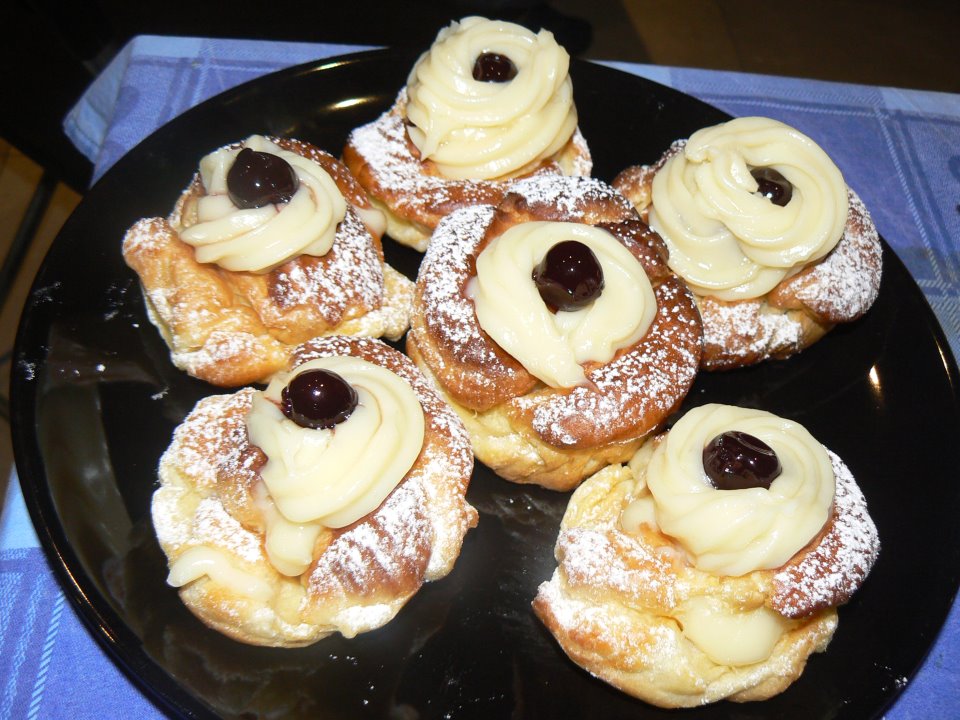
Zeppole are round Italian pastries, usually about the size of a small apple, made by frying balls of dough. The outside is often dusted with powdered sugar, and the inside may be left plain or filled with custard, fruit preserves, or a creamy filling. Some versions use a butter and honey mixture as a filling. The texture can range from airy and light to more dense, depending on the recipe. While most are sweet, there are also savory types, sometimes filled with anchovy or sultana. Zeppole are enjoyed both as a treat from bakeries and as street food during festivals.
Where does Zeppole come from?
The tradition of frying dough in Italy dates back to ancient Rome, where people would sweeten it with sugar or cinnamon. The modern form of zeppole appeared in the 1700s, especially in cities like Naples, Rome, and Lecce. The pastry became closely linked to Saint Joseph's Day, a Catholic holiday in March, and was popularized in Naples by baker Pasquale Pintauro in the 19th century. Zeppole are also found in Sicily, Malta, and among Italian communities in North America. In Sardinia, a similar treat called tzípulas is made, but with a spiral shape created by pouring the dough through a funnel.
How is Zeppole made?
To make zeppole, a soft dough is shaped into balls and fried in hot oil until golden. After frying, they are often sprinkled with powdered sugar. Many are filled with custard, jelly, or a creamy mixture, while others use butter and honey. Savory zeppole, especially in southern Italy and Malta, may have anchovy or sultana inside. Some versions, like those called bignè di San Giuseppe or sfinge, use choux pastry and are baked rather than fried. The Sardinian tzípulas are made by pouring dough in a spiral through a funnel into the oil.

How and when is Zeppole eaten?
Zeppole are most commonly eaten during Saint Joseph's Day celebrations in March, when they are sold on the streets and given as gifts. In Sardinia, a similar pastry is enjoyed at Carnival. In Malta, the savory version is eaten during Lent. Zeppole are also part of everyday life in Italian bakeries and are enjoyed as a snack or with tea. In Calabria, savory zeppole with anchovy or sultana are eaten at the turn of the year. They can be served plain, filled, or topped, depending on local custom.
Kinds of Zeppole
There are many regional and local versions of zeppole. In Rome, they are sometimes called bignè di San Giuseppe and made with choux pastry. In Sardinia, tzípulas are made using a funnel to create a spiral shape. Savory zeppole filled with anchovy are common in southern Italy and Malta, especially during Lent. Some are filled with sultana instead. The word zeppole can also refer to baked cream puffs in some areas. Each region brings its own twist to the dough, filling, and shape.
What Zeppole means
Zeppole hold a special place in Italian Catholic tradition, especially for Saint Joseph's Day, when they are widely shared and sold. The pastry is a symbol of the festival and is often prepared at home or bought from street vendors. In Sardinia, the related tzípulas are tied to Carnival celebrations. In Malta, the savory version is linked to Lent. The spread of zeppole to North America reflects the migration of Italian communities, who brought their festive foods with them. The pastry's many names and forms show its deep roots in Italian regional culture.
When Zeppole is on the table
Questions people ask about Zeppole
What are zeppole made of?
Zeppole are made from a dough that is deep-fried, then often dusted with powdered sugar. They may be filled with custard, jelly, pastry cream, butter and honey, or sometimes anchovy or sultana for savory versions.
Where do zeppole come from?
Zeppole come from Italy, with strong traditions in cities like Naples, Rome, and Lecce. They are also found in Sicily, Sardinia, Malta, and in Italian communities in North America.
Are zeppole always sweet?
While most zeppole are sweet and filled or topped with ingredients like custard or jelly, there are also savory versions, especially in southern Italy and Malta, which may contain anchovy or sultana.
When are zeppole usually eaten?
Zeppole are especially popular during Saint Joseph's Day in March, but they are also enjoyed at Carnival in Sardinia, during Lent in Malta, and as a snack or treat throughout the year.
What is the difference between zeppole and tzípulas?
Tzípulas are a Sardinian variation of zeppole, made by pouring dough in a spiral through a funnel into hot oil, giving them a different shape and texture.
Good reading and sources
The facts on this page come from the Wikipedia article "Zeppole", written by its contributors and used under the CC BY-SA 4.0 licence, and from its Wikidata record (CC0). Thali rewrote the text in its own words, with AI assistance, and compares every page with the article to make sure no passage is copied. It may be reused under the same CC BY-SA 4.0 licence with a link back.
It may contain mistakes, and it is not dietary or allergy advice: recipes differ from cook to cook. If something is wrong, tell us. Last refreshed 2026-10-03.
More from Italy
All the food of Italy Pizza
🇮🇹 Italy and 4 moreFlatbread topped with tomato, cheese and baked at high heat
Main dish, Lunch, Dinner
Pizza
🇮🇹 Italy and 4 moreFlatbread topped with tomato, cheese and baked at high heat
Main dish, Lunch, Dinner
 Ice cream
🇺🇸 United States and 5 moreA frozen dessert made from sweetened, flavoured milk or cream
Sweet or dessert, Snacks
Ice cream
🇺🇸 United States and 5 moreA frozen dessert made from sweetened, flavoured milk or cream
Sweet or dessert, Snacks
 TiramisuVegetariantiramisù
🇮🇹 ItalyCoffee-soaked ladyfingers layered with mascarpone cream and cocoa powder
Sweet or dessert
TiramisuVegetariantiramisù
🇮🇹 ItalyCoffee-soaked ladyfingers layered with mascarpone cream and cocoa powder
Sweet or dessert
 Hot chocolate
🇲🇽 Mexico and 5 moreA warm drink made from chocolate or cocoa, milk or water, and sugar
Drink, Breakfast, Snacks
Hot chocolate
🇲🇽 Mexico and 5 moreA warm drink made from chocolate or cocoa, milk or water, and sugar
Drink, Breakfast, Snacks
Its cousins elsewhere
All pies and savoury pastries Egg tartVegetarian蛋撻
🇨🇳 China and 5 moreA small pastry tart with a sweet egg custard filling, found in Cantonese cuisine
Pie or savoury pastry, Snacks, Tea time
Egg tartVegetarian蛋撻
🇨🇳 China and 5 moreA small pastry tart with a sweet egg custard filling, found in Cantonese cuisine
Pie or savoury pastry, Snacks, Tea time
 Alfajor
🇦🇷 Argentina and 4 moreSweet biscuits or pastry joined with a filling, often dulce de leche or honey and nuts
Sweet or dessert, Snacks
Halvaحَلَاوَة
🇮🇷 Iran and 5 moreDense sweet made from seeds, grains, or vegetables, found across Asia, Africa, and Europe
Sweet or dessert, Snacks, Tea time
Alfajor
🇦🇷 Argentina and 4 moreSweet biscuits or pastry joined with a filling, often dulce de leche or honey and nuts
Sweet or dessert, Snacks
Halvaحَلَاوَة
🇮🇷 Iran and 5 moreDense sweet made from seeds, grains, or vegetables, found across Asia, Africa, and Europe
Sweet or dessert, Snacks, Tea time
 BaklavaVegetarianباقلوا
🇹🇷 Turkey and 5 moreThin pastry filled with nuts and soaked in sweet syrup
Sweet or dessert, Tea time, Snacks
BaklavaVegetarianباقلوا
🇹🇷 Turkey and 5 moreThin pastry filled with nuts and soaked in sweet syrup
Sweet or dessert, Tea time, Snacks