Courses and styles of service
Afternoon tea
The British mid-afternoon meal of tea with small sandwiches, scones with cream and jam, and cakes, served in tiers and eaten in that order.
Presented by ClearTrust Free for cooks, travellers and the curious.
Afternoon tea is a light meal taken at about four o'clock. A pot of tea comes with a tiered stand: finger sandwiches at the bottom, scones in the middle, cakes and pastries on top. Few people in Britain have it daily now. It is a treat, taken in hotels and tea rooms for birthdays and visits.

What it is
The sandwiches are small, crustless and mild: cucumber, egg and cress, smoked salmon, ham or cheese. The scones are served warm with clotted cream and strawberry jam. The top tier holds small cakes and tarts. A simpler version with only scones, cream, jam and tea is a cream tea, a speciality of Devon and Cornwall. High tea is something else: a hearty early evening meal with hot dishes, eaten at a dining table, and historically a working family's supper.
Where it comes from
Tea became fashionable in Britain in the seventeenth century and affordable in the nineteenth. One common account credits Anna, Duchess of Bedford, in the 1840s, with starting the habit of tea and something to eat in the long gap between an early lunch and a late dinner. Whether or not she was first, the custom spread through fashionable drawing rooms in Victoria's reign and then to hotels and tea rooms open to the public.
How it works
You book a table, usually for a sitting between two and five. You choose a tea from a list, and it is brought in a pot with a strainer. Milk goes in black tea. It does not go in green or herbal tea. You eat from the bottom tier upward: savoury, then scones, then sweets. Scones are split by hand, and each half is spread separately. Devon puts cream first, then jam. Cornwall puts jam first.
How to do it
- Book ahead at hotels. Popular rooms fill weeks in advance.
- Let the tea brew for a few minutes before pouring through the strainer.
- Start with the sandwiches and work upward.
- Break the scone in two with your hands and dress each half.
- Ask for more sandwiches or tea. Refills are often included.
Good manners
- Stir tea back and forth quietly. Do not clink the cup.
- Do not sandwich the scone halves back together.
- Check the dress code. Some hotels ask for smart clothes.
What is eaten
 SconeA quick bread, sweet or savoury, served with tea in Britain and beyond
 Tea sandwichSmall, crustless sandwiches served at afternoon tea
 Clotted creamA thick, rich cream formed by gently heating and cooling cow’s milk
 Sponge cakeA light, airy cake made with eggs, flour and sugar, often served plain or with fillings
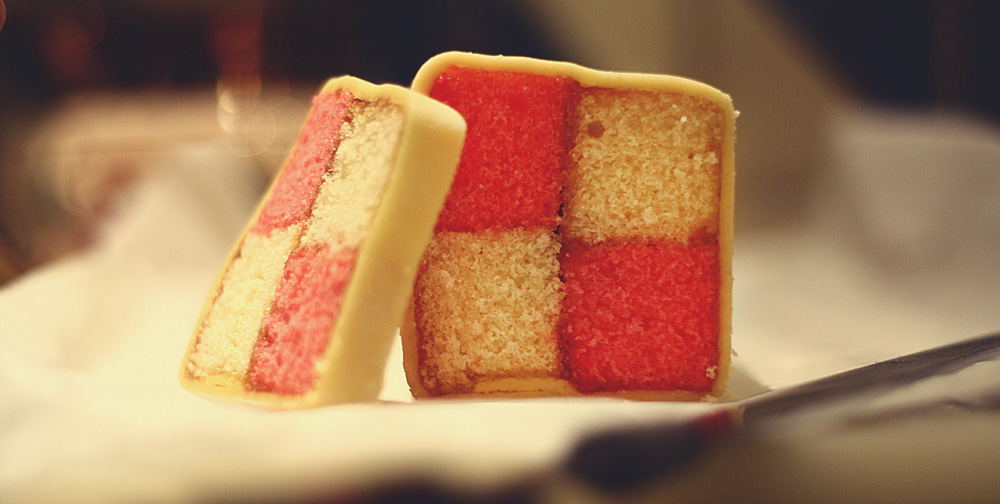 Battenberg cakeChequered pink and yellow sponge cake wrapped in marzipan
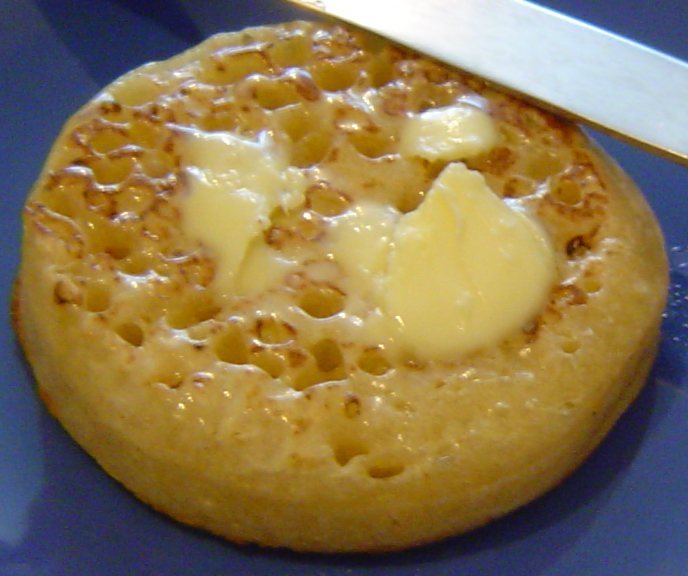 CrumpetRound, spongy griddle bread with a porous top, often eaten toasted with butter
 ShortbreadCrumbly Scottish biscuit made with butter, flour and sugarCucumber sandwichThin cucumber slices between buttered bread, a classic for British afternoon tea
 Cream teaAfternoon tea with scones, clotted cream and strawberry jam
Sources and further reading
Original text by the Thali desk, written with AI assistance and checked against the sources above. Customs vary from place to place. If we have something wrong, tell us.
Photo credits on this page
The small pictures above come from Wikimedia Commons under free licences. Some are cropped to fit.
- Cucumber sandwich: Bit Boy, CC BY 2.0, source
- Cream tea: ( Liyster ), CC BY 3.0, source
- Scone: Benson Kua, CC BY-SA 2.0, source
- Sponge cake: Unknown author, CC BY-SA 2.0, source
- Battenberg cake: Henrycooksey, CC BY 3.0, source
- Clotted cream: Biggishben, CC BY-SA 3.0, source
- Crumpet: Unknown author, CC BY-SA 3.0, source
- Shortbread: User:Dave souza, CC BY-SA 2.5, source