Sacred and ceremonial meals
Shabbat dinner
The Friday night meal that welcomes the Jewish Sabbath, with candles, a blessing over wine, two braided loaves and an unhurried family table.
Presented by ClearTrust Free for cooks, travellers and the curious.
Shabbat, the Jewish day of rest, begins at sunset on Friday and ends after nightfall on Saturday. It is welcomed with a festive meal at home. The table is set with the best cloth, candles are lit, and work, phones and the week's worries are put aside. For many Jewish families it is the fixed point of the week.
What it is
Three meals are eaten on Shabbat, and Friday night's is the first and usually the grandest. It opens with rituals. Candles are lit shortly before sunset, traditionally by the woman of the house. After evening prayers the family sings a song of welcome to the Sabbath angels, and parents bless their children. Kiddush, the blessing that sanctifies the day, is recited over a cup of wine. Hands are washed, and a blessing is said over two loaves of challah, which are then cut or torn and shared.
The food
Because cooking is not done on Shabbat, everything is prepared before sunset and kept warm. Menus vary across the Jewish world. An Ashkenazi table might have fish, chicken soup, roast chicken and a baked noodle or potato pudding. A North African table might begin with fish in a spicy tomato sauce and many small salads. For Saturday lunch there are slow stews that cook overnight on a low heat, known as cholent among Ashkenazim and hamin among Sephardim.
How it works
The meal is long and slow. Between courses people talk, sing table songs called zemirot, and often share a thought on the weekly Torah reading. It ends with the grace after meals. In observant homes no lights are switched, no phones are used and nothing is written from sunset on. Hosting guests is a valued part of the day, and visitors, students and travellers are regularly invited to join a family's table.
How to do it
- Arrive before sunset if your hosts are observant.
- Stand or sit quietly for Kiddush and answer amen.
- Wash hands when the others do, then stay silent until the bread is blessed.
- Take a piece of challah when it is passed.
- Stay for the songs and the closing grace.
Good manners
- In an observant home, do not use your phone, take photos or offer to turn on lights.
- Bring only kosher gifts, such as sealed kosher wine, and deliver them before sunset.
- Greet people with Shabbat shalom.
What is eaten
 ChallahBraided egg bread central to Jewish Sabbath and holiday meals
 Gefilte fishPoached patties of seasoned fish, often topped with carrot
 Chicken soupA hot soup of chicken simmered with vegetables, noodles or grains
 CholentA slow-cooked Jewish stew of meat, beans, grains and potatoes for the Sabbath
 KugelAshkenazi Jewish baked casserole of noodles or potatoes, sweet or savory
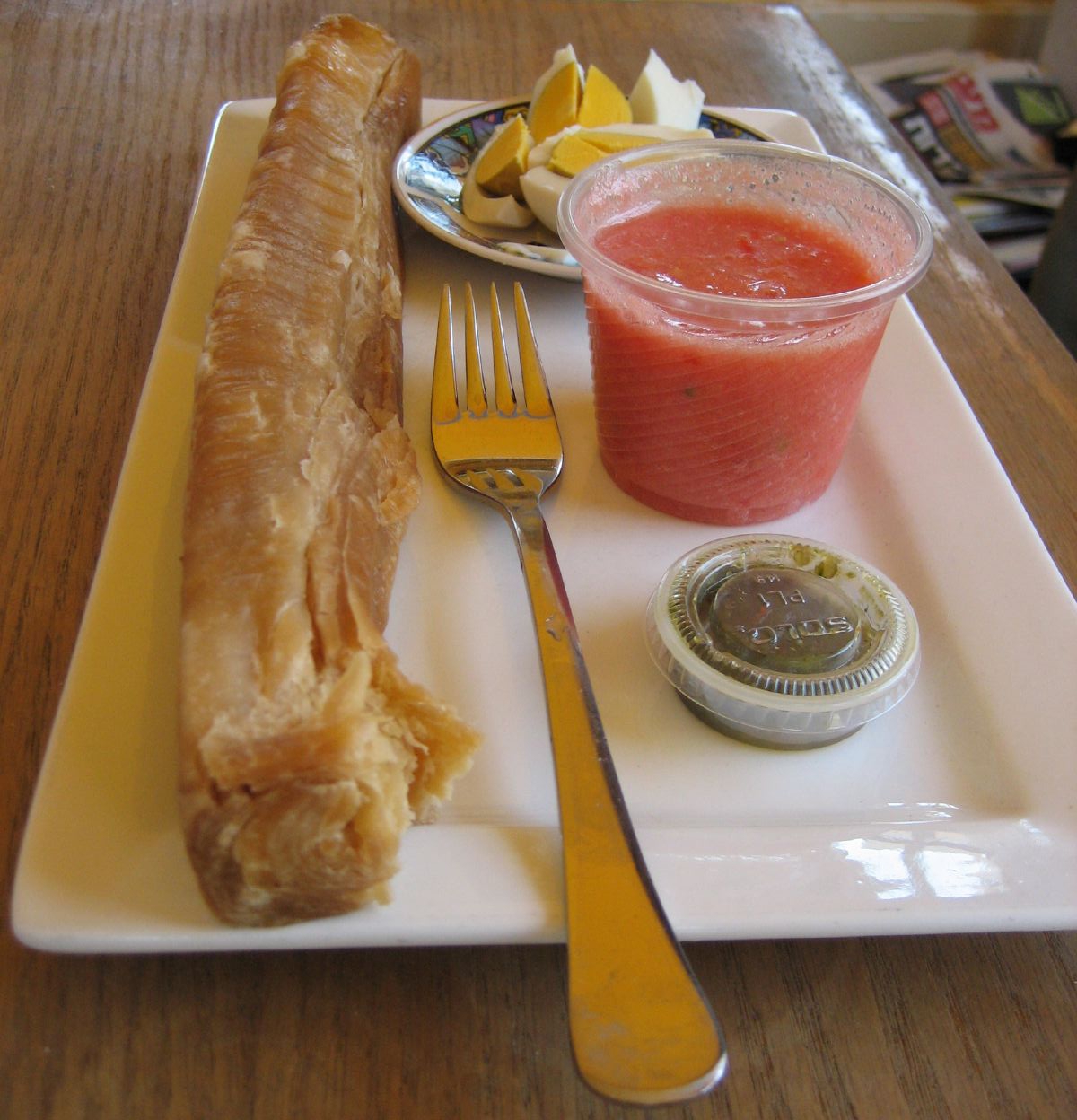 JachnunSlow-baked Yemenite Jewish bread for Shabbat mornings
Also part of it, and being written: Chraime, Matzah ball.
Sources and further reading
Original text by the Thali desk, written with AI assistance and checked against the sources above. Customs vary from place to place. If we have something wrong, tell us.
Photo credits on this page
The small pictures above come from Wikimedia Commons under free licences. Some are cropped to fit.
- Cholent: en:User:AlexMilkis, Public domain, source
- Chicken soup: Shizhao, CC BY-SA 3.0, source
- Challah: Yoninah, Public domain, source
- Gefilte fish: Olaf.herfurth, CC BY-SA 3.0, source
- Jachnun: Joshua Herzig-Marx, CC BY 2.5, source
- Kugel: Stuart Spivack, CC BY-SA 2.0, source