
Amygdalota
In its own language: Αμυγδαλωτά
Almond cookies from the Cyclades, often shaped into pears or balls
Amygdalota are almond cookies from the Cyclades islands in Greece, sometimes called Greek macaroons. They are made with ground almonds, honey, and scented with floral waters, and come in various shapes such as pears or small balls.
- Amygdalota are almond cookies from the Cyclades islands in Greece
- They are sometimes called Greek macaroons, but contain no coconut
- Common shapes include pears and small balls
- Flavored with orange flower water or rose water for aroma
What is Amygdalota?
Amygdalota are almond-based cookies linked to the Cyclades, a group of Greek islands. The dough uses ground almonds as its main ingredient, mixed with honey for sweetness. Orange flower water or rose water is often added, giving the cookies a fragrant aroma. They are shaped into small forms, commonly resembling pears or rolled into balls, and are intended to be eaten in one or two bites. The cookies have a delicate, nutty taste with a hint of floral notes.
Where does Amygdalota come from?
These cookies are a specialty of the Cyclades, but similar almond treats can be found across the eastern Mediterranean. The name 'Amygdalota' comes from the Greek word for almond. Over time, the cookies have picked up other names in different Greek regions, such as rozethes, ergolavoi, or troufes. The tradition of making almond sweets in this area reflects the widespread use of almonds in Mediterranean desserts.
How is Amygdalota made?
To prepare Amygdalota, ground almonds are combined with honey to form a dough. This mixture is then scented with orange flower water or rose water. The dough is shaped by hand into small forms, often as pears or balls, and then baked or left to set, depending on the recipe. The cookies are made to be easy to eat in a single bite.
How and when is Amygdalota eaten?
Amygdalota are typically enjoyed as a sweet snack or with tea. Their small size makes them suitable for serving at gatherings or as a treat with coffee. They are not tied to a particular holiday or festival, but rather are part of everyday eating in the Cyclades and other Greek regions.
Kinds of Amygdalota
Depending on the region, Amygdalota may be called by other names and shaped differently. Some versions might use different floral waters or adjust the sweetness. While the Cyclades are especially known for these cookies, similar almond sweets appear in other Mediterranean cuisines, each with its own twist.
What Amygdalota means
Amygdalota reflect the Greek fondness for almond-based desserts and the use of floral flavors. Though not tied to a specific festival, they are a familiar sight at social gatherings and family occasions in the Cyclades. Their association with the islands gives them a special place in local food traditions.
Questions people ask about Amygdalota
What are Amygdalota made of?
Amygdalota are made from ground almonds, sweetened with honey, and often flavored with orange flower water or rose water.
Where do Amygdalota come from?
These cookies are associated with the Cyclades, a group of islands in Greece, though similar almond cookies are found throughout the eastern Mediterranean.
Are Amygdalota the same as macaroons?
Amygdalota are sometimes called Greek macaroons, but they do not contain coconut. They are almond-based and have their own regional character.
How are Amygdalota usually served?
They are served as small, bite-sized cookies, often with tea or coffee, and are enjoyed as a sweet snack.
Do Amygdalota have any special shapes?
Yes, they are often shaped like pears or rolled into balls, but other shapes may also be used depending on the region.
Good reading and sources
The facts on this page come from the Wikipedia article "Amygdalota", written by its contributors and used under the CC BY-SA 4.0 licence, and from its Wikidata record (CC0). Thali rewrote the text in its own words, with AI assistance, and compares every page with the article to make sure no passage is copied. It may be reused under the same CC BY-SA 4.0 licence with a link back.
It may contain mistakes, and it is not dietary or allergy advice: recipes differ from cook to cook. If something is wrong, tell us. Last refreshed 2026-10-03.
More from Greece
All the food of Greece BaklavaVegetarianباقلوا
🇹🇷 Turkey and 5 moreThin pastry filled with nuts and soaked in sweet syrup
Sweet or dessert, Tea time, Snacks
Easter egg
🇷🇺 Russia and 5 moreEggs dyed or decorated for Easter, symbolizing resurrection and new life
Sweet or dessert, Breakfast, Snacks
BaklavaVegetarianباقلوا
🇹🇷 Turkey and 5 moreThin pastry filled with nuts and soaked in sweet syrup
Sweet or dessert, Tea time, Snacks
Easter egg
🇷🇺 Russia and 5 moreEggs dyed or decorated for Easter, symbolizing resurrection and new life
Sweet or dessert, Breakfast, Snacks
 Turkish delightVegan
🇹🇷 Turkey and 5 moreSoft, chewy cubes of starch and sugar, often flavored or filled with nuts or fruit
Sweet or dessert, Snacks, Tea time
Turkish delightVegan
🇹🇷 Turkey and 5 moreSoft, chewy cubes of starch and sugar, often flavored or filled with nuts or fruit
Sweet or dessert, Snacks, Tea time
Its cousins elsewhere
All sweets and desserts JalebiVegetarian
🇮🇳 India and 6 moreDeep-fried spirals of batter soaked in syrup, enjoyed across Asia and Africa
Pie or savoury pastry, Breakfast, Snacks
JalebiVegetarian
🇮🇳 India and 6 moreDeep-fried spirals of batter soaked in syrup, enjoyed across Asia and Africa
Pie or savoury pastry, Breakfast, Snacks
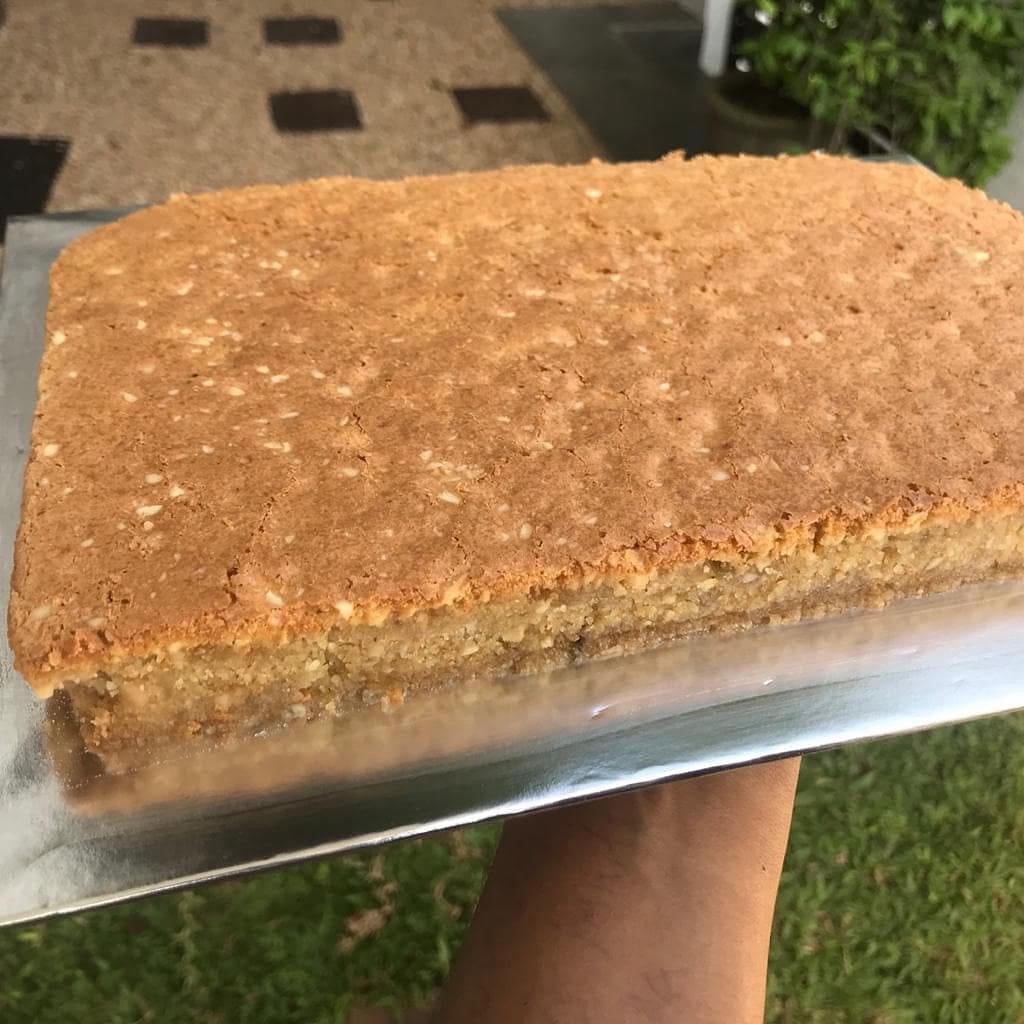 Love cakeVegetarian
🇱🇰 Sri LankaSri Lankan semolina cake with cashews, pumpkin preserve, and aromatic spices
Sweet or dessert
Love cakeVegetarian
🇱🇰 Sri LankaSri Lankan semolina cake with cashews, pumpkin preserve, and aromatic spices
Sweet or dessert
 Gulab jamunVegetarian
🇮🇳 India and 3 moreDeep-fried milk dough balls soaked in rose-scented sugar syrup
Sweet or dessert
Gulab jamunVegetarian
🇮🇳 India and 3 moreDeep-fried milk dough balls soaked in rose-scented sugar syrup
Sweet or dessert
 KnafehVegetarianكنافة
🇵🇸 Palestine and 5 moreShredded pastry layered with cheese and soaked in sweet syrup
Sweet or dessert, Breakfast, Snacks
KnafehVegetarianكنافة
🇵🇸 Palestine and 5 moreShredded pastry layered with cheese and soaked in sweet syrup
Sweet or dessert, Breakfast, Snacks