
Knafeh
In its own language: كنافة
Shredded pastry layered with cheese and soaked in sweet syrup
Knafeh is a traditional dessert from the Arab world, especially linked to Palestine, Egypt, and the Levant. It consists of shredded pastry or semolina layered with cheese or cream, baked, and soaked in a fragrant sugar syrup. Knafeh is often served warm and is a highlight of special occasions and Ramadan.
- Knafeh Nabulseyeh is famous in Nablus, Palestine.
- The dessert is soaked in rose or orange blossom syrup.
- Knafeh is often served during Ramadan and special occasions.
- Künefe from Hatay, Turkey, has protected status.
- The largest knafeh ever made weighed 1,765 kg in Nablus.
What is Knafeh?
Knafeh is a dessert made from layers of shredded pastry or semolina dough, filled with cheese or sometimes cream, and soaked in a sweet syrup scented with rose or orange blossom water. It is often garnished with nuts like pistachios or almonds. The pastry can be fine or coarse, and the filling varies from salty white cheese to rich clotted cream. Knafeh is usually served warm, with the syrup poured over just before eating, creating a contrast between the crisp pastry and the soft, melted filling.
Where does Knafeh come from?
Knafeh’s roots are in the Arab world, with strong ties to Palestine, Egypt, and the Levant. Stories trace its creation to the kitchens of caliphs during Ramadan as early as the 10th century, though early cookbooks do not mention the cheese-filled version. The earliest written recipes describe a thin pancake layered with cheese and sweetened with honey or rose syrup. The cheese-filled knafeh known today appears in records from the late 19th century in Beirut. The city of Nablus in Palestine is especially famous for its version, Knafeh Nabulseyeh.
How is Knafeh made?
To make knafeh, shredded pastry or semolina dough is pressed into a buttered pan and layered with a filling of desalted white cheese or cream. The dish is baked or cooked on a stovetop until the pastry is golden and the cheese melts. Once cooked, a hot sugar syrup, often flavored with rose or orange blossom water, is poured over the pastry. It is then garnished with crushed pistachios or other nuts. Some versions use food coloring for a bright orange top layer.


How and when is Knafeh eaten?
Knafeh is eaten throughout the Middle East, especially during Ramadan and on festive occasions, but is also enjoyed as an everyday treat. It is often served hot, cut into squares or wedges. In some places, it is eaten for breakfast, sometimes sandwiched in bread or pita. Street vendors and bakeries commonly sell knafeh, and it is a popular offering at gatherings and celebrations.
Kinds of Knafeh
There are many regional versions of knafeh. Knafeh Nabulseyeh from Nablus uses a layer of semolina or kadayif pastry and salty Nabulsi cheese. Knafeh Ghazawiya from Gaza replaces cheese with nuts and spices. Osmalieh in Syria and Lebanon sandwiches cream between two layers of pastry. In Turkey, künefe uses a local cheese and is recognized with protected status in Hatay. Other forms include knafeh basma, madlouqa, and versions served in bread.
What Knafeh means
Knafeh is deeply woven into Palestinian and Levantine identity, especially in Nablus, which is often called the knafeh capital. It is a symbol of celebration, featured at festivals and during Ramadan. The dessert has also been at the center of cultural discussions, particularly regarding its origins. In 2009, Nablus set a world record for the largest knafeh, highlighting its cultural significance and communal pride.
When Knafeh is on the table
Questions people ask about Knafeh
What is knafeh made of?
Knafeh is made from shredded pastry or semolina dough, layered with cheese or cream, baked, and soaked in a sweet syrup flavored with rose or orange blossom water. It is often topped with nuts like pistachios or almonds.
Where does knafeh come from?
Knafeh is a traditional dessert from the Arab world, especially associated with Palestine, Egypt, and the Levant. The city of Nablus in Palestine is particularly famous for its version.
When is knafeh usually eaten?
Knafeh is commonly eaten during Ramadan and on special occasions, but it is also enjoyed as an everyday treat or for breakfast in some regions.
Are there different types of knafeh?
Yes, there are many regional varieties, such as Knafeh Nabulseyeh from Nablus, Osmalieh from Syria and Lebanon, and Künefe from Hatay, Turkey. Fillings and pastry types can vary.
Is knafeh vegetarian?
Knafeh is typically vegetarian, as it is made with pastry, cheese or cream, sugar, and nuts. Some versions use only nuts or cream as filling.
Good reading and sources
- The dessert that’s blocked at bordersBBC, Article
- The Dribble With PastryLos Angeles Times, Article
- Sami Tamimi and Tara WigleyThe Guardian, Recipe
The facts on this page come from the Wikipedia article "Knafeh", written by its contributors and used under the CC BY-SA 4.0 licence, and from its Wikidata record (CC0). Thali rewrote the text in its own words, with AI assistance, and compares every page with the article to make sure no passage is copied. It may be reused under the same CC BY-SA 4.0 licence with a link back.
It may contain mistakes, and it is not dietary or allergy advice: recipes differ from cook to cook. If something is wrong, tell us. Last refreshed 2026-10-03.
More from Palestine
All the food of Palestine Muhallebiمهلبی
🇮🇷 Iran and 5 moreA smooth milk pudding thickened with rice flour or starch, served cold
Sweet or dessert
Muhallebiمهلبی
🇮🇷 Iran and 5 moreA smooth milk pudding thickened with rice flour or starch, served cold
Sweet or dessert
 Qatayefقطايف
🇪🇬 Egypt and 5 moreSweet stuffed pancakes, folded and filled with nuts or cream, served for Ramadan
Sweet or dessert, Snacks, Tea time
Qatayefقطايف
🇪🇬 Egypt and 5 moreSweet stuffed pancakes, folded and filled with nuts or cream, served for Ramadan
Sweet or dessert, Snacks, Tea time
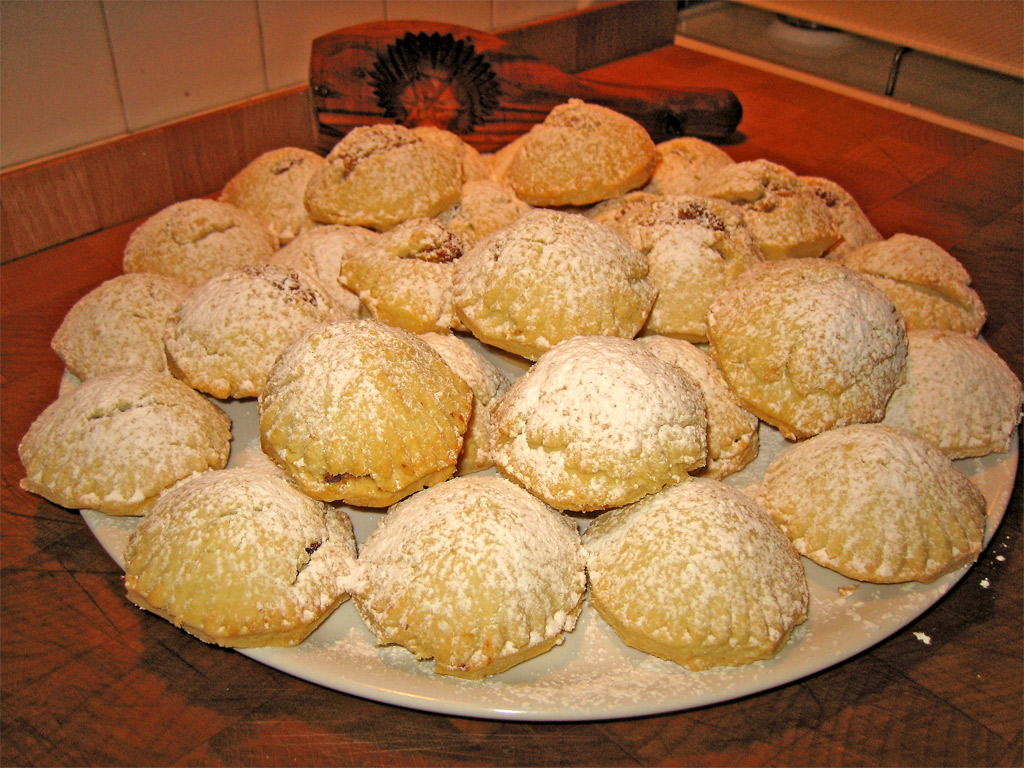 Ma'amoulVegetarianمعمول
🇸🇾 Syria and 4 moreSemolina cookies filled with dates or nuts, shaped in moulds for festive occasions
Sweet or dessert, Snacks, Tea time
Ma'amoulVegetarianمعمول
🇸🇾 Syria and 4 moreSemolina cookies filled with dates or nuts, shaped in moulds for festive occasions
Sweet or dessert, Snacks, Tea time
 SfihaMeatصَفِيحَة
🇱🇧 Lebanon and 5 moreLevantine flatbread with a seasoned minced meat topping
Main dish, Lunch, Dinner
SfihaMeatصَفِيحَة
🇱🇧 Lebanon and 5 moreLevantine flatbread with a seasoned minced meat topping
Main dish, Lunch, Dinner
Its cousins elsewhere
All sweets and desserts Pie
🇬🇧 United Kingdom and 5 moreA baked dish with a pastry crust and sweet or savoury filling
Main dish, Lunch, Dinner
Pie
🇬🇧 United Kingdom and 5 moreA baked dish with a pastry crust and sweet or savoury filling
Main dish, Lunch, Dinner
 AmygdalotaVegetarianΑμυγδαλωτά
🇬🇷 GreeceAlmond cookies from the Cyclades, often shaped into pears or balls
Sweet or dessert, Snacks, Tea time
AmygdalotaVegetarianΑμυγδαλωτά
🇬🇷 GreeceAlmond cookies from the Cyclades, often shaped into pears or balls
Sweet or dessert, Snacks, Tea time
 CannoliVegetarianCannolo
🇮🇹 ItalySicilian fried pastry tubes filled with sweet ricotta cream
Pie or savoury pastry, Snacks, Tea time
CannoliVegetarianCannolo
🇮🇹 ItalySicilian fried pastry tubes filled with sweet ricotta cream
Pie or savoury pastry, Snacks, Tea time
 King cake
🇫🇷 France and 5 moreA festive sweet bread or pastry with a hidden token, eaten for Epiphany and Carnival
Pie or savoury pastry, Snacks, Tea time
King cake
🇫🇷 France and 5 moreA festive sweet bread or pastry with a hidden token, eaten for Epiphany and Carnival
Pie or savoury pastry, Snacks, Tea time