
Arroz carreteiro
Brazilian rice cooked with beef, sausage, and aromatics
Arroz carreteiro is a rice dish from Rio Grande do Sul, Brazil, now enjoyed across the country. It combines rice with beef—either fresh, dried, or cured—plus sausage, onion, garlic, tomato, and parsley. Once a practical meal for wagon drivers, it is now a staple in Brazilian homes and gatherings.
- Originated with wagon drivers in Rio Grande do Sul
- Traditionally made with dried, salted beef called charque
- Now popular throughout Brazil with many local versions
- Often cooked in one pot with rice, beef, sausage, and vegetables
What is Arroz carreteiro?
Arroz carreteiro is a hearty rice dish from southern Brazil. Its base is white rice, cooked together with pieces of beef—either fresh, dried (carne-seca or carne-de-sol), or cured (charque)—and often sausage such as linguiça or paio. Bacon may also be included. The mixture is seasoned with chopped onion, garlic, tomato, and parsley, giving it a savory aroma and a colorful look. The result is a filling, flavorful meal where the rice absorbs the taste of the meats and aromatics.
Where does Arroz carreteiro come from?
The dish began as a practical meal for wagon drivers (carreteiros) in Rio Grande do Sul, who needed food that would last for days on the road. Without refrigeration, they used dried, salted beef called carne-de-sol or charque, which could be stored for long periods. The drivers would cook the meat with rice in a cast iron pot, creating a simple but sustaining meal. Over time, arroz carreteiro became a signature dish of Rio Grande do Sul and spread throughout Brazil.
How is Arroz carreteiro made?
To make arroz carreteiro, cooks start by sautéing onions and garlic in a pot, often with bacon or sausage for extra flavor. Cubed or shredded beef—fresh, dried, or leftover from a barbecue—is added and browned. Rice goes in next, followed by chopped tomatoes and parsley. Water is poured over the mixture, and everything simmers together until the rice is cooked and has absorbed the flavors of the meat and seasonings. The dish is typically made in one pot.

How and when is Arroz carreteiro eaten?
Arroz carreteiro is served hot, usually as a main course for lunch or dinner. It is common at family meals and gatherings, especially in southern Brazil. The dish is often enjoyed on its own, but may be paired with simple sides or salads. In some regions, it is made after a churrasco (barbecue) to use up leftover grilled meat. Its filling nature makes it a popular choice for feeding groups.
Kinds of Arroz carreteiro
In the Central-West and Northeast of Brazil, a similar dish called maria-isabel uses carne-de-sol as the main meat. Some modern versions of arroz carreteiro use fresh beef or whatever meat is on hand, including leftovers from barbecues. The types of sausage and the balance of ingredients can vary by region and household. While the original relied on dried meat for preservation, today’s versions adapt to local tastes and available ingredients.
What Arroz carreteiro means
Arroz carreteiro is closely tied to the culture of Rio Grande do Sul, where it is seen as a symbol of the region’s history and resourcefulness. The dish reflects the traditions of the wagon drivers who once crossed the state’s plains. Today, it is a staple at gatherings and is recognized as one of the main dishes of southern Brazilian cuisine. Its roots in practicality and community continue to shape its place in Brazilian food culture.
Questions people ask about Arroz carreteiro
What is arroz carreteiro made of?
It is made with rice, beef (fresh or dried), sausage such as linguiça or paio, onion, garlic, tomato, parsley, and sometimes bacon.
Where does arroz carreteiro come from?
Arroz carreteiro comes from Rio Grande do Sul, a state in southern Brazil, and is now enjoyed across the country.
Why was dried meat used in the original dish?
Wagon drivers used dried, salted beef (carne-de-sol or charque) because it could be stored for long periods without refrigeration during their journeys.
Is arroz carreteiro always made the same way?
No, there are many variations. Some use fresh beef or leftover barbecue meat, and the types of sausage and seasonings can differ by region.
When is arroz carreteiro usually eaten?
It is typically eaten hot as a main dish for lunch or dinner, often at family meals or gatherings.
Good reading and sources
- Arroz carreteiro on WikipediaEncyclopedia
- More photos on Wikimedia CommonsPhotos
- Wikidata recordOpen data
The facts on this page come from the Wikipedia article "Arroz carreteiro", written by its contributors and used under the CC BY-SA 4.0 licence, and from its Wikidata record (CC0). Thali rewrote the text in its own words, with AI assistance, and compares every page with the article to make sure no passage is copied. It may be reused under the same CC BY-SA 4.0 licence with a link back.
It may contain mistakes, and it is not dietary or allergy advice: recipes differ from cook to cook. If something is wrong, tell us. Last refreshed 2026-10-03.
More from Brazil
All the food of Brazil PolentaVegan
🇮🇹 Italy and 5 moreBoiled cornmeal porridge from northern Italy, served soft or set and sliced
Main dish
PolentaVegan
🇮🇹 Italy and 5 moreBoiled cornmeal porridge from northern Italy, served soft or set and sliced
Main dish
 ChorizoMeat
🇪🇸 Spain and 5 moreA seasoned pork sausage from the Iberian Peninsula, made in many regional styles
Sausage or cured food, Breakfast, Lunch
ChorizoMeat
🇪🇸 Spain and 5 moreA seasoned pork sausage from the Iberian Peninsula, made in many regional styles
Sausage or cured food, Breakfast, Lunch
 Steak tartareMeat
🇫🇷 France and 5 moreRaw minced beef, seasoned and often topped with a raw egg yolk
Main dish, Lunch, Dinner
Steak tartareMeat
🇫🇷 France and 5 moreRaw minced beef, seasoned and often topped with a raw egg yolk
Main dish, Lunch, Dinner
Its cousins elsewhere
All main dishes Cataplana
🇵🇹 PortugalSeafood and meat stew cooked in a sealed metal vessel from Portugal's Algarve
Main dish, Lunch, Dinner
Cataplana
🇵🇹 PortugalSeafood and meat stew cooked in a sealed metal vessel from Portugal's Algarve
Main dish, Lunch, Dinner
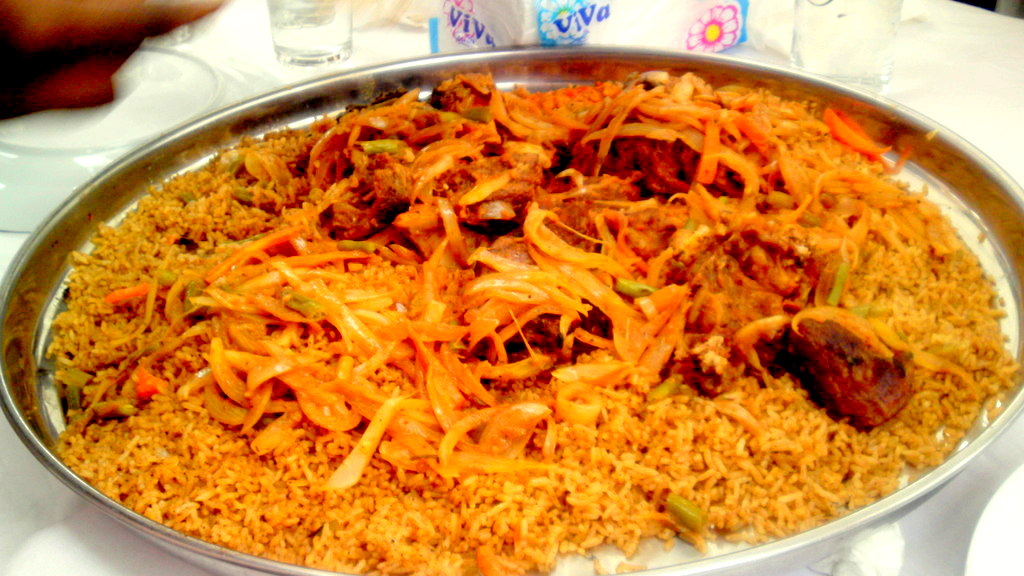 Riz grasMeat
🇧🇫 Burkina Faso and 4 moreWest African rice cooked with meat and vegetables, served hot
Main dish, Lunch, Dinner
Riz grasMeat
🇧🇫 Burkina Faso and 4 moreWest African rice cooked with meat and vegetables, served hot
Main dish, Lunch, Dinner
 LahmacunMeat
🇸🇾 Syria and 3 moreThin flatbread baked with a topping of minced meat, vegetables and herbs
Main dish, Lunch, Dinner
LahmacunMeat
🇸🇾 Syria and 3 moreThin flatbread baked with a topping of minced meat, vegetables and herbs
Main dish, Lunch, Dinner
 Dal bhatVegetarian
🇳🇵 Nepal and 2 moreLentil soup served with plain rice, a staple meal across South Asia
Main dish, Lunch, Dinner
Dal bhatVegetarian
🇳🇵 Nepal and 2 moreLentil soup served with plain rice, a staple meal across South Asia
Main dish, Lunch, Dinner