
Arroz zambito
Peruvian rice pudding sweetened with chancaca and spiced with cinnamon
Arroz zambito is a dessert from Lima, Peru, and a darker, spiced version of rice pudding. It is made with rice, milk, chancaca (unrefined cane sugar), raisins, pecans, cinnamon, and sometimes coconut. The addition of chancaca gives it a deep brown color and unique flavor. It was once sold by Afro-Peruvian women street vendors.
- Uses chancaca, an unrefined cane sugar, for its dark color
- Spiced with cinnamon, anise, and cloves
- Often includes raisins, pecans, and coconut
- Originated in Lima, Peru
- Sold by Afro-Peruvian women in the 19th century
What is Arroz zambito?
Arroz zambito is a Peruvian dessert similar to rice pudding but with a distinct twist. It is made by simmering rice and milk with chancaca, an unrefined cane sugar that gives the dish a rich brown color and deep flavor. Spices like cinnamon, anise, and cloves are added for warmth and aroma. The pudding is often finished with raisins, pecans, and sometimes grated coconut, making it both creamy and textured. The flavor is sweet and spiced, and the color is noticeably darker than regular rice pudding.
Where does Arroz zambito come from?
This dessert comes from Lima, Peru, and is a local adaptation of arroz con leche. The main difference is the use of chancaca, which is also used in other Peruvian sweets. In the 19th century, arroz zambito was commonly sold on the streets of Lima by Afro-Peruvian women. The name 'zambito' refers to its dark color, drawing from a colonial-era term, and sets it apart from the white rice pudding.
How is Arroz zambito made?
To make arroz zambito, rice is cooked slowly in milk until soft. Chancaca is added, melting into the mixture and coloring it brown. Spices such as cinnamon, anise, and cloves are simmered with the rice, infusing it with flavor. Raisins and pecans are stirred in, and some versions include grated coconut for extra texture. The dessert is cooked until thick and creamy, then served warm or cold.
How and when is Arroz zambito eaten?
Arroz zambito is eaten as a dessert, either warm or chilled. It is enjoyed at home or bought from street vendors, especially in Lima. The pudding is usually served in bowls and may be topped with extra nuts or coconut. It is a familiar sweet in Peruvian daily life, not tied to any specific festival or religious occasion.
Kinds of Arroz zambito
While the basic ingredients remain the same, some cooks add more spices or swap in different nuts. Golden raisins and coconut are common additions. The dessert is closely related to arroz con leche but stands out because of the chancaca. Other Peruvian sweets, like picarones, also use chancaca syrup, but arroz zambito is unique for its rice base.
What Arroz zambito means
Arroz zambito is part of Lima's food history and reflects the influence of Afro-Peruvian street vendors in the 19th century. Its name and color connect it to local social history. Though not tied to festivals, it is a well-loved everyday sweet and a reminder of the city's diverse culinary roots.
Questions people ask about Arroz zambito
What is arroz zambito made of?
It is made from rice, milk, chancaca (unrefined cane sugar), raisins, pecans, cinnamon, and often anise, cloves, and coconut.
Where does arroz zambito come from?
Arroz zambito comes from Lima, Peru, where it was sold by street vendors in the 19th century.
How is arroz zambito different from regular rice pudding?
The main difference is the use of chancaca, which gives it a dark color and distinct flavor, along with added spices and nuts.
Is arroz zambito served hot or cold?
It can be served either warm or cold, depending on preference.
Is arroz zambito vegetarian?
Yes, it is vegetarian, as it contains no meat or fish, but does include milk.
Good reading and sources
- Arroz zambito on WikipediaEncyclopedia
- More photos on Wikimedia CommonsPhotos
- Wikidata recordOpen data
The facts on this page come from the Wikipedia article "Arroz zambito", written by its contributors and used under the CC BY-SA 4.0 licence, and from its Wikidata record (CC0). Thali rewrote the text in its own words, with AI assistance, and compares every page with the article to make sure no passage is copied. It may be reused under the same CC BY-SA 4.0 licence with a link back.
It may contain mistakes, and it is not dietary or allergy advice: recipes differ from cook to cook. If something is wrong, tell us. Last refreshed 2026-10-03.
More from Peru
All the food of Peru Churrochurros
🇪🇸 Spain and 5 moreRidged, deep-fried dough sticks often eaten hot with chocolate or coffee
Sweet or dessert, Breakfast, Snacks
Churrochurros
🇪🇸 Spain and 5 moreRidged, deep-fried dough sticks often eaten hot with chocolate or coffee
Sweet or dessert, Breakfast, Snacks
 PanettoneVegetarian
🇮🇹 Italy and 2 moreTall, sweet Italian bread with candied fruit, eaten at Christmas and New Year
Sweet or dessert, Breakfast, Tea time
PanettoneVegetarian
🇮🇹 Italy and 2 moreTall, sweet Italian bread with candied fruit, eaten at Christmas and New Year
Sweet or dessert, Breakfast, Tea time
 Eggnog
🇺🇸 United States and 5 moreA creamy, sweet drink of milk, eggs, sugar and spirits, served at Christmas
Drink, Snacks
Eggnog
🇺🇸 United States and 5 moreA creamy, sweet drink of milk, eggs, sugar and spirits, served at Christmas
Drink, Snacks
 TurrónVegetarian
🇪🇸 Spain and 5 moreHoney and nut nougat, shaped into bars or cakes, enjoyed at Christmas in Spain and Italy
Sweet or dessert, Snacks
TurrónVegetarian
🇪🇸 Spain and 5 moreHoney and nut nougat, shaped into bars or cakes, enjoyed at Christmas in Spain and Italy
Sweet or dessert, Snacks
Its cousins elsewhere
All sweets and desserts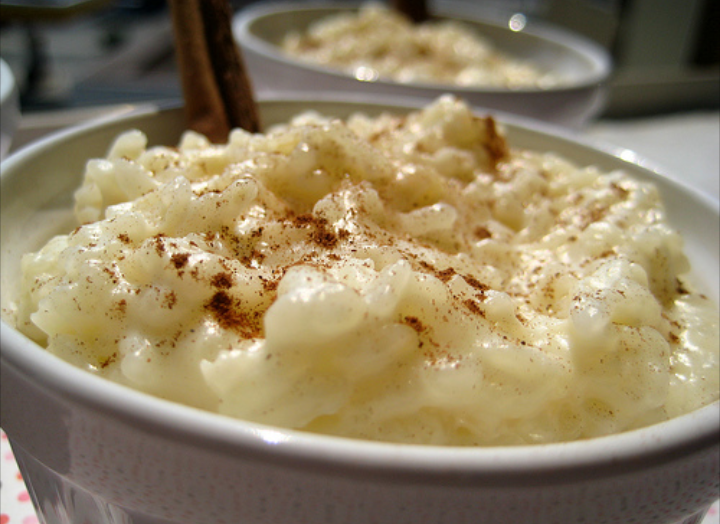 Rice pudding
🇮🇳 India and 4 moreSweetened rice cooked in milk, found in many forms worldwide
Sweet or dessert, Breakfast, Lunch
Rice pudding
🇮🇳 India and 4 moreSweetened rice cooked in milk, found in many forms worldwide
Sweet or dessert, Breakfast, Lunch
 Jolpan
🇮🇳 IndiaAssamese breakfast snacks of rice, pitha, and sweets, often served with tea or curd
Sweet or dessert, Breakfast, Snacks
Jolpan
🇮🇳 IndiaAssamese breakfast snacks of rice, pitha, and sweets, often served with tea or curd
Sweet or dessert, Breakfast, Snacks
 Pumpkin pieVegetarian
🇺🇸 United States and 1 moreSweet pie with spiced pumpkin custard in a pastry shell, served for autumn holidays
Sweet or dessert
Pumpkin pieVegetarian
🇺🇸 United States and 1 moreSweet pie with spiced pumpkin custard in a pastry shell, served for autumn holidays
Sweet or dessert
 TavukgöğsüMeat
🇹🇷 TurkeyTurkish milk pudding thickened with finely shredded chicken breast
Sweet or dessert
TavukgöğsüMeat
🇹🇷 TurkeyTurkish milk pudding thickened with finely shredded chicken breast
Sweet or dessert