
Banana bread
A sweet, moist loaf made with mashed bananas and chemical leavening
Banana bread is an American quick loaf made from mashed ripe bananas, flour, and sugar. Often served as a dessert or sweet snack, it became a pantry staple across the United States in the nineteen-thirties and also spread to the Philippines.
- Sold commercially in Lawrence, Kansas, as early as January 1881.
- National Banana Bread Day is celebrated each year on February 23 in the United States.
- The recipe surged in popularity during the 2020 pandemic lockdowns.
- In the Philippines, this baked sweet is commonly called banana cake.
What is Banana bread?
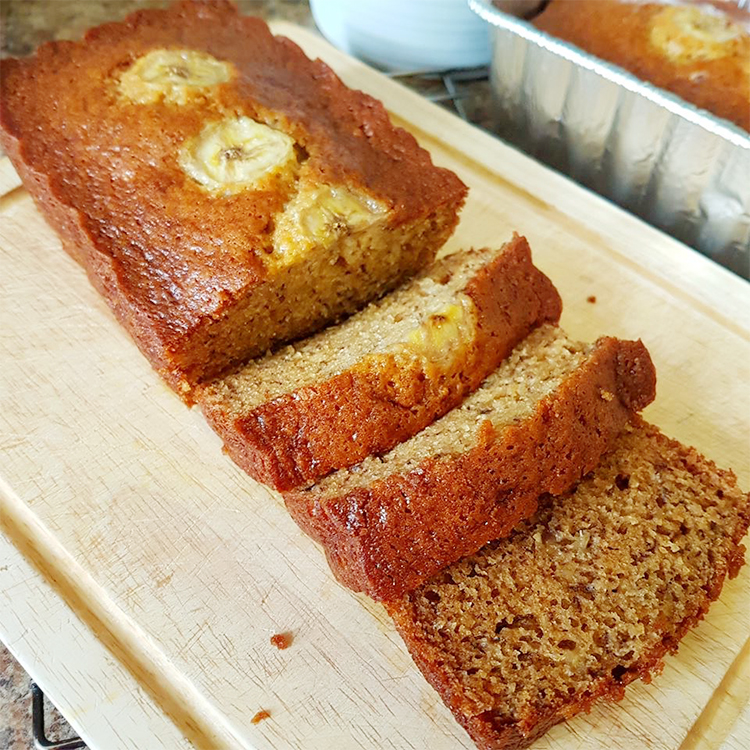
Banana bread sits comfortably between a pastry loaf and a teacake. Bakers rely on thoroughly ripened bananas, which soften and concentrate their natural sugars as their skins darken. When mashed and mixed into a batter, the fruit lends the loaf a rich moisture, a deep sweetness, and a soft, crumbly crumb. Although labeled as a bread, its tender grain and sweet profile often make it feel closer to a muffin or an everyday sponge cake. Most versions emerge from the oven dense and golden brown, offering a pronounced aroma of cooked fruit.
Where does Banana bread come from?
The fruit first reached the United States during the eighteen-seventies, and bakers in Lawrence, Kansas, were offering loaves for sale by January 1881. Widespread domestic baking took off during the nineteen-thirties when grocery shops began selling chemical leaveners across North America. Food historians suggest two paths for its sudden popularity: homemakers during the Great Depression avoiding food waste by rescuing softening fruit, or corporate test kitchens publishing recipes to encourage sales of flour and baking soda. The loaf also travelled to the Philippines during the American colonial era, where local fruit production flourished.
How is Banana bread made?
Bakers typically prepare this loaf using the quick-bread method, eliminating the lengthy fermentation needed for traditional yeast doughs. Softened, overripe bananas are mashed into a puree and blended with flour, sugar, and water. Instead of relying on yeast, the mixture uses chemical aerators like baking powder or baking soda to create lift in the oven. Some historic or specialty recipes still call for yeast leavening, but the chemically aerated method remains the norm. The batter is poured into a loaf tin and baked until firm, sweet, and lightly springy.


How and when is Banana bread eaten?
Served as a dessert, teatime treat, or mid-day bite, this baked loaf is cut into thick slices. Its gentle sweetness pairs naturally with afternoon tea or casual family gatherings. Because of its cake-like density and damp crumb, it can be enjoyed plain or alongside a simple beverage. In Filipino homes, where it became popular during the colonial era, people commonly refer to the loaf as banana cake. It functions both as an unpretentious home bake and an everyday treat found on kitchen counters.
Kinds of Banana bread
Home cooks frequently adapt the base batter with mix-ins. Banana nut bread often includes chopped almonds, pecans, or walnuts, while other popular versions fold in dried raisins or chocolate chips. Bakers also incorporate different fruits, such as blueberries, raspberries, or orange citrus zest. The mixture can be portioned into tins to produce individual muffins, topped with a sweet crumble, or prepared in a vegan style that omits all dairy and egg components.
What Banana bread means
During the COVID-19 lockdowns in 2020, banana bread experienced an enormous surge in home baking as families spent extended time in domestic kitchens. In the United States, enthusiasm for the treat is marked every year on February 23, celebrated as National Banana Bread Day. In the Philippines, the bake remains deeply tied to the country's rise as a premier commercial banana producer following its introduction during the era of American governance.
Questions people ask about Banana bread
Where does banana bread come from?
Banana bread originates from the United States. Commercial sales were recorded in Kansas in 1881, and domestic recipes spread across North America during the 1930s.
What is banana bread made of?
The basic loaf is made of mashed bananas, wheat flour, sugar, and water, usually leavened with baking soda or baking powder.
Why are overripe bananas preferred?
Bananas that have ripened heavily have a softer consistency and a higher sugar content. This gives the baked loaf its characteristic sweetness and keeps the crumb moist.
How does banana bread rise without yeast?
Most banana breads are quick breads. They rely on chemical agents such as baking powder or baking soda to rise quickly without needing a fermentation period.
Good reading and sources
The facts on this page come from the Wikipedia article "Banana bread", written by its contributors and used under the CC BY-SA 4.0 licence, and from its Wikidata record (CC0). EveryThali rewrote the text in its own words, with AI assistance, and compares every page with the article to make sure no passage is copied. It may be reused under the same CC BY-SA 4.0 licence with a link back.
It may contain mistakes, and it is not dietary or allergy advice: recipes differ from cook to cook. If something is wrong, tell us. Last refreshed 2026-10-04.
More from the United States
All the food of the United States Ice cream
🇺🇸 United States and 5 moreA frozen dessert made from sweetened, flavoured milk or cream
Sweet or dessert, Snacks
Ice cream
🇺🇸 United States and 5 moreA frozen dessert made from sweetened, flavoured milk or cream
Sweet or dessert, Snacks
 Candy
🇺🇸 United States and 5 moreSmall sweet treats made mainly from sugar or sweeteners
Sweet or dessert, Snacks
Candy
🇺🇸 United States and 5 moreSmall sweet treats made mainly from sugar or sweeteners
Sweet or dessert, Snacks
 Doughnut
🇺🇸 United States and 5 moreSweet fried or baked rings or balls, often glazed or filled
Sweet or dessert, Breakfast, Snacks
Doughnut
🇺🇸 United States and 5 moreSweet fried or baked rings or balls, often glazed or filled
Sweet or dessert, Breakfast, Snacks
 Hot chocolate
🇲🇽 Mexico and 5 moreA warm drink made from chocolate or cocoa, milk or water, and sugar
Drink, Breakfast, Snacks
Hot chocolate
🇲🇽 Mexico and 5 moreA warm drink made from chocolate or cocoa, milk or water, and sugar
Drink, Breakfast, Snacks
Its cousins elsewhere
All breads Bagel
🇵🇱 Poland and 2 moreRing-shaped bread roll, boiled then baked for a dense, chewy texture
Bread, Breakfast, Lunch
Bagel
🇵🇱 Poland and 2 moreRing-shaped bread roll, boiled then baked for a dense, chewy texture
Bread, Breakfast, Lunch
 InjeraVeganእንጀራ
🇪🇹 Ethiopia and 1 moreLarge, spongy sour flatbread made from fermented teff flour
Bread, Lunch, Dinner
InjeraVeganእንጀራ
🇪🇹 Ethiopia and 1 moreLarge, spongy sour flatbread made from fermented teff flour
Bread, Lunch, Dinner
 BriocheVegetarianune brioche
🇫🇷 FranceFrench bread made with eggs and butter, often shaped in rounds or loaves
Bread, Breakfast, Snacks
BriocheVegetarianune brioche
🇫🇷 FranceFrench bread made with eggs and butter, often shaped in rounds or loaves
Bread, Breakfast, Snacks