![[2014-11-22] Empório Teodora - Bauru - Lanche Bauru_Romerito Pontes-2](https://thumb.wikimedia.org/wikipedia/commons/thumb/3/3d/%282014-11-22%29_Emp%C3%B3rio_Teodora_-_Bauru_-_Lanche_Bauru_Romerito_Pontes-2_%2815869512362%29.jpg/1280px-%282014-11-22%29_Emp%C3%B3rio_Teodora_-_Bauru_-_Lanche_Bauru_Romerito_Pontes-2_%2815869512362%29.jpg)
Bauru
A Brazilian sandwich with melted cheese, roast beef, tomato and pickled cucumber
Bauru is a sandwich from Brazil made with melted cheese (usually mozzarella), roast beef, tomato, and pickled cucumber, all served in a French bun with the soft crumb removed. Created in São Paulo in the 1930s, it has become a well-known snack and even has an official recipe in the city of Bauru.
- Created in São Paulo in 1934 by a law student
- Official sandwich of the city of Bauru with a certified recipe
- Traditional version uses mozzarella, roast beef, tomato, and pickled cucumber
- The bread is hollowed out before filling
- Cheese is melted in a bain-marie
What is Bauru?
Bauru is a sandwich that brings together melted cheese, usually mozzarella, with slices of roast beef, tomato, and pickled cucumber. These are layered inside a French-style bun, from which the soft inner part is removed, making space for the fillings. The cheese is melted using a bain-marie, a gentle water bath technique. The result is a warm, savory sandwich with a mix of creamy, tangy, and meaty flavors.
Where does Bauru come from?
The Bauru was first made in 1934 at Ponto Chic, a well-known eatery in São Paulo, Brazil. Casemiro Pinto Neto, a law student from the city of Bauru, asked for a sandwich made to his instructions. His creation quickly became popular among students and regulars, and the sandwich was named after his hometown. Over time, the city of Bauru adopted the sandwich as its own, giving it official status and a certified recipe.
How is Bauru made?
To make a traditional Bauru, the soft crumb is removed from a French bun. Cheese, typically mozzarella, is melted in a bain-marie and spread inside the hollowed bread. Slices of roast beef, fresh tomato, and pickled cucumber are added before closing the sandwich. Some versions use other meats or breads, but the classic method is recognized and protected in Bauru.

How and when is Bauru eaten?
Bauru is commonly eaten as a snack or a light meal, especially at lunch. It is served in cafés and snack bars, often enjoyed by students and workers looking for a filling, quick bite. The sandwich can be eaten on its own or with a drink, and is popular throughout Brazil, especially in São Paulo and the city of Bauru.
Kinds of Bauru
Many places serve sandwiches called Bauru with different ingredients, such as ham instead of roast beef or using regular sliced bread. However, the city of Bauru has set an official recipe, and only sandwiches that follow this method can be certified as the authentic version. This has helped preserve the original style while allowing for local twists elsewhere.
What Bauru means
The Bauru sandwich is a point of pride for the city of Bauru, which has made it the official city sandwich and created a certification program to protect its recipe. Its student origins and connection to São Paulo's university life have made it a symbol of Brazilian snack culture. The sandwich is also recognized in food media for its unique combination of ingredients.
Questions people ask about Bauru
What is a Bauru sandwich made of?
A traditional Bauru has melted cheese (usually mozzarella), roast beef, tomato, and pickled cucumber inside a French bun with the crumb removed.
Where did the Bauru sandwich come from?
It was created in São Paulo, Brazil, in 1934 by Casemiro Pinto Neto, a student from the city of Bauru.
How is the cheese prepared in a Bauru?
The cheese is melted using a bain-marie, which is a gentle water bath method, before being added to the sandwich.
Are there different versions of the Bauru sandwich?
Yes, some places use ham instead of roast beef or different breads, but the official version is certified by the city of Bauru.
Is the Bauru eaten hot or cold?
The traditional Bauru is served with the cheese melted, so it is usually eaten warm.
Good reading and sources
- Bauru (sandwich) on WikipediaEncyclopedia
- More photos on Wikimedia CommonsPhotos
- Wikidata recordOpen data
The facts on this page come from the Wikipedia article "Bauru (sandwich)", written by its contributors and used under the CC BY-SA 4.0 licence, and from its Wikidata record (CC0). Thali rewrote the text in its own words, with AI assistance, and compares every page with the article to make sure no passage is copied. It may be reused under the same CC BY-SA 4.0 licence with a link back.
It may contain mistakes, and it is not dietary or allergy advice: recipes differ from cook to cook. If something is wrong, tell us. Last refreshed 2026-10-03.
More from Brazil
All the food of Brazil ChoripánMeat
🇦🇷 Argentina and 5 moreGrilled chorizo sausage in crusty bread, often topped with sauce
Sandwich or wrap, Snacks, Lunch
ChoripánMeat
🇦🇷 Argentina and 5 moreGrilled chorizo sausage in crusty bread, often topped with sauce
Sandwich or wrap, Snacks, Lunch
 completoMeat
🇨🇱 Chile and 1 moreA Chilean hot dog loaded with tomato, avocado, mayonnaise and other toppings
Street food, Lunch, Dinner
completoMeat
🇨🇱 Chile and 1 moreA Chilean hot dog loaded with tomato, avocado, mayonnaise and other toppings
Street food, Lunch, Dinner
 CoffeeVegan
🇾🇪 Yemen and 5 moreA dark, bitter drink made by brewing roasted coffee beans
Drink, Breakfast, Snacks
CoffeeVegan
🇾🇪 Yemen and 5 moreA dark, bitter drink made by brewing roasted coffee beans
Drink, Breakfast, Snacks
 PestoVegetarian
🇮🇹 Italy and 2 moreA basil, pine nut and cheese paste from Genoa, used to dress pasta
Sauce, pickle or ferment
PestoVegetarian
🇮🇹 Italy and 2 moreA basil, pine nut and cheese paste from Genoa, used to dress pasta
Sauce, pickle or ferment
Its cousins elsewhere
All sandwiches and wraps HamburgerMeat
🇺🇸 United States and 1 moreA hot ground meat patty in a sliced bun, often with salad and sauces
Main dish, Lunch, Dinner
HamburgerMeat
🇺🇸 United States and 1 moreA hot ground meat patty in a sliced bun, often with salad and sauces
Main dish, Lunch, Dinner
 CheeseburgerMeat
🇺🇸 United StatesA hamburger topped with melted cheese, often with lettuce, tomato and condiments
Main dish, Lunch, Dinner
CheeseburgerMeat
🇺🇸 United StatesA hamburger topped with melted cheese, often with lettuce, tomato and condiments
Main dish, Lunch, Dinner
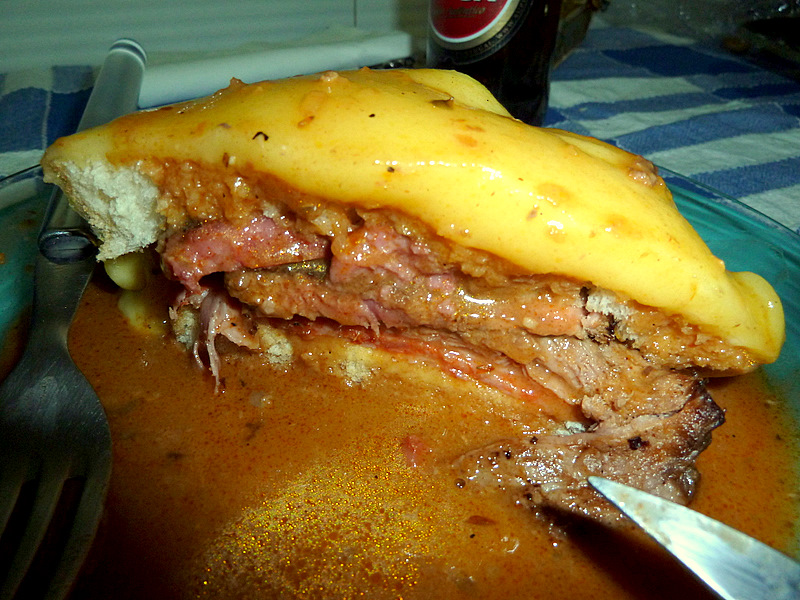 FrancesinhaMeat
🇵🇹 PortugalA layered sandwich from Porto with meats, cheese and a hot beer-tomato sauce
Sandwich or wrap, Lunch, Dinner
FrancesinhaMeat
🇵🇹 PortugalA layered sandwich from Porto with meats, cheese and a hot beer-tomato sauce
Sandwich or wrap, Lunch, Dinner
 Torta ahogada
🇲🇽 MexicoA crusty sandwich from Guadalajara covered in spicy chili sauce
Sandwich or wrap, Lunch, Dinner
Torta ahogada
🇲🇽 MexicoA crusty sandwich from Guadalajara covered in spicy chili sauce
Sandwich or wrap, Lunch, Dinner