
Bougatsa
In its own language: μπουγάτσα
Greek pastry with phyllo and sweet or savoury filling
Bougatsa is a Greek pastry made from thin layers of phyllo dough wrapped around a filling, most often semolina custard, cheese, or other ingredients. It is commonly eaten for breakfast or as a snack, especially in northern Greece, and is served in small pieces, sometimes dusted with sugar or cinnamon.
- Bougatsa is a Greek pastry with sweet or savoury fillings
- The most popular version uses semolina custard
- It is often served hot and dusted with sugar or cinnamon
- Bougatsa originated in northern Greece, especially Serres and Thessaloniki
- Shops called bougatsadika sell only bougatsa
What is Bougatsa?
Bougatsa is a pastry from Greece made by wrapping thin sheets of phyllo dough around a filling. The most common version holds a creamy semolina custard, but cheese, chocolate, apple, and savoury mixtures like spinach or minced meat are also used. The pastry is baked until golden and crisp, then cut into pieces. Sweet versions are often topped with powdered sugar or cinnamon. Bougatsa can be rich and creamy or light and flaky, depending on the filling and region.
Where does Bougatsa come from?
Bougatsa’s name traces back to Byzantine Greek and shares roots with the Roman hearth bread, focaccia. Its history may reach as far as the ancient Greek and Roman placenta cake, which was made with layers of dough and cheese and is still found as 'placenta' on Lesbos. Bougatsa was a regular food among the Cappadocian Greeks during the Byzantine era. The style most familiar today began in northern Greece, with cities like Serres and Thessaloniki known for their bougatsa shops.
How is Bougatsa made?
To make bougatsa, a filling such as semolina custard or cheese is prepared first. Several layers of phyllo dough, brushed with butter, are placed in a baking dish. The filling is spread inside, then wrapped and sealed by folding the dough. The pastry is baked until the outside is crisp and golden. Once out of the oven, it is portioned into small pieces. Sweet bougatsa is often dusted with sugar or cinnamon before serving.

How and when is Bougatsa eaten?
Bougatsa is a popular choice for breakfast or as a snack in Greece. It is typically enjoyed hot, either in the morning or as a midday treat. Specialty shops, called bougatsadika, serve only bougatsa, often slicing it to order. Sweet versions are eaten plain or with a sprinkle of sugar and cinnamon, while savoury types may be filled with cheese or meat. It is eaten with the hands or a fork, often on a small plate.
Kinds of Bougatsa
Bougatsa comes in many forms, depending on the region and filling. In Veria and Athens, the custard version is especially creamy and sweet. Thessaloniki’s bougatsa is known for its crisp texture and milder sweetness. Chania, on Crete, uses local mizithra cheese and sometimes adds sugar and cinnamon on top. Other fillings include chocolate, apple, potato, spinach, or a mix of spinach and feta, as well as minced meat.
What Bougatsa means
Bougatsa is a daily food in Greece and is closely tied to northern cities like Thessaloniki and Serres. It is also part of the breakfast tradition among Greek Jews. Some bakeries still make bougatsa by hand, a process that has been featured in food television. Bougatsa shops are a common sight in Greek towns, and the pastry is a familiar comfort food for many Greeks.
Questions people ask about Bougatsa
What is bougatsa made of?
Bougatsa is made from thin phyllo pastry wrapped around a filling, most often semolina custard for sweet versions, or cheese and other ingredients for savoury types.
Where does bougatsa come from?
Bougatsa comes from Greece, with its modern form originating in northern cities like Serres and Thessaloniki.
Is bougatsa sweet or savoury?
Bougatsa can be either sweet or savoury. The sweet kind usually has a custard filling, while savoury versions may contain cheese, spinach, or meat.
When is bougatsa usually eaten?
Bougatsa is most often eaten for breakfast or as a snack, typically served hot and cut into small pieces.
What are some common fillings for bougatsa?
Popular fillings include semolina custard, feta or mizithra cheese, chocolate, apple, spinach, and minced meat.
Good reading and sources
The facts on this page come from the Wikipedia article "Bougatsa", written by its contributors and used under the CC BY-SA 4.0 licence, and from its Wikidata record (CC0). Thali rewrote the text in its own words, with AI assistance, and compares every page with the article to make sure no passage is copied. It may be reused under the same CC BY-SA 4.0 licence with a link back.
It may contain mistakes, and it is not dietary or allergy advice: recipes differ from cook to cook. If something is wrong, tell us. Last refreshed 2026-10-03.
More from Greece
All the food of Greece BaklavaVegetarianباقلوا
🇹🇷 Turkey and 5 moreThin pastry filled with nuts and soaked in sweet syrup
Sweet or dessert, Tea time, Snacks
Easter egg
🇷🇺 Russia and 5 moreEggs dyed or decorated for Easter, symbolizing resurrection and new life
Sweet or dessert, Breakfast, Snacks
BaklavaVegetarianباقلوا
🇹🇷 Turkey and 5 moreThin pastry filled with nuts and soaked in sweet syrup
Sweet or dessert, Tea time, Snacks
Easter egg
🇷🇺 Russia and 5 moreEggs dyed or decorated for Easter, symbolizing resurrection and new life
Sweet or dessert, Breakfast, Snacks
 Turkish delightVegan
🇹🇷 Turkey and 5 moreSoft, chewy cubes of starch and sugar, often flavored or filled with nuts or fruit
Sweet or dessert, Snacks, Tea time
Turkish delightVegan
🇹🇷 Turkey and 5 moreSoft, chewy cubes of starch and sugar, often flavored or filled with nuts or fruit
Sweet or dessert, Snacks, Tea time
Its cousins elsewhere
All pies and savoury pastries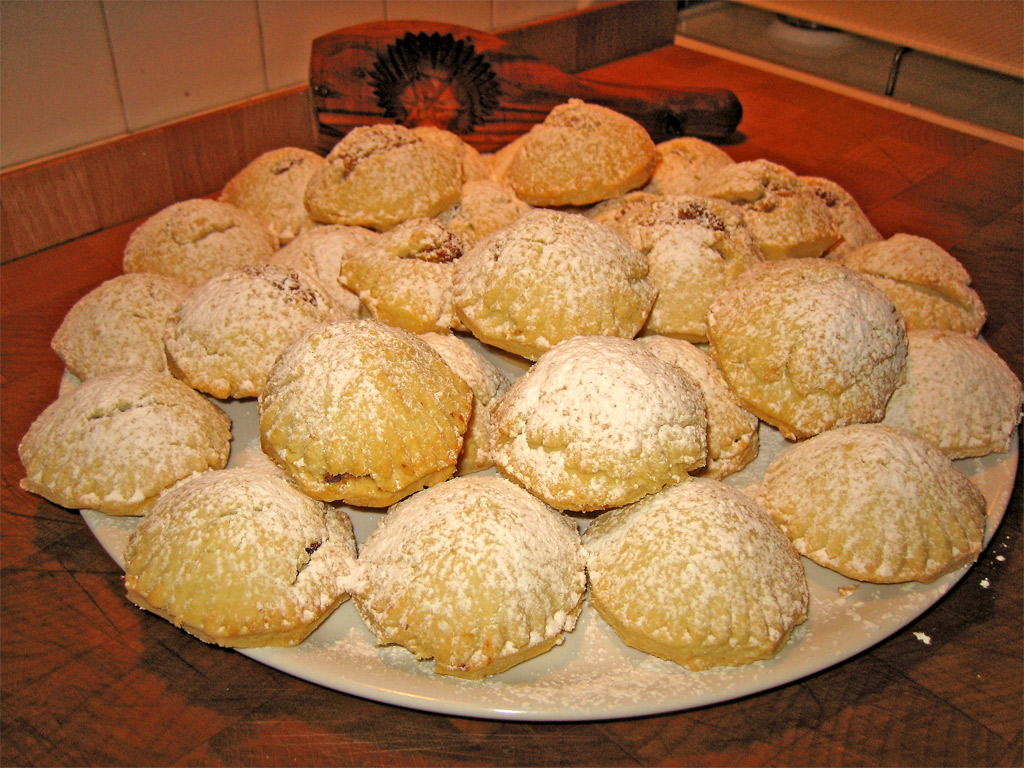 Ma'amoulVegetarianمعمول
🇸🇾 Syria and 4 moreSemolina cookies filled with dates or nuts, shaped in moulds for festive occasions
Sweet or dessert, Snacks, Tea time
Ma'amoulVegetarianمعمول
🇸🇾 Syria and 4 moreSemolina cookies filled with dates or nuts, shaped in moulds for festive occasions
Sweet or dessert, Snacks, Tea time
 Samosa
🇮🇳 India and 5 moreFried or baked pastry with a spiced filling, shaped into triangles or cones
Pie or savoury pastry, Snacks, Lunch
Samosa
🇮🇳 India and 5 moreFried or baked pastry with a spiced filling, shaped into triangles or cones
Pie or savoury pastry, Snacks, Lunch
 Chocolate brownieVegetarianBrownie
🇺🇸 United States and 2 moreDense chocolate squares baked as a bar, often served warm or with toppings
Sweet or dessert, Snacks, Tea time
Chocolate brownieVegetarianBrownie
🇺🇸 United States and 2 moreDense chocolate squares baked as a bar, often served warm or with toppings
Sweet or dessert, Snacks, Tea time