
Cajuzinho
A Brazilian party sweet shaped like a tiny cashew, made with peanuts and sugar
Cajuzinho is a sweet treat from Brazil, commonly found at celebrations and parties. Shaped to look like a small cashew, it is made from peanuts, cashew nuts, and sugar, with a strong peanut flavor. It is served at room temperature and enjoyed as a confectionery snack.
- Shaped to look like a tiny cashew
- Made with peanuts, cashew nuts, and sugar
- A staple at Brazilian parties
- Tastes mainly of peanut
- Served at room temperature
What is Cajuzinho?
Cajuzinho is a small Brazilian sweet shaped to resemble a cashew fruit. Despite its name, it tastes mainly of peanut, which is its main ingredient, along with cashew nuts and sugar. The mixture is formed into little shapes that mimic the look of a cashew, giving the treat its name, which means 'little cashew' in Portuguese. It is a familiar sight at parties and gatherings in Brazil, where it is served as a bite-sized confection.
Where does Cajuzinho come from?
Cajuzinho comes from Brazil, where it has become a staple of festive occasions and social gatherings. Its name is drawn from the Portuguese word for cashew, 'caju', though peanuts are the dominant flavor. The sweet’s popularity has made it a common feature at Brazilian parties, and its playful shape is a nod to the cashew fruit, which is also widely grown and enjoyed in Brazil.
How is Cajuzinho made?
To make cajuzinho, peanuts are ground and mixed with sugar and cashew nuts to form a dough-like mixture. This mixture is then shaped by hand into small, cashew-like forms. Sometimes, the sweets are rolled in sugar or decorated with a piece of cashew nut at one end to complete the resemblance. They are served at room temperature and do not require baking.
How and when is Cajuzinho eaten?
Cajuzinho is typically served at Brazilian parties, especially birthdays and festive gatherings. It is eaten as a sweet snack, often alongside other Brazilian confections. The small size makes it easy to pick up and eat in one or two bites. It is usually presented on platters, sometimes in small paper cups, and enjoyed by both children and adults.
Kinds of Cajuzinho
There are a few variations of cajuzinho, including versions shaped into round balls instead of the traditional cashew shape. Some recipes use almonds in place of or alongside cashew nuts. While the classic version is most common, these alternatives provide slight changes in texture or flavor, but the peanut taste remains central.
What Cajuzinho means
Cajuzinho is closely linked with Brazilian party culture, where it is almost always present at celebrations. Its playful shape and sweet flavor make it a favorite among children. Alongside other treats like brigadeiro and beijinho, cajuzinho is part of the traditional spread at birthdays and festive events, reflecting the importance of sweets in Brazilian social life.
Questions people ask about Cajuzinho
What is cajuzinho made of?
Cajuzinho is made from peanuts, cashew nuts, and sugar. The mixture is shaped to look like a small cashew, but the main flavor is peanut.
Where does cajuzinho come from?
Cajuzinho comes from Brazil, where it is a popular sweet served at parties and festive gatherings.
What does cajuzinho taste like?
Although it is shaped like a cashew, cajuzinho tastes strongly of peanut, which is its main ingredient.
When is cajuzinho usually eaten?
Cajuzinho is most often eaten as a snack at Brazilian parties, especially birthdays and celebrations.
Is cajuzinho vegetarian?
Yes, cajuzinho is vegetarian, as it is made from peanuts, cashew nuts, and sugar, with no animal products.
Good reading and sources
The facts on this page come from the Wikipedia article "Cajuzinho", written by its contributors and used under the CC BY-SA 4.0 licence, and from its Wikidata record (CC0). Thali rewrote the text in its own words, with AI assistance, and compares every page with the article to make sure no passage is copied. It may be reused under the same CC BY-SA 4.0 licence with a link back.
It may contain mistakes, and it is not dietary or allergy advice: recipes differ from cook to cook. If something is wrong, tell us. Last refreshed 2026-10-03.
More from Brazil
All the food of Brazil ÉclairVegetarian
🇫🇷 France and 2 moreChoux pastry filled with cream and topped with icing
Pie or savoury pastry, Snacks, Tea time
ÉclairVegetarian
🇫🇷 France and 2 moreChoux pastry filled with cream and topped with icing
Pie or savoury pastry, Snacks, Tea time
 Churrochurros
🇪🇸 Spain and 5 moreRidged, deep-fried dough sticks often eaten hot with chocolate or coffee
Sweet or dessert, Breakfast, Snacks
Churrochurros
🇪🇸 Spain and 5 moreRidged, deep-fried dough sticks often eaten hot with chocolate or coffee
Sweet or dessert, Breakfast, Snacks
 Dulce de lecheVegetarian
🇦🇷 Argentina and 2 moreA sweet, spreadable milk and sugar confection from Latin America
Sweet or dessert, Snacks, Tea time
Dulce de lecheVegetarian
🇦🇷 Argentina and 2 moreA sweet, spreadable milk and sugar confection from Latin America
Sweet or dessert, Snacks, Tea time
 Crème caramelVegetarian
🇫🇷 France and 5 moreCustard dessert topped with a layer of liquid caramel
Sweet or dessert
Crème caramelVegetarian
🇫🇷 France and 5 moreCustard dessert topped with a layer of liquid caramel
Sweet or dessert
Its cousins elsewhere
All sweets and desserts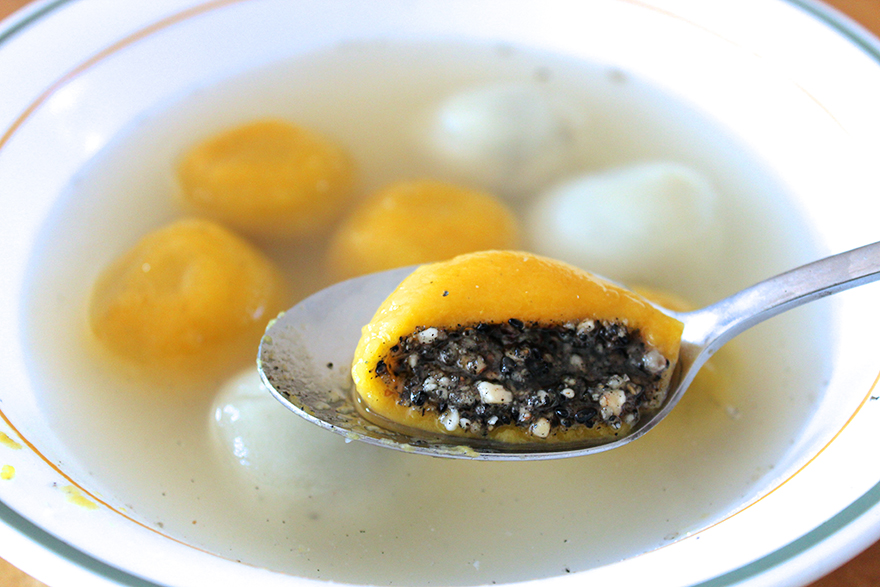 Tangyuan汤圆 / 湯圓
🇨🇳 China and 5 moreGlutinous rice balls, often filled, served in sweet or savory broth
Sweet or dessert, Snacks
Tangyuan汤圆 / 湯圓
🇨🇳 China and 5 moreGlutinous rice balls, often filled, served in sweet or savory broth
Sweet or dessert, Snacks
 Apam balikVegetarian
🇨🇳 China and 4 moreA folded sweet pancake filled with peanuts and sugar, sold at roadside stalls
Sweet or dessert, Snacks, Tea time
Apam balikVegetarian
🇨🇳 China and 4 moreA folded sweet pancake filled with peanuts and sugar, sold at roadside stalls
Sweet or dessert, Snacks, Tea time