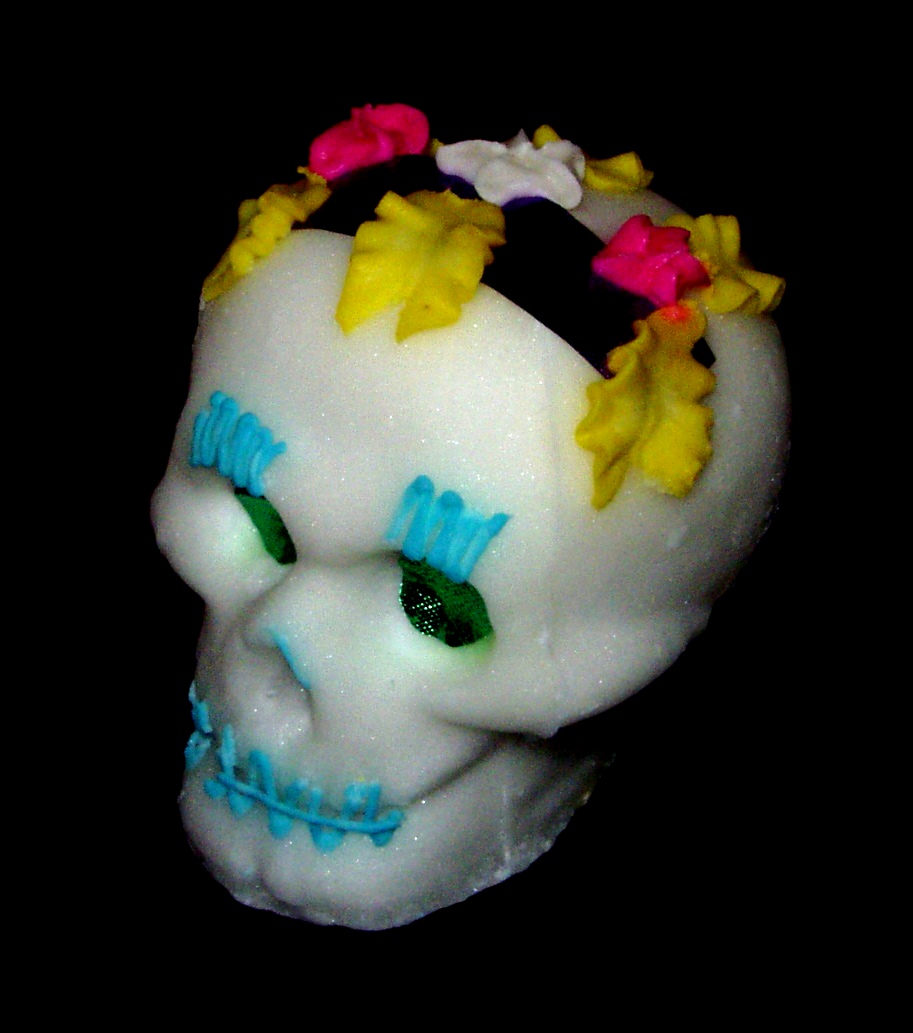
Calavera
Decorative or edible skulls made for Mexico’s Day of the Dead
Calavera are skull-shaped figures made from sugar or clay, central to Mexico’s Day of the Dead celebrations. They are crafted with molds, decorated with colorful icing, foil, and beads, and sometimes personalized with names. Some are edible, while others are purely decorative and placed on altars to honor the dead.
- Made from sugar or clay and shaped like a human skull
- Decorated with icing, foil, beads, and sometimes feathers
- Central to Mexico’s Day of the Dead celebrations
- Names are often written on the forehead in icing
- Some are edible, others are purely decorative
What is Calavera?
A calavera is a skull-shaped figure made from sugar (called alfeñique) or clay, most often seen during Mexico’s Day of the Dead. Sugar calaveras are molded, then decorated with bright icing, colored foil, beads, and sometimes feathers. Some are edible, flavored with vanilla or left plain, while others are purely decorative. They are small, portable, and often have a name written across the forehead. Clay calaveras are painted in metallic or bright colors and may have beaded eyes. The overall look is playful and colorful, serving as a lighthearted symbol of death.
Where does Calavera come from?
The tradition of making calaveras dates back at least to the 1740s, when skeletal figures were first sold. It likely blends indigenous practices, where skulls and bones were seen as powerful, with Catholic customs brought by the Spanish. The Day of the Dead itself is a mix of pre-Columbian and Catholic beliefs. Sugar skulls were originally gifts for children, but now appear on altars for the dead. Over time, calaveras have become a key symbol of the holiday, with both edible and artistic forms.
How is Calavera made?
To make a sugar calavera, cane sugar is pressed into molds to form the skull shape. Once set, the skulls are decorated with colored icing, foil, beads, and sometimes feathers. The process can be lengthy, with artisans spending months preparing for the season. Some calaveras are made to be eaten, using food-safe decorations and sometimes flavored with vanilla. Others are more elaborate, intended as folk art and not meant for consumption. Clay calaveras are shaped, painted, and decorated similarly, but are always for display.


How and when is Calavera eaten?
Edible calaveras are sometimes given to children or used as offerings on altars (ofrendas) during Day of the Dead. They may be eaten, kept for a few days, or thrown away after the holiday. Decorative calaveras are placed on altars to honor deceased loved ones, often with the person's name written on the skull. The act of eating or displaying calaveras is part of the broader celebration, which welcomes the spirits of the dead back home for a brief visit.
Kinds of Calavera
Calaveras can be made from sugar, clay, chocolate, marzipan, or even candied vegetables. While sugar and clay are most traditional, chocolate versions are also common. Designs vary from simple to highly elaborate, with some featuring hats or feathers. The Alfeñique fair in Toluca is famous for its wide range of calaveras and related sweets. Some calaveras are made as toys, especially the clay ones, and are painted in various colors.
What Calavera means
Calaveras are a central part of Day of the Dead festivities in Mexico, symbolizing the playful remembrance of those who have died. They are sold at markets in the weeks leading up to the holiday and are often personalized. The most famous artistic calavera is La Catrina, created by José Guadalupe Posada and later reimagined by Diego Rivera. Calaveras also appear in satirical poetry and art, poking fun at the living while reminding them of mortality. The tradition is both secular and festive, reflecting a unique approach to death.
When Calavera is on the table
Questions people ask about Calavera
What are calaveras made of?
Calaveras are usually made from cane sugar or clay, shaped in molds to resemble skulls. They are decorated with colored icing, foil, beads, and sometimes feathers. Some are edible, while others are just for display.
Where do calaveras come from?
Calaveras are from Mexico and are closely tied to the Day of the Dead festival. The tradition blends indigenous and Catholic influences and dates back at least to the 18th century.
Are calaveras meant to be eaten?
Some calaveras are edible, especially those made from sugar and decorated with food-safe materials. Others, especially the more elaborate or clay ones, are meant only for decoration and not for eating.
When are calaveras used or eaten?
Calaveras are made and used during the Day of the Dead and All Souls' Day, which fall on November 1 and 2. They are placed on altars as offerings or given as gifts, and some are eaten during the celebrations.
What is the meaning of calaveras in Mexican culture?
Calaveras are playful symbols of death, used to honor and remember deceased loved ones during the Day of the Dead. They reflect a lighthearted approach to mortality and are a key part of the holiday’s traditions.
Good reading and sources
The facts on this page come from the Wikipedia article "Calavera", written by its contributors and used under the CC BY-SA 4.0 licence, and from its Wikidata record (CC0). Thali rewrote the text in its own words, with AI assistance, and compares every page with the article to make sure no passage is copied. It may be reused under the same CC BY-SA 4.0 licence with a link back.
It may contain mistakes, and it is not dietary or allergy advice: recipes differ from cook to cook. If something is wrong, tell us. Last refreshed 2026-10-03.
More from Mexico
All the food of Mexico Hot chocolate
🇲🇽 Mexico and 5 moreA warm drink made from chocolate or cocoa, milk or water, and sugar
Drink, Breakfast, Snacks
Hot chocolate
🇲🇽 Mexico and 5 moreA warm drink made from chocolate or cocoa, milk or water, and sugar
Drink, Breakfast, Snacks
 Crème caramelVegetarian
🇫🇷 France and 5 moreCustard dessert topped with a layer of liquid caramel
Sweet or dessert
Crème caramelVegetarian
🇫🇷 France and 5 moreCustard dessert topped with a layer of liquid caramel
Sweet or dessert
 Eggnog
🇺🇸 United States and 5 moreA creamy, sweet drink of milk, eggs, sugar and spirits, served at Christmas
Drink, Snacks
Eggnog
🇺🇸 United States and 5 moreA creamy, sweet drink of milk, eggs, sugar and spirits, served at Christmas
Drink, Snacks
 HorchataVegan
🇪🇸 Spain and 5 moreSweet plant-based drink made from rice, tiger nuts or seeds
Drink, Snacks
HorchataVegan
🇪🇸 Spain and 5 moreSweet plant-based drink made from rice, tiger nuts or seeds
Drink, Snacks
Its cousins elsewhere
All sweets and desserts BerlinerVegetarian
🇩🇪 Germany and 5 moreJam-filled German doughnut without a central hole, dusted with sugar or glazed
Sweet or dessert, Snacks, Tea time
BerlinerVegetarian
🇩🇪 Germany and 5 moreJam-filled German doughnut without a central hole, dusted with sugar or glazed
Sweet or dessert, Snacks, Tea time
 Chocolate
🇨🇮 Ivory Coast and 5 moreA sweet or bitter food made from processed cocoa beans, enjoyed in many forms worldwide
Sweet or dessert, Snacks
Halvaحَلَاوَة
🇮🇷 Iran and 5 moreDense sweet made from seeds, grains, or vegetables, found across Asia, Africa, and Europe
Sweet or dessert, Snacks, Tea time
Chocolate
🇨🇮 Ivory Coast and 5 moreA sweet or bitter food made from processed cocoa beans, enjoyed in many forms worldwide
Sweet or dessert, Snacks
Halvaحَلَاوَة
🇮🇷 Iran and 5 moreDense sweet made from seeds, grains, or vegetables, found across Asia, Africa, and Europe
Sweet or dessert, Snacks, Tea time
 BaklavaVegetarianباقلوا
🇹🇷 Turkey and 5 moreThin pastry filled with nuts and soaked in sweet syrup
Sweet or dessert, Tea time, Snacks
BaklavaVegetarianباقلوا
🇹🇷 Turkey and 5 moreThin pastry filled with nuts and soaked in sweet syrup
Sweet or dessert, Tea time, Snacks