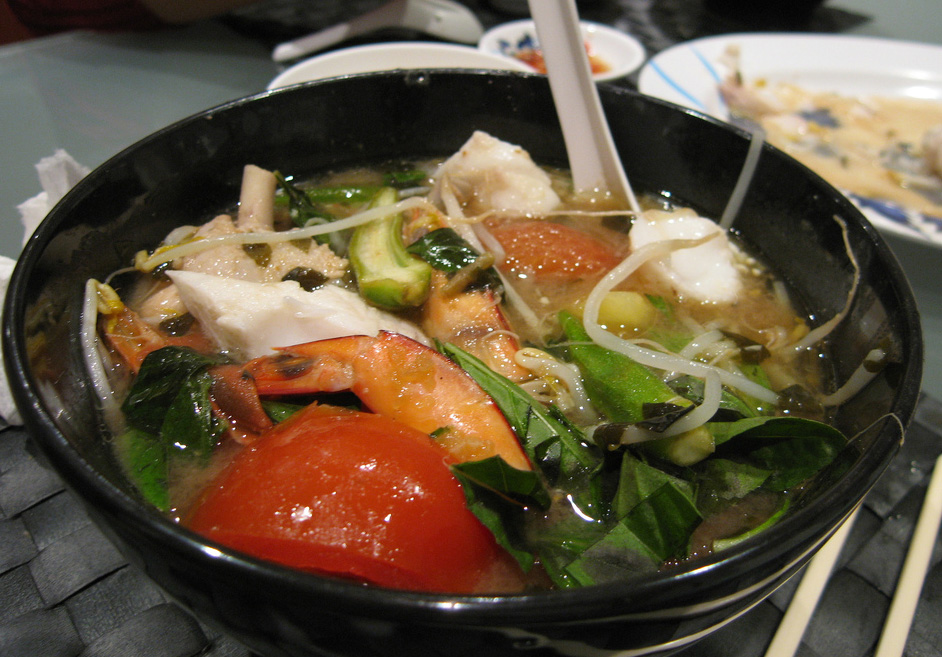
Canh chua
Vietnamese soup with fish, tamarind, pineapple and fresh herbs
Canh chua is a tangy soup from southern Vietnam, especially the Mekong Delta. It is usually made with river fish, pineapple, tomatoes, bean sprouts, and a broth soured with tamarind. Fresh herbs and caramelized garlic are added on top. The soup is eaten on its own or with rice or noodles.
- Tamarind gives the soup its signature sourness
- Fish from the Mekong Delta is a classic choice
- Fresh herbs and caramelized garlic are added before serving
- Can be eaten with rice or rice noodles
- Many regional and ingredient variations exist
What is Canh chua?
Canh chua is a Vietnamese soup known for its bright, sour taste. The broth gets its tang from tamarind, which is balanced by sweet pineapple and tomatoes. River fish is the usual protein, but other seafood or even meat can be used. The soup is often finished with fresh herbs such as sawtooth coriander, Thai basil, and long coriander, along with caramelized garlic and chopped scallions. Bean sprouts and sometimes okra or stems of giant elephant ear plants add crunch. The result is a colorful, aromatic soup with a mix of tart, sweet, and savory flavors.
Where does Canh chua come from?
This soup comes from the Mekong Delta in southern Vietnam, a region known for its rivers and freshwater fish. Over time, canh chua has become a staple across the country, with local twists in different areas. While the Mekong Delta version is the most recognized, central Vietnam also has its own types of canh chua. The soup's use of tamarind and river fish reflects the ingredients found in the delta's markets and waters.
How is Canh chua made?
To make canh chua, tamarind pulp is soaked in hot water and pressed to release its sour juice, which is strained and added to the soup base. Fish pieces are simmered in this broth along with pineapple chunks, tomato wedges, and sometimes other vegetables like okra or elephant ear stems. Bean sprouts are added near the end to keep them crisp. The soup is finished with a handful of fresh herbs and a topping of garlic that has been browned in oil. Each bowl is assembled just before serving to keep the ingredients vibrant.
How and when is Canh chua eaten?
Canh chua is usually served at lunch or dinner, either as a main dish or alongside other Vietnamese foods. People may eat it on its own, pour it over steamed white rice, or pair it with rice vermicelli noodles. The soup is often shared at the table, with diners adding extra herbs to taste. In some cases, it is prepared as a hot pot, where ingredients are cooked at the table and eaten communally.
Kinds of Canh chua
There are many versions of canh chua. Some use different types of fish, such as snakehead or catfish, while others feature shrimp, squid, eel, or even chicken. Vegetarian versions use tofu or bamboo shoots. Some recipes add pickled mustard greens or water spinach. In the Mekong Delta, flowers or special leaves might be included. The soup can also be made as a hot pot, called lẩu canh chua, for group meals.
What Canh chua means
Canh chua is a common part of daily meals in southern Vietnam, especially in the Mekong Delta. It reflects the region's abundance of fresh fish and tropical produce. The soup is not tied to any particular holiday or ritual but is enjoyed year-round. Its balance of flavors and use of local herbs make it a symbol of southern Vietnamese cooking.
Questions people ask about Canh chua
What is canh chua made of?
Canh chua is made with fish, tamarind, pineapple, tomatoes, bean sprouts, and a mix of fresh herbs. The broth is soured with tamarind, and caramelized garlic is added on top.
Where does canh chua come from?
Canh chua comes from the Mekong Delta in southern Vietnam, a region known for its rivers and fish. It is now enjoyed throughout Vietnam.
Is canh chua always made with fish?
Fish is traditional, but there are versions with shrimp, squid, eel, chicken, tofu, or vegetables. The soup can be adapted to different diets.
How is canh chua usually served?
It is served as a main dish or side, often with steamed rice or rice vermicelli. Sometimes it is prepared as a hot pot for sharing.
What makes canh chua taste sour?
The soup gets its sour flavor from tamarind pulp, which is soaked and strained into the broth.
Good reading and sources
The facts on this page come from the Wikipedia article "Canh chua", written by its contributors and used under the CC BY-SA 4.0 licence, and from its Wikidata record (CC0). Thali rewrote the text in its own words, with AI assistance, and compares every page with the article to make sure no passage is copied. It may be reused under the same CC BY-SA 4.0 licence with a link back.
It may contain mistakes, and it is not dietary or allergy advice: recipes differ from cook to cook. If something is wrong, tell us. Last refreshed 2026-10-03.
More from Vietnam
All the food of Vietnam Mu kropMeat
🇹🇭 Thailand and 4 moreThai-style fried pork belly with a crunchy golden skin
Main dish, Lunch, Dinner
Mu kropMeat
🇹🇭 Thailand and 4 moreThai-style fried pork belly with a crunchy golden skin
Main dish, Lunch, Dinner
 Phophở
🇻🇳 Vietnam and 5 moreVietnamese rice noodle soup with beef or chicken in aromatic broth
Soup, Breakfast, Lunch
Phophở
🇻🇳 Vietnam and 5 moreVietnamese rice noodle soup with beef or chicken in aromatic broth
Soup, Breakfast, Lunch
 Pâté
🇫🇷 France and 5 moreA smooth or coarse spread made from minced meat, liver, or vegetables
Sauce, pickle or ferment
Pâté
🇫🇷 France and 5 moreA smooth or coarse spread made from minced meat, liver, or vegetables
Sauce, pickle or ferment
Its cousins elsewhere
All soups BouillabaisseFish or seafood
🇫🇷 FranceA Marseille fish stew with local seafood, herbs, and saffron broth
Stew or curry, Lunch, Dinner
BouillabaisseFish or seafood
🇫🇷 FranceA Marseille fish stew with local seafood, herbs, and saffron broth
Stew or curry, Lunch, Dinner
 GazpachoVegan
🇪🇸 Spain and 1 moreChilled soup of blended raw vegetables, served cold in Spain and Portugal
Soup, Lunch, Dinner
GazpachoVegan
🇪🇸 Spain and 1 moreChilled soup of blended raw vegetables, served cold in Spain and Portugal
Soup, Lunch, Dinner
 Hariraالحريرة
🇲🇦 Morocco and 3 moreNorth African soup of tomato, legumes, herbs and spices, often served during Ramadan
Soup, Dinner, Supper
Hariraالحريرة
🇲🇦 Morocco and 3 moreNorth African soup of tomato, legumes, herbs and spices, often served during Ramadan
Soup, Dinner, Supper
 SalmorejoVegetariansalmorejo cordobés
🇪🇸 SpainThick cold tomato and bread soup from Córdoba, Andalusia
Soup, Lunch, Dinner
SalmorejoVegetariansalmorejo cordobés
🇪🇸 SpainThick cold tomato and bread soup from Córdoba, Andalusia
Soup, Lunch, Dinner