
Cheesesteak
Thinly sliced beef and melted cheese in a long hoagie roll
Cheesesteak is a hot sandwich from Philadelphia, Pennsylvania, made with thinly sliced beefsteak and melted cheese, served in a long hoagie roll. It is a popular fast food in the United States, with American cheese, provolone, or Cheez Whiz as common cheese choices. Cheesesteaks are eaten mainly as a main meal and have inspired many regional and modern versions.
- Invented in Philadelphia in the early 20th century
- Traditionally made with thinly sliced rib-eye or top round beef
- Common cheeses are American, provolone, or Cheez Whiz
- Served hot in a long, soft hoagie roll
- Many regional and modern variations exist
What is Cheesesteak?
A cheesesteak is a sandwich built around thin slices of beefsteak, usually rib-eye or top round, cooked quickly on a griddle. The meat is combined with melted cheese—most often American, provolone, or Cheez Whiz—and loaded into a long, soft hoagie roll. Sautéed onions are a frequent addition, and some versions include mushrooms or peppers. The sandwich is served hot, with the cheese melting into the meat and bread. The roll is soft but sturdy enough to hold the filling, and the overall taste is rich, savory, and slightly salty.
Where does Cheesesteak come from?
Cheesesteak began in Philadelphia in the early 20th century. Pat and Harry Olivieri, who ran a hot dog stand, are often credited with its invention in the 1930s when they put chopped beef and onions on an Italian roll. The sandwich first appeared without cheese; cheese was added later, with American cheese or provolone as early options. The exact story of who first added cheese is debated. Pat's King of Steaks, opened by Pat Olivieri, remains a landmark. Over time, cheesesteaks spread throughout Philadelphia and became a symbol of the city.
How is Cheesesteak made?
To make a cheesesteak, thin slices of beef are cooked on a lightly oiled griddle until browned, then chopped or scrambled with a spatula. Cheese slices or spread are placed over the meat to melt. The roll is placed on top to warm, then the whole mixture is scooped up and pressed into the roll. Sautéed onions, mushrooms, or peppers may be added. The sandwich is then cut in half and served hot. The bread is typically a long hoagie roll, soft and slightly salted, sometimes with a firm crust or sesame seeds.

How and when is Cheesesteak eaten?
Cheesesteaks are usually eaten for lunch or dinner, often as a quick meal from sandwich shops, food carts, or casual restaurants. In Philadelphia, they are a staple of local fast food culture and are commonly ordered with or without onions and with a choice of cheese. Some people add mushrooms, peppers, or other toppings. The sandwich is typically eaten by hand, sometimes wrapped in paper for convenience. Outside Philadelphia, it is often called a 'Philly cheesesteak.'
Kinds of Cheesesteak
There are many versions of the cheesesteak. Chicken cheesesteaks use chicken instead of beef. A Buffalo chicken cheesesteak adds Buffalo sauce and sometimes blue cheese. Cheesesteak hoagies include lettuce and tomato. The Heater, served at Phillies baseball games, features jalapeños and hot sauce. Mushroom and pepper cheesesteaks add those vegetables. Pizza steak is topped with pizza sauce and mozzarella. Vegan versions use plant-based substitutes for meat and cheese. In Lahore, Pakistan, local spices are added.
What Cheesesteak means
Cheesesteak is closely tied to Philadelphia’s identity, with many family-run shops and debates over the best version. Pat's King of Steaks and Geno's are two famous rivals. The sandwich has become a symbol of the city and is featured at local sports events. Cheez Whiz, introduced in the 1950s, is especially popular at Pat's. The sandwich’s fame has spread, and it is now found in fast food chains and high-end restaurants, as well as in other countries with local twists.
Questions people ask about Cheesesteak
What is a cheesesteak made of?
A cheesesteak is made with thinly sliced beefsteak, melted cheese (usually American, provolone, or Cheez Whiz), and a long hoagie roll. Sautéed onions, mushrooms, or peppers are sometimes added.
Where did the cheesesteak originate?
The cheesesteak originated in Philadelphia, Pennsylvania, in the United States. It was first made in the early 20th century and is now a symbol of Philadelphia’s food culture.
What kind of cheese is used on a cheesesteak?
The most common cheeses are American cheese, provolone, and Cheez Whiz. Some shops also use Cooper Sharp American or mozzarella for certain variations.
Are there vegetarian or vegan versions of cheesesteak?
Yes, vegan cheesesteaks replace the beef and cheese with plant-based alternatives, such as seitan or mushrooms for the meat and soy-based cheese.
How is a cheesesteak usually served?
A cheesesteak is served hot, typically as a main meal for lunch or dinner. It is eaten by hand, often from sandwich shops or food carts, and can be customized with various toppings.
Good reading and sources
- Encyclopaedia BritannicaArticle
- Where to Eat at Citizens Bank Park, Home of the Phanatic (and the Phillies)Eater, Article
The facts on this page come from the Wikipedia article "Cheesesteak", written by its contributors and used under the CC BY-SA 4.0 licence, and from its Wikidata record (CC0). Thali rewrote the text in its own words, with AI assistance, and compares every page with the article to make sure no passage is copied. It may be reused under the same CC BY-SA 4.0 licence with a link back.
It may contain mistakes, and it is not dietary or allergy advice: recipes differ from cook to cook. If something is wrong, tell us. Last refreshed 2026-10-03.
More from the United States
All the food of the United States Pizza
🇮🇹 Italy and 4 moreFlatbread topped with tomato, cheese and baked at high heat
Main dish, Lunch, Dinner
Pizza
🇮🇹 Italy and 4 moreFlatbread topped with tomato, cheese and baked at high heat
Main dish, Lunch, Dinner
 HamburgerMeat
🇺🇸 United States and 1 moreA hot ground meat patty in a sliced bun, often with salad and sauces
Main dish, Lunch, Dinner
HamburgerMeat
🇺🇸 United States and 1 moreA hot ground meat patty in a sliced bun, often with salad and sauces
Main dish, Lunch, Dinner
 French friesVeganpommes frites
🇫🇷 France and 5 moreDeep-fried strips of potato, served hot and salted
Street food, Lunch, Dinner
French friesVeganpommes frites
🇫🇷 France and 5 moreDeep-fried strips of potato, served hot and salted
Street food, Lunch, Dinner
 SpaghettiVegan
🇮🇹 Italy and 2 moreLong, thin pasta strands made from durum wheat and water
Noodle or pasta dish, Lunch, Dinner
SpaghettiVegan
🇮🇹 Italy and 2 moreLong, thin pasta strands made from durum wheat and water
Noodle or pasta dish, Lunch, Dinner
Its cousins elsewhere
All sandwiches and wraps GyrosMeatγύρος
🇬🇷 Greece and 3 moreGreek pita wrap with rotisserie meat, tomato, onion, fries and tzatziki
Sandwich or wrap, Lunch, Dinner
GyrosMeatγύρος
🇬🇷 Greece and 3 moreGreek pita wrap with rotisserie meat, tomato, onion, fries and tzatziki
Sandwich or wrap, Lunch, Dinner
 Croque monsieurMeatcroque-monsieur
🇫🇷 FranceHot French sandwich of ham and cheese, baked or fried until crisp
Sandwich or wrap, Lunch, Snacks
Croque monsieurMeatcroque-monsieur
🇫🇷 FranceHot French sandwich of ham and cheese, baked or fried until crisp
Sandwich or wrap, Lunch, Snacks
 ZapiekankaVegetarian
🇵🇱 PolandA toasted open-face baguette sandwich with mushrooms, cheese, and ketchup
Street food, Snacks, Lunch
ZapiekankaVegetarian
🇵🇱 PolandA toasted open-face baguette sandwich with mushrooms, cheese, and ketchup
Street food, Snacks, Lunch
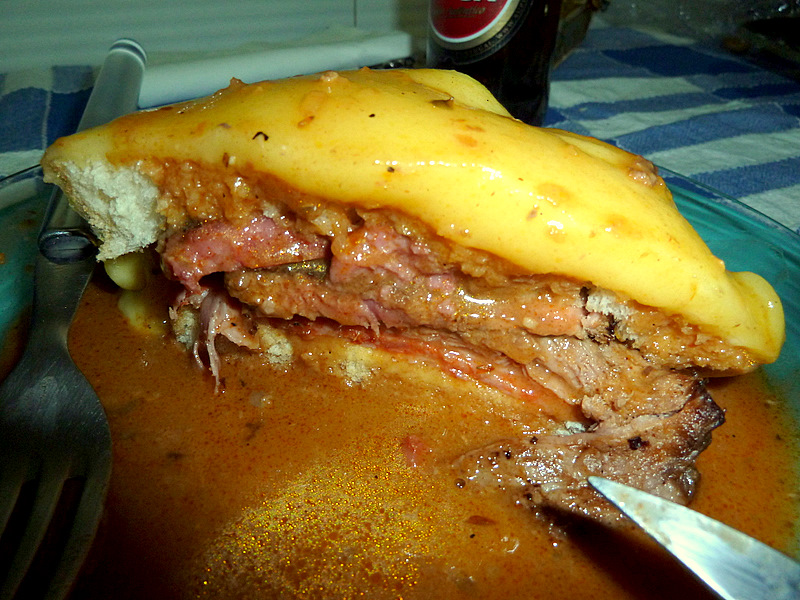 FrancesinhaMeat
🇵🇹 PortugalA layered sandwich from Porto with meats, cheese and a hot beer-tomato sauce
Sandwich or wrap, Lunch, Dinner
FrancesinhaMeat
🇵🇹 PortugalA layered sandwich from Porto with meats, cheese and a hot beer-tomato sauce
Sandwich or wrap, Lunch, Dinner