Chhena gaja
In its own language: ଛେନା ଗଜା
Odisha sweet of chhena and semolina, shaped and cooked in sugar syrup
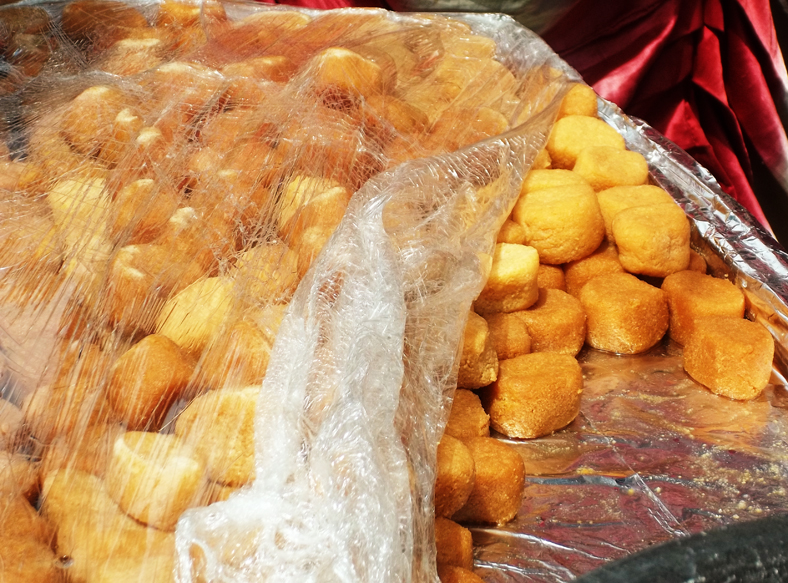
Chhena gaja is a sweet from Odisha, India, made by kneading chhena (a fresh cheese) with semolina, shaping it, and cooking it in sugar syrup. Unlike other chhena-based sweets such as rasagola, chhena gaja is mostly found within Odisha and is known for its unique texture and taste.
- Made from chhena (fresh cheese) and semolina
- Cooked in thick sugar syrup until dense and sweet
- Specialty of Odisha, especially Balasore
- Sometimes forms a sugar crust when dried after cooking
What is Chhena gaja?
Chhena gaja is a sweet treat made from chhena, which is a fresh cheese similar to cottage cheese, and semolina (sooji). The mixture is kneaded, shaped into rectangular pieces, and cooked in a thick sugar syrup. Sometimes, after cooking, the pieces are left to dry a bit, causing a light sugar crust to form on the outside. The result is a dense, moist sweet with a slightly grainy texture from the semolina and a rich, sugary flavor.
Where does Chhena gaja come from?
Chhena gaja comes from Odisha, a state on India’s east coast. It is especially associated with the city of Balasore. While other chhena-based sweets from Odisha, like rasagola, have become popular across India, chhena gaja remains a specialty of Odisha and is less known outside the region. Its ingredients are similar to those in other Odia sweets, but its preparation and final taste set it apart.
How is Chhena gaja made?
To make chhena gaja, chhena and semolina are combined and kneaded until smooth. The mixture is pressed to remove excess water and then left to dry briefly. It is shaped into palm-sized rectangles, which are then boiled in thick sugar syrup. Sometimes, after boiling, the pieces are allowed to dry further, which can cause a thin layer of sugar to crystallize on the surface.


How and when is Chhena gaja eaten?
Chhena gaja is eaten as a sweet snack or dessert. It is enjoyed throughout the year, often bought from sweet shops in Odisha. The sweet is typically eaten on its own, without accompaniments. It is not tied to any particular festival or religious event, but is a regular part of local food culture.
Kinds of Chhena gaja
While the basic method and ingredients remain consistent, some makers allow the cooked gaja to dry longer, creating a firmer texture and a crystallized sugar coating. The size and exact shape may vary from shop to shop or household to household, but the core ingredients and process are the same.
What Chhena gaja means
Chhena gaja is a point of local pride in Odisha, where it is well known and widely enjoyed. Unlike rasagola, which has become famous across India, chhena gaja is mostly found in Odisha and is considered a regional specialty. It is a common offering in sweet shops and is part of the everyday food culture of the state.
Questions people ask about Chhena gaja
What is chhena gaja made of?
Chhena gaja is made from chhena (a fresh cheese similar to cottage cheese), semolina, and sugar. The ingredients are kneaded together, shaped, and cooked in sugar syrup.
Where does chhena gaja come from?
Chhena gaja is from Odisha, a state in eastern India. It is especially linked to the city of Balasore and is a well-known sweet in the region.
How is chhena gaja different from rasagola?
While both use chhena as a base, chhena gaja is kneaded with semolina, shaped into rectangles, and cooked in syrup, resulting in a denser, grainier sweet. Rasagola is round and spongy.
Is chhena gaja vegetarian?
Yes, chhena gaja is vegetarian. It is made from milk products and does not contain meat, eggs, or fish.
Is chhena gaja eaten for any festival?
Chhena gaja is not tied to any specific festival or religious occasion. It is enjoyed as an everyday sweet in Odisha.
Good reading and sources
The facts on this page come from the Wikipedia article "Chhena gaja", written by its contributors and used under the CC BY-SA 4.0 licence, and from its Wikidata record (CC0). Thali rewrote the text in its own words, with AI assistance, and compares every page with the article to make sure no passage is copied. It may be reused under the same CC BY-SA 4.0 licence with a link back.
It may contain mistakes, and it is not dietary or allergy advice: recipes differ from cook to cook. If something is wrong, tell us. Last refreshed 2026-10-03.
More from India
All the food of India Ice cream
🇺🇸 United States and 5 moreA frozen dessert made from sweetened, flavoured milk or cream
Sweet or dessert, Snacks
Halvaحَلَاوَة
🇮🇷 Iran and 5 moreDense sweet made from seeds, grains, or vegetables, found across Asia, Africa, and Europe
Sweet or dessert, Snacks, Tea time
Ice cream
🇺🇸 United States and 5 moreA frozen dessert made from sweetened, flavoured milk or cream
Sweet or dessert, Snacks
Halvaحَلَاوَة
🇮🇷 Iran and 5 moreDense sweet made from seeds, grains, or vegetables, found across Asia, Africa, and Europe
Sweet or dessert, Snacks, Tea time
 Candy
🇺🇸 United States and 5 moreSmall sweet treats made mainly from sugar or sweeteners
Sweet or dessert, Snacks
Candy
🇺🇸 United States and 5 moreSmall sweet treats made mainly from sugar or sweeteners
Sweet or dessert, Snacks
 French toast
🇫🇷 France and 5 moreBread soaked in egg and milk, pan-fried and served sweet or savoury
Main dish, Breakfast, Snacks
French toast
🇫🇷 France and 5 moreBread soaked in egg and milk, pan-fried and served sweet or savoury
Main dish, Breakfast, Snacks
Its cousins elsewhere
All sweets and desserts Qatayefقطايف
🇪🇬 Egypt and 5 moreSweet stuffed pancakes, folded and filled with nuts or cream, served for Ramadan
Sweet or dessert, Snacks, Tea time
Qatayefقطايف
🇪🇬 Egypt and 5 moreSweet stuffed pancakes, folded and filled with nuts or cream, served for Ramadan
Sweet or dessert, Snacks, Tea time
 GalaktobourekoVegetarianγαλακτομπούρεκο
🇬🇷 Greece and 4 moreCustard-filled filo pastry soaked in syrup
Pie or savoury pastry
GalaktobourekoVegetarianγαλακτομπούρεκο
🇬🇷 Greece and 4 moreCustard-filled filo pastry soaked in syrup
Pie or savoury pastry
 Seffaالسفة
🇲🇦 Morocco and 1 moreSweetened couscous or noodles with butter, cinnamon, and almonds
Main dish
Seffaالسفة
🇲🇦 Morocco and 1 moreSweetened couscous or noodles with butter, cinnamon, and almonds
Main dish
 Chocolate
🇨🇮 Ivory Coast and 5 moreA sweet or bitter food made from processed cocoa beans, enjoyed in many forms worldwide
Sweet or dessert, Snacks
Chocolate
🇨🇮 Ivory Coast and 5 moreA sweet or bitter food made from processed cocoa beans, enjoyed in many forms worldwide
Sweet or dessert, Snacks