
Qatayef
In its own language: قطايف
Sweet stuffed pancakes, folded and filled with nuts or cream, served for Ramadan
Qatayef is a festive dessert from the Middle East, especially popular in Egypt, Palestine, Jordan, Syria, and Lebanon. These are small pancakes cooked on one side, then stuffed with sweet cheese, nuts, or cream, and served with syrup. Qatayef is most often enjoyed during Ramadan, after sunset meals.
- Qatayef is a classic Ramadan dessert across the Middle East
- It is made by cooking pancakes on one side and filling them with nuts or cream
- The largest qatayef ever made weighed over 100 kilograms in Bethlehem
- Qatayef is enjoyed by both Muslims and Christians during festive times
- In Jordan, millions of qatayef are eaten each Ramadan
What is Qatayef?
Qatayef are small, round pancakes with a soft, spongy texture, cooked only on one side. Once cooled, they are folded around sweet fillings such as chopped nuts, sweet cheese, or thick cream. Some versions are fried or baked until crisp, while others are left soft and served fresh. They are finished with a pour of sugar syrup or honey, giving them a sweet, aromatic flavor. The pancakes are often scented with spices like cardamom or cinnamon, and the fillings can include pistachios, walnuts, or almonds.
Where does Qatayef come from?
Qatayef has roots in medieval Arab cooking, with recipes found in 10th-century cookbooks from the Abbasid era. It was prepared for caliphs and mentioned by poets and writers in Egypt and the Levant. The dessert was also known in Ottoman Turkish as yassi kadayif, and a similar sweet appears in European texts from the 13th century. Over time, qatayef became closely linked to Ramadan, spreading across the Middle East and even into Turkish cuisine.
How is Qatayef made?
The batter for qatayef is made from wheat or semolina flour, yeast, water, and sometimes sugar and baking powder. It is poured onto a hot surface, forming small rounds that are cooked on one side only. Once set, each pancake is filled with a mixture such as sweetened nuts, cheese, or cream. The filled pancakes are then either folded and sealed, then fried or baked, or simply folded and served fresh. A warm syrup or honey is poured over before serving.


How and when is Qatayef eaten?
Qatayef is most often eaten during Ramadan, especially after the evening meal that breaks the fast. It is sold in bakeries and by street vendors, and also made at home. People enjoy it as a sweet treat with tea or coffee, and it is sometimes served at other celebrations, such as Eid il-Burbara among Arab Christians. Qatayef can be eaten warm or at room temperature, and is often shared with family and guests.
Kinds of Qatayef
There are several types of qatayef. Qatayef asafiri is filled with cream and left unbaked, served with syrup. Another version, qatayef satati, is stuffed with nuts or cheese, then fried or baked for a crisp finish. Modern fillings, such as chocolate spreads, are also used. In Turkey, yassi kadayif is recognized as a regional specialty and made with a blend of flours. The choice of filling and whether to fry or serve fresh varies by region and family tradition.
What Qatayef means
Qatayef is a symbol of Ramadan in many Arab countries, with millions consumed each year in places like Jordan and Palestine. Its popularity is tied to its simple ingredients and festive associations. The dessert appears in literature, and in 2010, Bethlehem set a world record for the largest qatayef. Both Muslims and Christians in the Levant enjoy it during their holidays, and it is a familiar sight in markets throughout the season.
When Qatayef is on the table
Questions people ask about Qatayef
What is qatayef made of?
Qatayef is made from a batter of wheat or semolina flour, yeast, water, and sometimes sugar. The pancakes are filled with sweet cheese, nuts like pistachios or walnuts, or thick cream, and served with syrup.
Where does qatayef come from?
Qatayef is a traditional dessert from the Middle East, especially Egypt, Palestine, Jordan, Syria, and Lebanon. Its history goes back to medieval Arab cookbooks and it is now found throughout the region.
When is qatayef usually eaten?
Qatayef is most commonly eaten during Ramadan, especially after sunset when the daily fast ends. It is also served at some Christian celebrations in the Levant.
How is qatayef served?
Qatayef can be served fresh, fried, or baked. It is typically filled with nuts, cheese, or cream and topped with sweet syrup or honey.
Are there different types of qatayef?
Yes, there are several variations. Some are filled with cream and left unbaked, while others are stuffed with nuts or cheese and then fried or baked. Modern versions may use chocolate or other fillings.
Good reading and sources
- Recipes for Ramadan: Sally Mousa’s qatayef (folded pancakes), five waysThe Guardian, Recipe
- عيد البربارة: من هي القديسة التي "هربت مع بنات الحارة"؟BBC, Article
The facts on this page come from the Wikipedia article "Qatayef", written by its contributors and used under the CC BY-SA 4.0 licence, and from its Wikidata record (CC0). Thali rewrote the text in its own words, with AI assistance, and compares every page with the article to make sure no passage is copied. It may be reused under the same CC BY-SA 4.0 licence with a link back.
It may contain mistakes, and it is not dietary or allergy advice: recipes differ from cook to cook. If something is wrong, tell us. Last refreshed 2026-10-03.
More from Egypt
All the food of Egypt Candy
🇺🇸 United States and 5 moreSmall sweet treats made mainly from sugar or sweeteners
Sweet or dessert, Snacks
Easter egg
🇷🇺 Russia and 5 moreEggs dyed or decorated for Easter, symbolizing resurrection and new life
Sweet or dessert, Breakfast, Snacks
Candy
🇺🇸 United States and 5 moreSmall sweet treats made mainly from sugar or sweeteners
Sweet or dessert, Snacks
Easter egg
🇷🇺 Russia and 5 moreEggs dyed or decorated for Easter, symbolizing resurrection and new life
Sweet or dessert, Breakfast, Snacks
 JalebiVegetarian
🇮🇳 India and 6 moreDeep-fried spirals of batter soaked in syrup, enjoyed across Asia and Africa
Pie or savoury pastry, Breakfast, Snacks
JalebiVegetarian
🇮🇳 India and 6 moreDeep-fried spirals of batter soaked in syrup, enjoyed across Asia and Africa
Pie or savoury pastry, Breakfast, Snacks
 Qamar al-DinVeganقمر الدين
🇸🇾 Syria and 3 moreThick apricot fruit leather and drink, especially served during Ramadan
Drink, Snacks
Qamar al-DinVeganقمر الدين
🇸🇾 Syria and 3 moreThick apricot fruit leather and drink, especially served during Ramadan
Drink, Snacks
Its cousins elsewhere
All sweets and desserts BaklavaVegetarianباقلوا
🇹🇷 Turkey and 5 moreThin pastry filled with nuts and soaked in sweet syrup
Sweet or dessert, Tea time, Snacks
BaklavaVegetarianباقلوا
🇹🇷 Turkey and 5 moreThin pastry filled with nuts and soaked in sweet syrup
Sweet or dessert, Tea time, Snacks
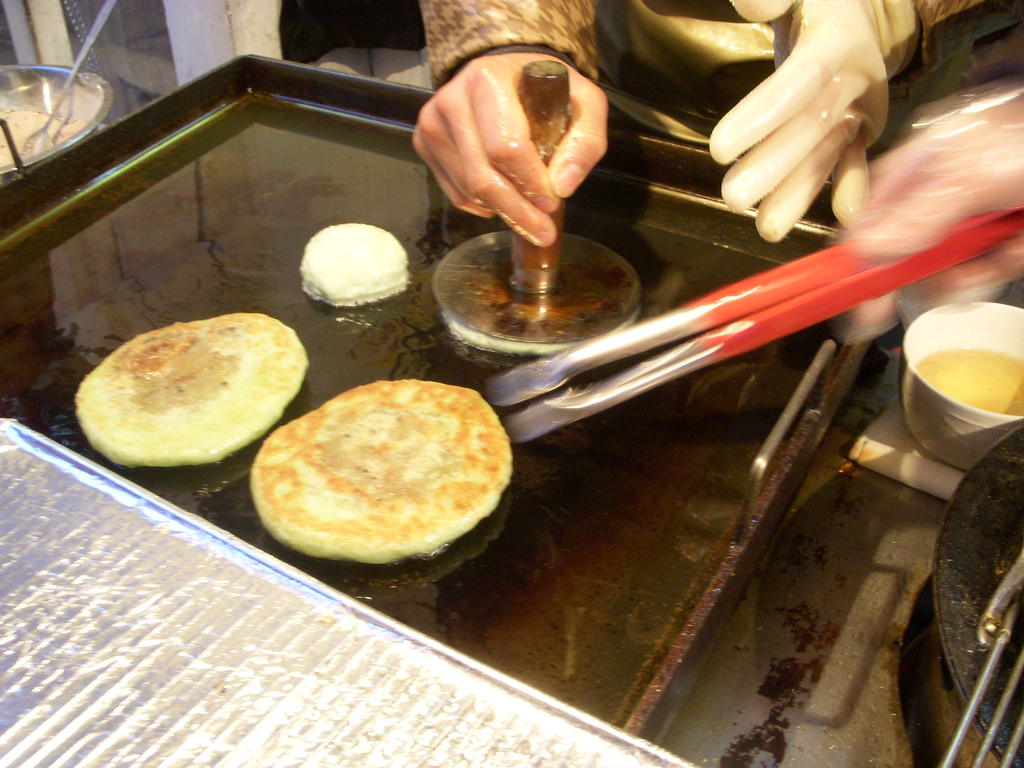 HotteokVegetarian호떡
🇰🇷 South Korea and 2 moreKorean street pancake with a sweet, nutty filling
Street food, Snacks
HotteokVegetarian호떡
🇰🇷 South Korea and 2 moreKorean street pancake with a sweet, nutty filling
Street food, Snacks
 GujhiaVegetarian
🇮🇳 IndiaSweet deep-fried dumpling filled with milk solids, coconut and nuts
Sweet or dessert, Snacks
GujhiaVegetarian
🇮🇳 IndiaSweet deep-fried dumpling filled with milk solids, coconut and nuts
Sweet or dessert, Snacks
 Cardamom breadVegetarian
🇫🇮 Finland and 3 moreEnriched Nordic sweet bread scented with cardamom, served with coffee or tea
Bread, Snacks, Tea time
Cardamom breadVegetarian
🇫🇮 Finland and 3 moreEnriched Nordic sweet bread scented with cardamom, served with coffee or tea
Bread, Snacks, Tea time