Christmas cake
Cakes served at Christmas, often rich with fruit, nuts or cream
Christmas cake refers to a range of cakes enjoyed during the Christmas season in many countries. These cakes can be dense fruitcakes soaked in alcohol, light sponge cakes with cream and fruit, or sweet breads. Recipes and styles vary widely, reflecting local tastes and traditions, but all are made to celebrate the holiday.
- British Christmas cake is often covered in marzipan and icing
- Japanese Christmas cake is a sponge with cream and strawberries
- Bolo Rei in Portugal and Brazil contains candied fruit and a hidden bean
- In Yorkshire, Christmas cake is eaten with Wensleydale cheese
- French Bûche de Noël is shaped and decorated like a log
What is Christmas cake?
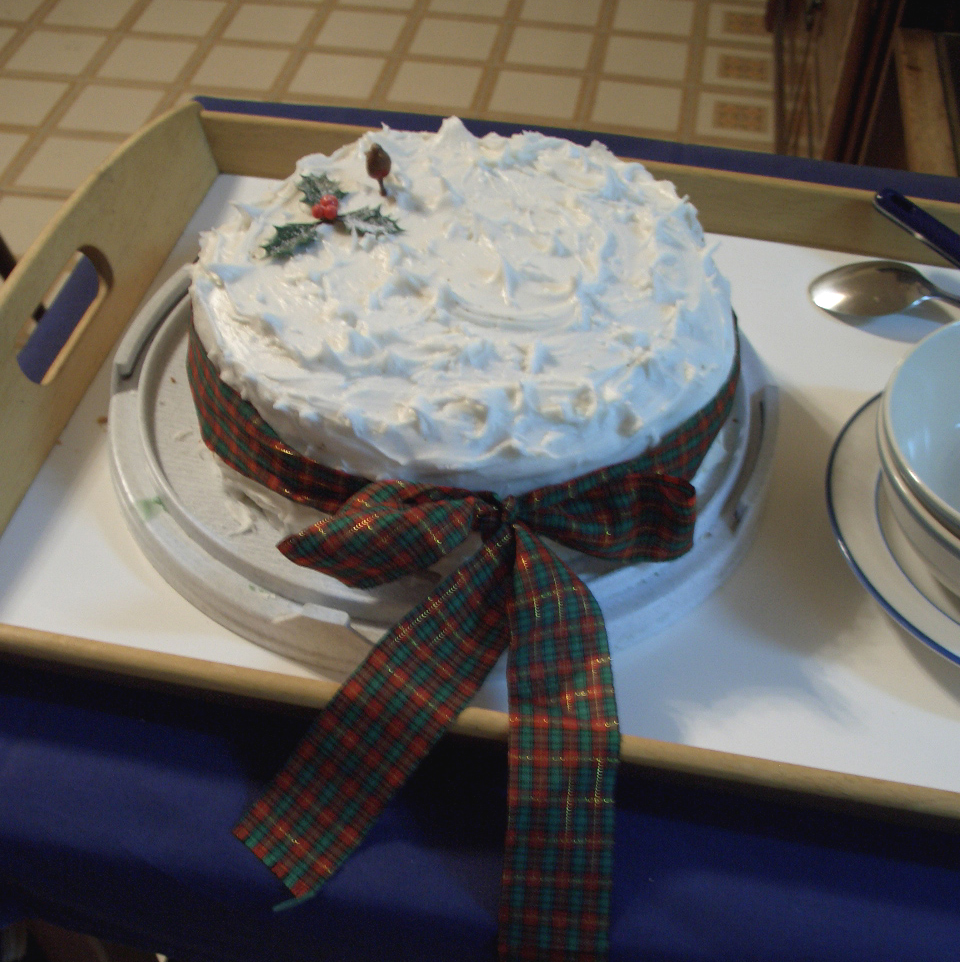
Christmas cake is a festive cake made for the Christmas season, with styles that differ greatly by country. In the UK, it is often a dense fruitcake with dried fruits soaked in spirits, sometimes covered in marzipan and icing, and decorated with holiday motifs. In Japan, it is a light sponge cake with whipped cream and strawberries. Other countries have their own versions, such as sweet breads or cakes with nuts and candied fruit. The look and taste depend on local tradition, ranging from rich and spiced to light and creamy.
Where does Christmas cake come from?
The English Christmas cake began as plum porridge, evolving over time into a rich fruitcake. In Scotland, the Whisky Dundee cake and black bun are traditional, with whisky and dried fruits. Other countries developed their own holiday cakes: Italy’s panettone and pandoro, Portugal’s Bolo Rei, and France’s Bûche de Noël. The Japanese Christmas cake, a sponge with cream and strawberries, became popular in the 20th century as a symbol of Western modernity. Each version reflects local ingredients and customs.
How is Christmas cake made?
Traditional British Christmas cakes start with soaking dried fruits like currants, sultanas, and raisins in alcohol such as brandy or whisky. The fruit is mixed into a batter with flour, eggs, butter, and spices, then baked and sometimes covered with marzipan and icing. Decorations may include ribbons and holiday figures. Japanese cakes are made from sponge cake, layered with whipped cream and decorated with strawberries and chocolates. Other countries use different bases, such as sweet enriched doughs or layered cakes with custard and fruit.


How and when is Christmas cake eaten?
Christmas cake is usually served during the Christmas holiday, often as a dessert or with tea. In the UK and Cyprus, it is a treat for guests. In Yorkshire, it is eaten with Wensleydale cheese. In Japan, families share the cake on Christmas Eve. In Portugal and Brazil, Bolo Rei is eaten with family and friends, sometimes with a hidden bean or trinket for good luck. The cake is often sliced and shared at gatherings, symbolizing celebration and togetherness.
Kinds of Christmas cake
Many countries have their own Christmas cakes. The UK has rich fruitcakes and the lighter Whisky Dundee. Japan’s version is a whipped cream sponge cake. In Italy, panettone and pandoro are popular, while France and French-speaking countries enjoy the Bûche de Noël. The Philippines has liquor-soaked pound cakes and crema de fruta. Portugal and Brazil serve Bolo Rei, decorated with candied fruit and nuts. Recipes may use different fruits, nuts, spices, or alcohol, and some are iced while others are plain.
What Christmas cake means
Christmas cake is closely tied to Christmas celebrations and family gatherings. In Portugal, finding a bean in Bolo Rei brings good luck. In Japan, the cake became a symbol of Western influence and is now a ritual of sharing. In the UK, adding coins for luck was once common. The Bûche de Noël recalls the Yule log tradition. These cakes are part of holiday customs, marking the season with special flavors and decorations.
When Christmas cake is on the table
Questions people ask about Christmas cake
What is Christmas cake made of?
Christmas cake is usually made from flour, eggs, sugar, butter, and dried or candied fruits. Some versions include nuts, spices, and alcohol like brandy or whisky. In Japan, it is a sponge cake with whipped cream and strawberries.
Where does Christmas cake come from?
Christmas cake has roots in England, where it began as plum porridge and evolved into fruitcake. Many countries now have their own versions, such as Bûche de Noël in France, panettone in Italy, and Bolo Rei in Portugal and Brazil.
Is Christmas cake always a fruitcake?
No, while British Christmas cake is often a fruitcake, other countries have different types. In Japan, it is a light sponge cake with cream and fruit, and in France, it is a rolled sponge cake called Bûche de Noël.
When is Christmas cake eaten?
Christmas cake is eaten during the Christmas season, often on Christmas Day or Christmas Eve. It is served at family gatherings, with tea, or as a dessert during holiday celebrations.
Are there any special customs with Christmas cake?
Yes, in Portugal, a bean or trinket is hidden in Bolo Rei for luck. In the UK, coins were sometimes baked into the cake. In Japan, sharing the cake with family or friends is a holiday ritual.
Good reading and sources
- COLUMN ONE : In Japan, a 'Goat Man' or No Man : Women are gaining more clout in relationships. As they become more independent, they demand Los Angeles Times, Article
- Why apologize profusely as a woman, when you can insult like a man?The Japan Times, Article
- Christmas cake on WikipediaEncyclopedia
- More photos on Wikimedia CommonsPhotos
- Wikidata recordOpen data
The facts on this page come from the Wikipedia article "Christmas cake", written by its contributors and used under the CC BY-SA 4.0 licence, and from its Wikidata record (CC0). Thali rewrote the text in its own words, with AI assistance, and compares every page with the article to make sure no passage is copied. It may be reused under the same CC BY-SA 4.0 licence with a link back.
It may contain mistakes, and it is not dietary or allergy advice: recipes differ from cook to cook. If something is wrong, tell us. Last refreshed 2026-10-03.
More from the United Kingdom
All the food of the United Kingdom Ice cream
🇺🇸 United States and 5 moreA frozen dessert made from sweetened, flavoured milk or cream
Sweet or dessert, Snacks
Ice cream
🇺🇸 United States and 5 moreA frozen dessert made from sweetened, flavoured milk or cream
Sweet or dessert, Snacks
 Candy
🇺🇸 United States and 5 moreSmall sweet treats made mainly from sugar or sweeteners
Sweet or dessert, Snacks
Candy
🇺🇸 United States and 5 moreSmall sweet treats made mainly from sugar or sweeteners
Sweet or dessert, Snacks
 French toast
🇫🇷 France and 5 moreBread soaked in egg and milk, pan-fried and served sweet or savoury
Main dish, Breakfast, Snacks
French toast
🇫🇷 France and 5 moreBread soaked in egg and milk, pan-fried and served sweet or savoury
Main dish, Breakfast, Snacks
 Pancake
🇺🇸 United States and 5 moreFlat cakes made from batter, cooked on a griddle or pan and served sweet or savoury
Main dish, Breakfast, Snacks
Pancake
🇺🇸 United States and 5 moreFlat cakes made from batter, cooked on a griddle or pan and served sweet or savoury
Main dish, Breakfast, Snacks
Its cousins elsewhere
All sweets and desserts Rum cakeVegetarian
🇬🇾 Guyana and 4 moreA rich cake made with rum-soaked fruits, enjoyed at holidays and celebrations
Sweet or dessert
Rum cakeVegetarian
🇬🇾 Guyana and 4 moreA rich cake made with rum-soaked fruits, enjoyed at holidays and celebrations
Sweet or dessert
 Chocolate brownieVegetarianBrownie
🇺🇸 United States and 2 moreDense chocolate squares baked as a bar, often served warm or with toppings
Sweet or dessert, Snacks, Tea time
Chocolate brownieVegetarianBrownie
🇺🇸 United States and 2 moreDense chocolate squares baked as a bar, often served warm or with toppings
Sweet or dessert, Snacks, Tea time
 Boortsog
🇰🇿 Kazakhstan and 5 moreGolden fried dough pieces from Central Asia and Mongolia, often served with tea or honey
Sweet or dessert, Snacks, Tea time
Boortsog
🇰🇿 Kazakhstan and 5 moreGolden fried dough pieces from Central Asia and Mongolia, often served with tea or honey
Sweet or dessert, Snacks, Tea time
 Egg tartVegetarian蛋撻
🇨🇳 China and 5 moreA small pastry tart with a sweet egg custard filling, found in Cantonese cuisine
Pie or savoury pastry, Snacks, Tea time
Egg tartVegetarian蛋撻
🇨🇳 China and 5 moreA small pastry tart with a sweet egg custard filling, found in Cantonese cuisine
Pie or savoury pastry, Snacks, Tea time