
Cotton candy
Fine threads of spun sugar, often tinted and flavored, served at fairs and festivals
Cotton candy is a sweet made by spinning melted sugar into thin, fluffy strands. It is popular at fairs and carnivals in many countries, where it is sold on sticks, cones, or in bags. The treat is usually colored and sometimes flavored, with blue raspberry and pink vanilla common in the US.
- Made by spinning melted sugar into thin, airy threads
- Known as candy floss in the UK and fairy floss in Australia
- Commonly sold at fairs, carnivals, and festivals worldwide
- Blue raspberry and pink vanilla are popular flavors in the US
- National Cotton Candy Day is celebrated on December 7 in the US
What is Cotton candy?
Cotton candy is made by spinning sugar into fine, airy threads that look like tufts of cotton. The result is a light, cloud-like sweet that melts quickly in the mouth. It is often colored pink or blue, and sometimes flavored to match the color. The candy is usually sold at public events, shaped into a large puff on a stick, cone, or packed in a plastic bag. Its texture is soft and delicate, and it dissolves easily on the tongue.
Where does Cotton candy come from?
Spun sugar has been enjoyed in Europe since at least the 1800s, though it was once a luxury because making it by hand took time and skill. The modern version, made with a machine, was created in the United States in 1897 by William Morrison and John C. Wharton. Their invention made it possible to produce the candy quickly and sell it to crowds. The name 'fairy floss' was used in Australia, while 'cotton candy' became the common term in the US. Over time, machines improved and the treat spread to fairs and festivals around the world.
How is Cotton candy made?
To make cotton candy, sugar is poured into a spinning machine where it is heated until it melts. The liquid sugar is forced through tiny holes by spinning, forming thin threads as it cools in the air. These threads collect in a large bowl, and a stick or cone is twirled around the edge to gather the candy into a serving. Food coloring and flavoring are usually added to the sugar before spinning. The process is sensitive to humidity, which can make the candy sticky.


How and when is Cotton candy eaten?
Cotton candy is most often eaten as a treat at fairs, carnivals, circuses, and festivals. It is served on a paper cone, stick, or in a bag, and is usually eaten by hand. The candy is popular with children and adults alike, especially in festive settings. In the United States, there is even a day set aside to celebrate it: National Cotton Candy Day on December 7. It is rarely eaten as part of a meal and is mainly enjoyed as a snack.
Kinds of Cotton candy
While the basic method and ingredients are the same, cotton candy comes in different colors and flavors depending on where it is sold. In the US, blue raspberry and pink vanilla are especially common. In other countries, it is known as candy floss or fairy floss, and may be found in a wider range of colors. Similar spun sugar sweets exist elsewhere, such as longxusu in China, kkul-tarae in Korea, and pashmak in Iran.
What Cotton candy means
Cotton candy is closely tied to the atmosphere of fairs and public celebrations. Its bright colors and fluffy texture make it a symbol of fun and nostalgia for many people. The treat has inspired flavors in other foods and is featured in popular culture. In 2024, concerns about food safety led to bans in parts of India after harmful dye was found in some samples. Despite this, cotton candy remains a familiar sight at events around the world.
Questions people ask about Cotton candy
What is cotton candy made of?
Cotton candy is made mainly from sugar, with added food coloring and flavoring to give it color and taste. The sugar is melted and spun into fine threads to create its fluffy texture.
Where did cotton candy come from?
The treat was first made in the United States using a machine invented in 1897. Earlier forms of spun sugar were enjoyed in Europe, but the machine made it easier to produce and sell at public events.
What does cotton candy taste like?
It tastes very sweet, with flavors depending on the coloring used. In the US, blue raspberry and pink vanilla are the most common flavors, but other varieties exist.
Where is cotton candy usually eaten?
Cotton candy is most often found at fairs, carnivals, circuses, and festivals. It is served as a snack, typically on a stick, cone, or in a bag.
Is cotton candy vegan?
Cotton candy is generally vegan, as it is made from sugar and does not contain animal products. However, the coloring and flavoring added can vary.
Good reading and sources
- Encyclopaedia BritannicaArticle
- Cotton candy: Pink sugary sweet sets off alarm bells in IndiaBBC, Article
- After Tamil Nadu bans sale of cotton candy, A.P. government directs officials to send samples for testingThe Hindu, Article
The facts on this page come from the Wikipedia article "Cotton candy", written by its contributors and used under the CC BY-SA 4.0 licence, and from its Wikidata record (CC0). EveryThali rewrote the text in its own words, with AI assistance, and compares every page with the article to make sure no passage is copied. It may be reused under the same CC BY-SA 4.0 licence with a link back.
It may contain mistakes, and it is not dietary or allergy advice: recipes differ from cook to cook. If something is wrong, tell us. Last refreshed 2026-10-05.
More from the United States
All the food of the United States Ice cream
🇺🇸 United States and 5 moreA frozen dessert made from sweetened, flavoured milk or cream
Sweet or dessert, Snacks
Ice cream
🇺🇸 United States and 5 moreA frozen dessert made from sweetened, flavoured milk or cream
Sweet or dessert, Snacks
 Candy
🇺🇸 United States and 5 moreSmall sweet treats made mainly from sugar or sweeteners
Sweet or dessert, Snacks
Candy
🇺🇸 United States and 5 moreSmall sweet treats made mainly from sugar or sweeteners
Sweet or dessert, Snacks
 Doughnut
🇺🇸 United States and 5 moreSweet fried or baked rings or balls, often glazed or filled
Sweet or dessert, Breakfast, Snacks
Doughnut
🇺🇸 United States and 5 moreSweet fried or baked rings or balls, often glazed or filled
Sweet or dessert, Breakfast, Snacks
 Hot chocolate
🇲🇽 Mexico and 5 moreA warm drink made from chocolate or cocoa, milk or water, and sugar
Drink, Breakfast, Snacks
Hot chocolate
🇲🇽 Mexico and 5 moreA warm drink made from chocolate or cocoa, milk or water, and sugar
Drink, Breakfast, Snacks
Its cousins elsewhere
All sweets and desserts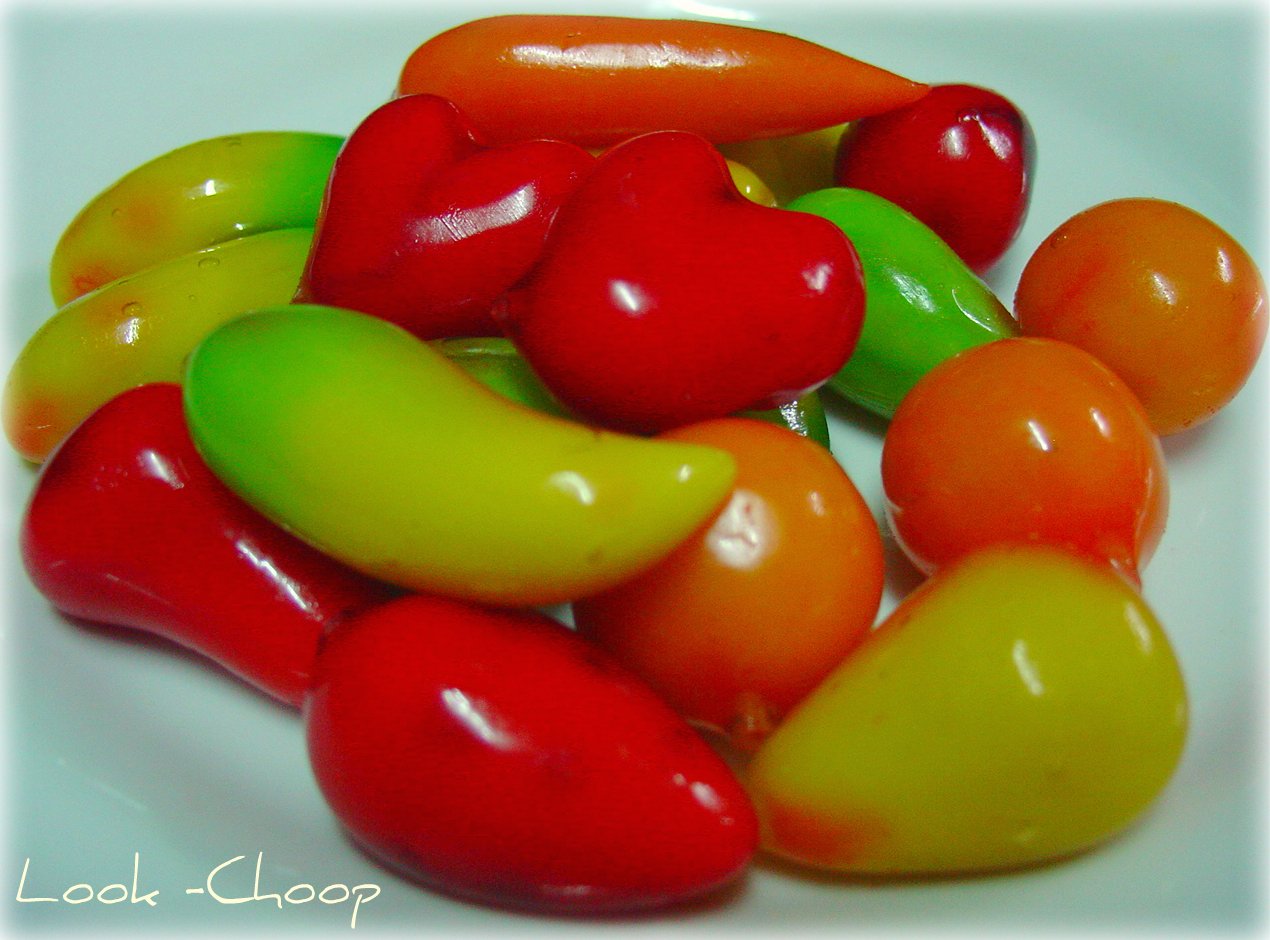 Luk chupVeganลูกชุบ
🇹🇭 ThailandThai sweets shaped and colored to look like tiny fruits and vegetables
Sweet or dessert, Snacks, Tea time
Luk chupVeganลูกชุบ
🇹🇭 ThailandThai sweets shaped and colored to look like tiny fruits and vegetables
Sweet or dessert, Snacks, Tea time
 GelatoVegetarian
🇮🇹 Italy and 1 moreItalian-style ice cream with a dense, smooth texture and intense flavor
Sweet or dessert, Snacks
GelatoVegetarian
🇮🇹 Italy and 1 moreItalian-style ice cream with a dense, smooth texture and intense flavor
Sweet or dessert, Snacks
 CocadaVegetarian
🇧🇷 Brazil and 5 moreChewy coconut sweets baked and served at room temperature
Sweet or dessert, Snacks
CocadaVegetarian
🇧🇷 Brazil and 5 moreChewy coconut sweets baked and served at room temperature
Sweet or dessert, Snacks
 Khanom chanVeganขนมชั้น
🇹🇭 ThailandThai steamed dessert with many soft, colorful layers
Sweet or dessert, Snacks
Khanom chanVeganขนมชั้น
🇹🇭 ThailandThai steamed dessert with many soft, colorful layers
Sweet or dessert, Snacks