
Curanto
Shellfish, meats and potatoes cooked over hot stones in an earth oven
Curanto is a traditional dish from Chiloé in southern Chile, where shellfish, potatoes, meats, and potato-based breads are layered over hot stones in a pit oven and covered with leaves and earth to steam. This communal meal, with roots over eleven thousand years old, is central to Chilote cuisine and often prepared outdoors for gatherings.
- Cooked in a pit oven with hot stones and covered with leaves and earth
- Includes shellfish, potatoes, meats, and local potato breads
- Archaeological evidence dates curanto back over 11,000 years
- A communal meal central to Chiloé's food culture
- Stewed versions are called curanto en olla or pulmay
What is Curanto?
Curanto is a feast of shellfish, meats, potatoes, and local potato breads such as milcao (a potato pancake) and chapalele (a potato dumpling), all cooked together in a pit oven. The ingredients are layered over hot stones and covered with large leaves, sacks, and earth, trapping steam and heat. The result is a hearty, smoky, and aromatic mix, with shellfish like clams, mussels, and barnacles as key elements. The dish is usually made for a crowd and served straight from the earth oven.
Where does Curanto come from?
Curanto comes from the Chiloé Archipelago in southern Chile, where it has been made for thousands of years. Archaeological finds on Chiloé Island show evidence of this cooking method dating back over eleven thousand years. The technique likely began with the indigenous Chono people and evolved as new foods were introduced by settlers and Spanish colonizers. Over time, curanto became a symbol of Chilote identity and spread to other parts of southern Chile through migration.
How is Curanto made?
To make curanto, a pit about half a meter deep is dug in the ground. Stones are heated in a fire until red hot, then the fire is cleared away. Layers of shellfish, meats, potatoes, milcao, chapalele, and vegetables are placed on the stones. Each layer is covered with large nalca (Chilean rhubarb) leaves, or sometimes fig or cabbage leaves. Wet sacks and earth are piled on top, sealing in the steam. The food cooks for about an hour, absorbing the smoky flavor from the earth oven. A stewed version, called curanto en olla or pulmay, is made in a large pot.

How and when is Curanto eaten?
Curanto is usually eaten at lunch or dinner as a main meal, often outdoors and shared among many people. It is served hot, straight from the pit or pot, with each person taking a mix of shellfish, meats, potatoes, and breads. The meal is communal, reflecting its roots in gatherings and celebrations. While it can be made at home in a pot, the earth oven version is reserved for special occasions or larger groups.
Kinds of Curanto
The classic curanto is made in a pit, but in other regions of Chile, a similar dish called curanto en olla or pulmay is cooked in a large pot over a fire or in a pressure cooker. The types of shellfish and meats used can vary depending on what is available, but clams, mussels, and barnacles are traditional. Some versions include fish or different vegetables. The method of covering the food may change if nalca leaves are not available.
What Curanto means
Curanto is deeply tied to the culture of Chiloé, representing both its indigenous roots and the blending of local and introduced foods. It is a symbol of hospitality and community, often prepared for gatherings and celebrations. The dish is one of the most recognized parts of Chilote cuisine and is featured in ethnographic accounts dating back to the 16th century. Its preparation and sharing are important cultural rituals in southern Chile.
Questions people ask about Curanto
What is curanto made of?
Curanto is made with shellfish such as clams and mussels, potatoes, meats, sausages, and local potato breads like milcao and chapalele. Sometimes fish, crustaceans, and vegetables are also included.
Where does curanto come from?
Curanto comes from the Chiloé Archipelago in southern Chile. It is a traditional dish of the Chilote people and has a history stretching back thousands of years.
How is curanto cooked?
Curanto is cooked in a pit dug in the ground. Hot stones are placed at the bottom, and layers of food are covered with large leaves, wet sacks, and earth. The ingredients steam together for about an hour.
Can curanto be made without a pit oven?
Yes, a version called curanto en olla or pulmay is made in a large pot over a fire or in a pressure cooker. This method is common in other parts of Chile.
What does curanto mean?
The word 'curanto' comes from the Mapudungun language and means 'stony,' referring to the hot stones used in the traditional cooking method.
Good reading and sources
The facts on this page come from the Wikipedia article "Curanto", written by its contributors and used under the CC BY-SA 4.0 licence, and from its Wikidata record (CC0). Thali rewrote the text in its own words, with AI assistance, and compares every page with the article to make sure no passage is copied. It may be reused under the same CC BY-SA 4.0 licence with a link back.
It may contain mistakes, and it is not dietary or allergy advice: recipes differ from cook to cook. If something is wrong, tell us. Last refreshed 2026-10-03.
More from Chile
All the food of Chile KabochaVeganカボチャ
🇯🇵 Japan and 5 moreA sweet, dense winter squash with edible skin, used in Japanese and Asian cooking
Main dish, Lunch, Dinner
KabochaVeganカボチャ
🇯🇵 Japan and 5 moreA sweet, dense winter squash with edible skin, used in Japanese and Asian cooking
Main dish, Lunch, Dinner
 Huatia
🇵🇪 Peru and 2 moreAndean food cooked in a traditional earth oven of heated stones
Main dish
Huatia
🇵🇪 Peru and 2 moreAndean food cooked in a traditional earth oven of heated stones
Main dish
 ChunchulloMeat
🇦🇷 Argentina and 5 moreBraided and roasted small intestine, a grill favorite in Latin America
Main dish, Lunch, Dinner
ChunchulloMeat
🇦🇷 Argentina and 5 moreBraided and roasted small intestine, a grill favorite in Latin America
Main dish, Lunch, Dinner
 Empanada
🇪🇸 Spain and 5 morePastry turnovers filled with meat, cheese, or vegetables, baked or fried
Pie or savoury pastry, Lunch, Dinner
Empanada
🇪🇸 Spain and 5 morePastry turnovers filled with meat, cheese, or vegetables, baked or fried
Pie or savoury pastry, Lunch, Dinner
Its cousins elsewhere
All main dishes Seafood boil
🇺🇸 United States and 1 moreShellfish and sides cooked together for a communal feast
Main dish, Lunch, Dinner
Seafood boil
🇺🇸 United States and 1 moreShellfish and sides cooked together for a communal feast
Main dish, Lunch, Dinner
 Enchilada
🇲🇽 Mexico and 4 moreCorn tortillas rolled around a filling and covered with savory sauce
Main dish, Lunch, Dinner
Enchilada
🇲🇽 Mexico and 4 moreCorn tortillas rolled around a filling and covered with savory sauce
Main dish, Lunch, Dinner
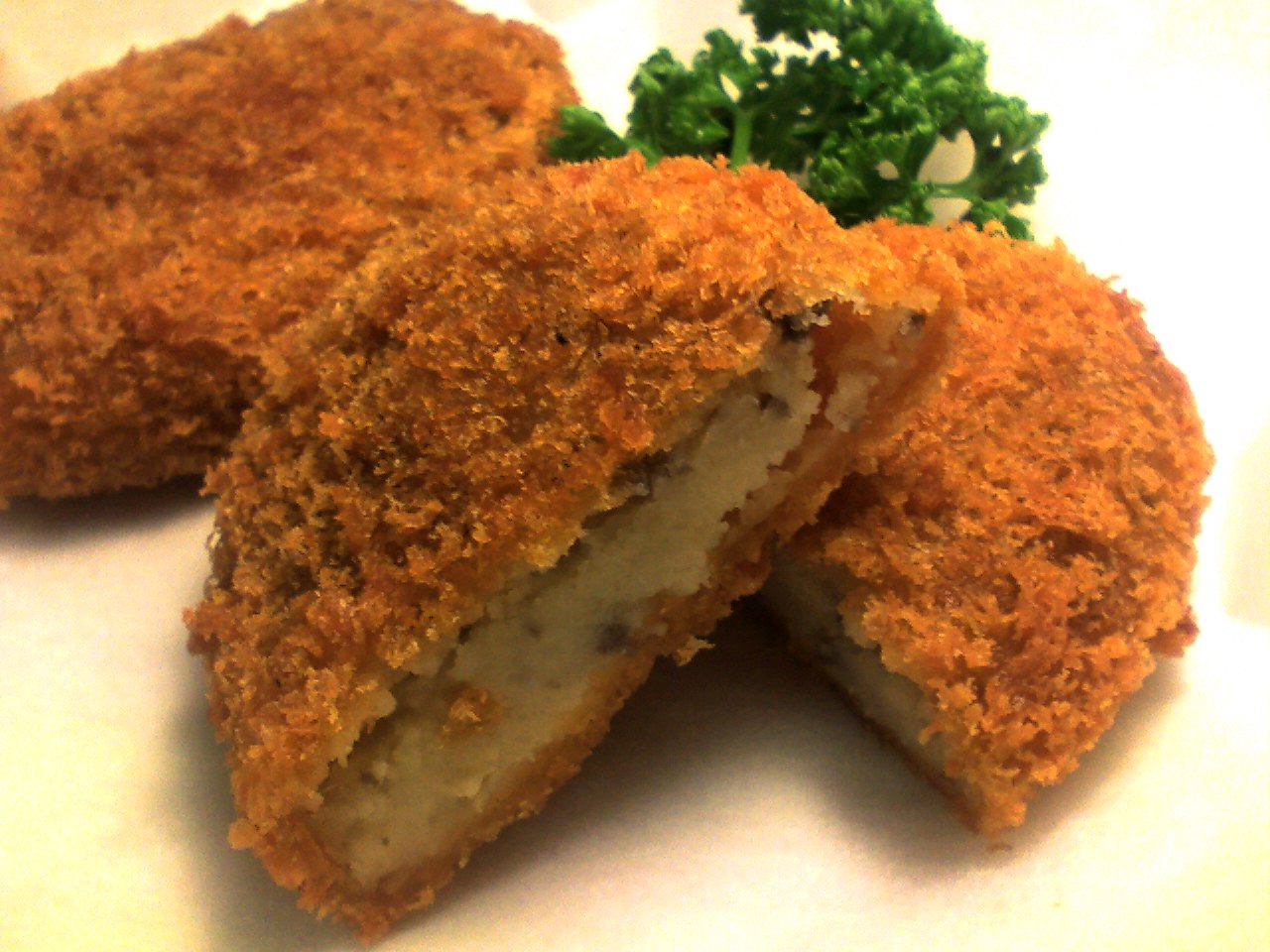 Korokkeコロッケ
🇯🇵 JapanJapanese patties of mashed potato or white sauce, breaded and deep-fried
Street food, Lunch, Dinner
Korokkeコロッケ
🇯🇵 JapanJapanese patties of mashed potato or white sauce, breaded and deep-fried
Street food, Lunch, Dinner
 SaltahMeatسلتة
🇾🇪 YemenYemen’s national stew of meat broth, fenugreek froth, and spicy salsa
Stew or curry, Lunch
SaltahMeatسلتة
🇾🇪 YemenYemen’s national stew of meat broth, fenugreek froth, and spicy salsa
Stew or curry, Lunch