
Dal makhani
Creamy black lentils slow-cooked with butter and spices
Dal makhani is a rich lentil dish from Punjab, India, made mainly with urad dal (black gram) and often red kidney beans. Butter and cream give it a smooth, luxurious texture. Usually eaten with rice or naan, it is a modern take on traditional lentil curries and is popular in Indian and Pakistani cuisine.
- Made with urad dal (black gram) and red kidney beans
- Created in Delhi in the 1950s by Punjabi restaurateurs
- Slow-cooked with butter, cream, and spices
- Often served with rice or naan
- Name means 'buttery lentils' in Punjabi
What is Dal makhani?
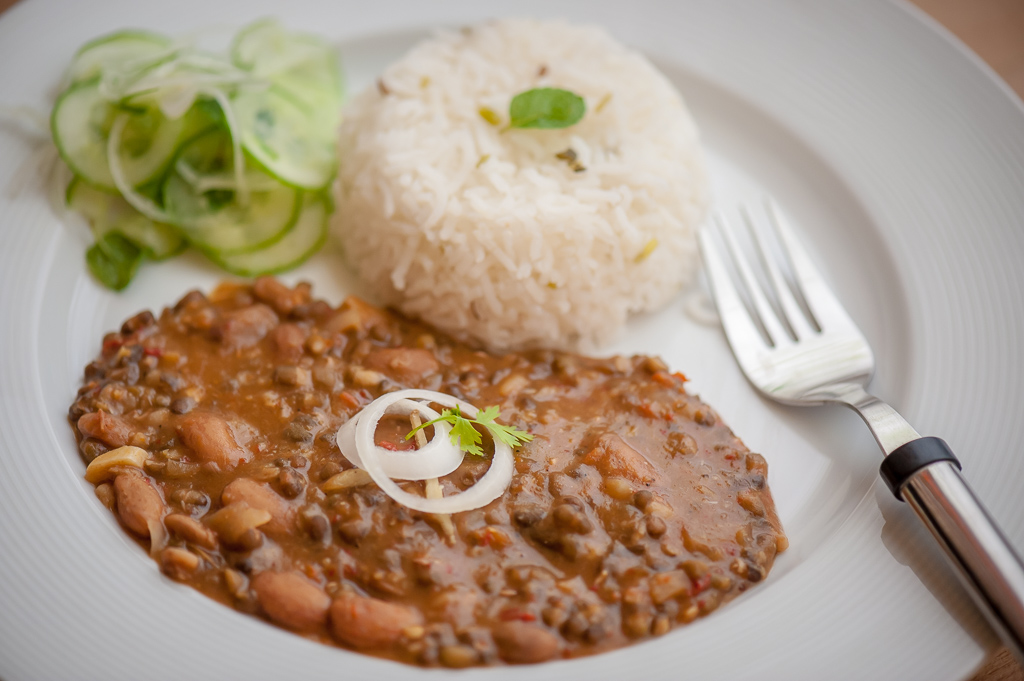
Dal makhani is a thick, creamy stew made from urad dal (black gram lentils) and often red kidney beans. The lentils are slow-cooked with butter, cream, tomatoes, onions, and a blend of spices. The dish is finished with dried fenugreek leaves (kasuri methi) and more butter, giving it a rich, smooth texture. It is usually garnished with cream or yogurt and fresh coriander. The result is a hearty, mildly spiced dish with a deep, buttery flavor.
Where does Dal makhani come from?
Dal makhani was created in the 1950s by Kundan Lal Jaggi and Kundan Lal Gujral, Punjabi Hindu migrants from Peshawar, at their Moti Mahal restaurant in Old Delhi. They were known for inventing butter chicken and wanted a vegetarian dish to pair with it. Inspired by the traditional use of urad dal in Punjabi cooking, they developed this new, creamy version. The name comes from 'dal' for lentils and 'makhani' meaning buttery.
How is Dal makhani made?
To make dal makhani, urad dal and red kidney beans are soaked overnight and then boiled until soft. Separately, onions are sautéed in ghee with spices like bay leaf and cardamom, followed by ginger-garlic paste and tomato puree. Chili powder and garam masala are added, and the mixture is cooked until the oil separates. The cooked lentils are combined with this masala and simmered for a long time, with butter and dried fenugreek leaves added toward the end. The dish is finished with cream or yogurt.
How and when is Dal makhani eaten?
Dal makhani is commonly served for lunch or dinner, often as a main dish. It pairs well with steamed rice, especially jeera rice (rice flavored with cumin), or with Indian breads like naan. It is a popular choice in restaurants and at home, enjoyed for its rich taste and creamy texture. The dish is usually shared among family or guests, making it a staple at gatherings and special meals.
Kinds of Dal makhani
While the classic dal makhani uses urad dal and red kidney beans, some versions may use only urad dal or add other pulses. The amount of butter and cream can vary, with some cooks using yogurt instead of cream for a lighter taste. Regional differences may appear in the choice of spices or the thickness of the stew. Some recipes are adapted for vegan diets by omitting dairy.
What Dal makhani means
Dal makhani is a symbol of Punjabi hospitality and is widely served in Indian and Pakistani restaurants. It is seen as a modern classic, created to complement butter chicken and now enjoyed on its own. The dish is not tied to any particular festival or religious practice but is a favorite at celebrations and family gatherings. Its creamy, rich character has made it a beloved part of North Indian cuisine.
Questions people ask about Dal makhani
What is dal makhani made of?
Dal makhani is made mainly from urad dal (black gram lentils) and often red kidney beans, cooked with butter, cream, tomatoes, onions, and spices.
Where does dal makhani come from?
Dal makhani comes from the Punjab region of India and was created in Delhi in the 1950s by Punjabi restaurateurs.
Is dal makhani vegetarian?
Yes, dal makhani is a vegetarian dish, as it is made from lentils, beans, dairy, and spices.
How is dal makhani usually served?
Dal makhani is typically served as a main dish with steamed rice or Indian breads like naan, often garnished with cream or yogurt.
What does 'makhani' mean?
'Makhani' is a Punjabi word meaning 'buttery', referring to the generous use of butter in the dish.
Good reading and sources
The facts on this page come from the Wikipedia article "Dal makhani", written by its contributors and used under the CC BY-SA 4.0 licence, and from its Wikidata record (CC0). Thali rewrote the text in its own words, with AI assistance, and compares every page with the article to make sure no passage is copied. It may be reused under the same CC BY-SA 4.0 licence with a link back.
It may contain mistakes, and it is not dietary or allergy advice: recipes differ from cook to cook. If something is wrong, tell us. Last refreshed 2026-10-03.
More from India
All the food of India Kebabكَبَاب
🇹🇷 Turkey and 5 moreGrilled or roasted meat, often on skewers, found across the Middle East and beyond
Main dish, Lunch, Dinner
Kebabكَبَاب
🇹🇷 Turkey and 5 moreGrilled or roasted meat, often on skewers, found across the Middle East and beyond
Main dish, Lunch, Dinner
 Biryani
🇮🇳 India and 5 moreRice and spiced meat or vegetables layered and cooked together
Main dish, Lunch, Dinner
Biryani
🇮🇳 India and 5 moreRice and spiced meat or vegetables layered and cooked together
Main dish, Lunch, Dinner
 French toast
🇫🇷 France and 5 moreBread soaked in egg and milk, pan-fried and served sweet or savoury
Main dish, Breakfast, Snacks
French toast
🇫🇷 France and 5 moreBread soaked in egg and milk, pan-fried and served sweet or savoury
Main dish, Breakfast, Snacks
 Fish and chipsFish or seafood
🇬🇧 United Kingdom and 8 moreBattered fried fish served hot with thick-cut chips
Main dish, Lunch, Dinner
Fish and chipsFish or seafood
🇬🇧 United Kingdom and 8 moreBattered fried fish served hot with thick-cut chips
Main dish, Lunch, Dinner
Its cousins elsewhere
All main dishes Clam chowderFish or seafood
🇺🇸 United StatesA hearty American soup with clams, potatoes, and regional twists
Soup, Lunch, Dinner
Clam chowderFish or seafood
🇺🇸 United StatesA hearty American soup with clams, potatoes, and regional twists
Soup, Lunch, Dinner
 TomatokeftedesVegan
🇬🇷 GreeceFried tomato fritters from Santorini made with herbs and flour
Street food, Snacks
TomatokeftedesVegan
🇬🇷 GreeceFried tomato fritters from Santorini made with herbs and flour
Street food, Snacks
 Chicken tikka masalaMeat
🇬🇧 United Kingdom and 4 moreRoasted marinated chicken in a creamy, spiced tomato-based sauce
Main dish, Lunch, Dinner
Chicken tikka masalaMeat
🇬🇧 United Kingdom and 4 moreRoasted marinated chicken in a creamy, spiced tomato-based sauce
Main dish, Lunch, Dinner
 SouvlakiMeatσουβλάκι
🇬🇷 Greece and 1 moreGrilled meat skewers, often served in pita with salad and sauce
Main dish, Lunch, Dinner
SouvlakiMeatσουβλάκι
🇬🇷 Greece and 1 moreGrilled meat skewers, often served in pita with salad and sauce
Main dish, Lunch, Dinner