
Dango
In its own language: 団子
Japanese sweet dumplings made from rice flour, often served on skewers
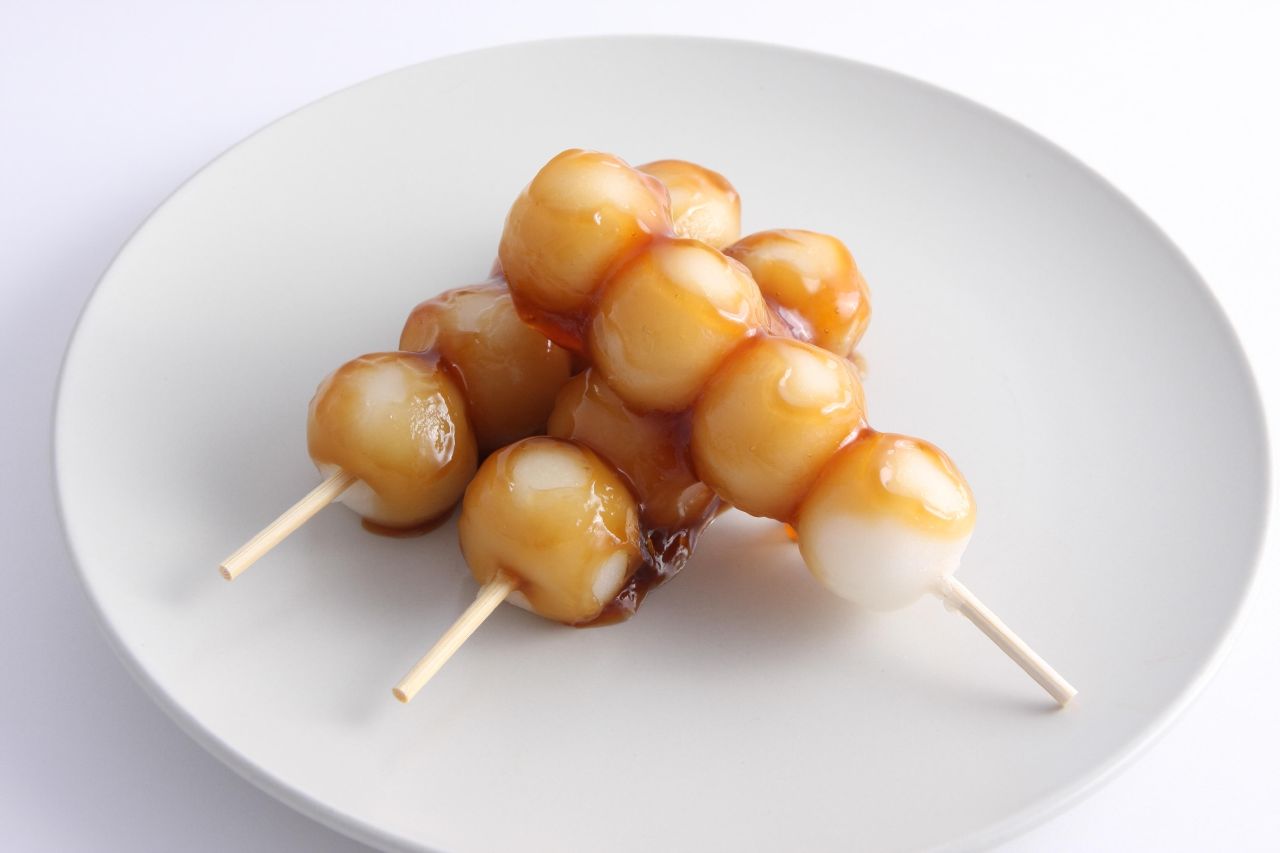
Dango are Japanese dumplings made from rice flour and glutinous rice flour, shaped into small balls and usually served on skewers. They are a type of wagashi (traditional confection) and are eaten year-round, often with sweet or savory toppings like red bean paste, soy sauce syrup, or kinako (toasted soy flour).
- Dango are usually served three to five on a skewer
- Made from a mix of rice flour and glutinous rice flour
- Commonly topped with sweet red bean paste or soy sauce syrup
- Hanami dango is eaten during cherry blossom viewing
- Dango is a type of wagashi, traditional Japanese confectionery
What is Dango?
Dango are small, round dumplings made from a mix of regular rice flour and glutinous rice flour. The dough is shaped into balls, typically three to five, and threaded onto a bamboo skewer. The dumplings can be topped or coated with a variety of sweet or savory flavors, such as sweetened red bean paste, soy sauce syrup, or kinako (toasted soy flour). Dango are chewy and mildly sweet, and are often paired with green tea. They are considered a type of wagashi, or traditional Japanese confectionery.
Where does Dango come from?
Dango comes from Japan and is a long-standing part of Japanese confectionery traditions. The dumpling is sometimes compared to mochi, but differs in that dango uses both regular and glutinous rice flour, while mochi is made only from glutinous rice. Dango is eaten throughout the year, with certain varieties linked to specific seasons or festivals. Over time, many regional and seasonal versions have developed, each with their own flavors and customs.
How is Dango made?
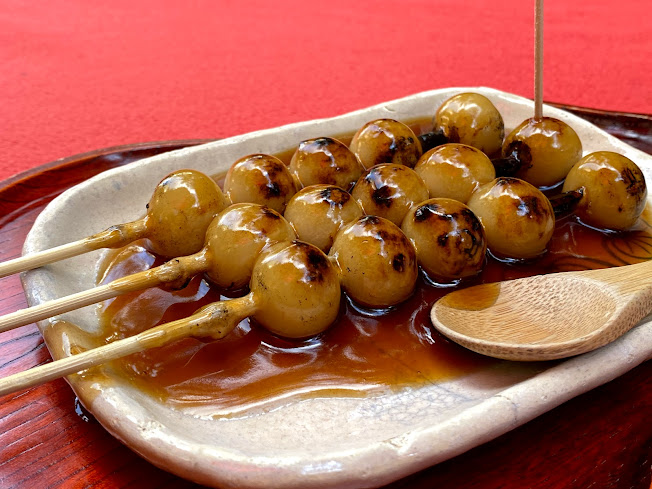
To make dango, rice flour and glutinous rice flour are mixed with water to form a smooth dough. The dough is rolled into small balls, which are then boiled or steamed until cooked through. After cooking, the dumplings are skewered and can be served plain or with toppings such as sweet red bean paste, soy sauce glaze, or kinako. Some types, like yaki dango, are grilled after cooking for a slightly charred flavor.


How and when is Dango eaten?
Dango is commonly enjoyed as a snack or with tea, especially green tea. It is served year-round, but some types are tied to particular festivals or seasons. Hanami dango, for example, is eaten during cherry blossom viewing in spring. Dango is often eaten straight from the skewer, making it a popular street food as well as a treat at home or in tea houses. The chewy texture and variety of toppings make it a versatile sweet.
Kinds of Dango
There are many types of dango, each with its own flavor or seasonal association. Anko dango is topped with sweet red bean paste, while mitarashi dango is coated in a sweet soy sauce glaze. Hanami dango features three colors—pink, white, and green—for cherry blossom season. Other versions use ingredients like green tea (cha dango), toasted soy flour (kinako dango), or millet flour (kibi dango). Some regional varieties, such as sasa dango from Niigata, are wrapped in bamboo leaves.
What Dango means
Dango holds a special place in Japanese culture as both an everyday treat and a festive food. Certain types are linked to events like hanami (cherry blossom viewing) and tsukimi (moon viewing). The food also appears in proverbs, such as 'hana yori dango,' meaning a preference for substance over appearance. Dango is recognized internationally, with the hanami dango depicted in the Unicode emoji 🍡.
Questions people ask about Dango
What is dango made of?
Dango is made from regular rice flour and glutinous rice flour, mixed with water to form a dough. The dough is shaped into small balls and cooked, then often topped with sweet or savory flavors like red bean paste or soy sauce syrup.
Where does dango come from?
Dango comes from Japan and is a traditional part of Japanese confectionery. It is enjoyed throughout the country and has many regional and seasonal varieties.
How is dango different from mochi?
Dango is made from both regular and glutinous rice flour, while mochi uses only glutinous rice. Dango is usually shaped into balls and served on skewers, whereas mochi is often pounded and shaped differently.
When is dango eaten?
Dango is eaten year-round in Japan, but some types are associated with specific festivals or seasons, such as hanami dango during cherry blossom viewing.
What are some popular types of dango?
Popular types include anko dango (with sweet red bean paste), mitarashi dango (with soy sauce syrup), hanami dango (three colored for cherry blossom season), and kinako dango (coated in toasted soy flour).
Good reading and sources
The facts on this page come from the Wikipedia article "Dango", written by its contributors and used under the CC BY-SA 4.0 licence, and from its Wikidata record (CC0). Thali rewrote the text in its own words, with AI assistance, and compares every page with the article to make sure no passage is copied. It may be reused under the same CC BY-SA 4.0 licence with a link back.
It may contain mistakes, and it is not dietary or allergy advice: recipes differ from cook to cook. If something is wrong, tell us. Last refreshed 2026-10-03.
More from Japan
All the food of Japan Ice cream
🇺🇸 United States and 5 moreA frozen dessert made from sweetened, flavoured milk or cream
Sweet or dessert, Snacks
Ice cream
🇺🇸 United States and 5 moreA frozen dessert made from sweetened, flavoured milk or cream
Sweet or dessert, Snacks
 KabochaVeganカボチャ
🇯🇵 Japan and 5 moreA sweet, dense winter squash with edible skin, used in Japanese and Asian cooking
Main dish, Lunch, Dinner
KabochaVeganカボチャ
🇯🇵 Japan and 5 moreA sweet, dense winter squash with edible skin, used in Japanese and Asian cooking
Main dish, Lunch, Dinner
 Cheesecake
🇬🇷 Greece and 5 moreA chilled dessert of sweetened soft cheese on a crumb or pastry base
Sweet or dessert, Snacks
Cheesecake
🇬🇷 Greece and 5 moreA chilled dessert of sweetened soft cheese on a crumb or pastry base
Sweet or dessert, Snacks
 MochiVegan餅
🇯🇵 JapanJapanese rice cake made by pounding glutinous rice into a sticky, chewy mass
Sweet or dessert
MochiVegan餅
🇯🇵 JapanJapanese rice cake made by pounding glutinous rice into a sticky, chewy mass
Sweet or dessert
Its cousins elsewhere
All sweets and desserts KobaVegan
🇲🇬 MadagascarA Malagasy sweet cake of peanuts, sugar and rice flour wrapped in banana leaves
Sweet or dessert, Snacks
KobaVegan
🇲🇬 MadagascarA Malagasy sweet cake of peanuts, sugar and rice flour wrapped in banana leaves
Sweet or dessert, Snacks
 Mofo gasyVegan
🇲🇬 MadagascarSweet rice flour cakes cooked in a mold, eaten for breakfast in Madagascar
Bread, Breakfast
Mofo gasyVegan
🇲🇬 MadagascarSweet rice flour cakes cooked in a mold, eaten for breakfast in Madagascar
Bread, Breakfast
 Chocolate
🇨🇮 Ivory Coast and 5 moreA sweet or bitter food made from processed cocoa beans, enjoyed in many forms worldwide
Sweet or dessert, Snacks
Chocolate
🇨🇮 Ivory Coast and 5 moreA sweet or bitter food made from processed cocoa beans, enjoyed in many forms worldwide
Sweet or dessert, Snacks
 Candy
🇺🇸 United States and 5 moreSmall sweet treats made mainly from sugar or sweeteners
Sweet or dessert, Snacks
Candy
🇺🇸 United States and 5 moreSmall sweet treats made mainly from sugar or sweeteners
Sweet or dessert, Snacks