
Mochi
In its own language: 餅
Japanese rice cake made by pounding glutinous rice into a sticky, chewy mass
Mochi is a Japanese rice cake made from glutinous short-grain rice that is steamed, pounded into a paste, and shaped into rounds or blocks. It is eaten year-round in Japan but is especially important during the New Year, when it features in traditional rituals and festive foods. Mochi can be plain or filled, and is used in both sweet and savory dishes.
- Made by pounding steamed glutinous rice into a sticky paste
- Central to Japanese New Year celebrations and rituals
- Can be plain, filled, or coated with sweet or savory toppings
- Traditional mochitsuki involves teamwork and wooden mallets
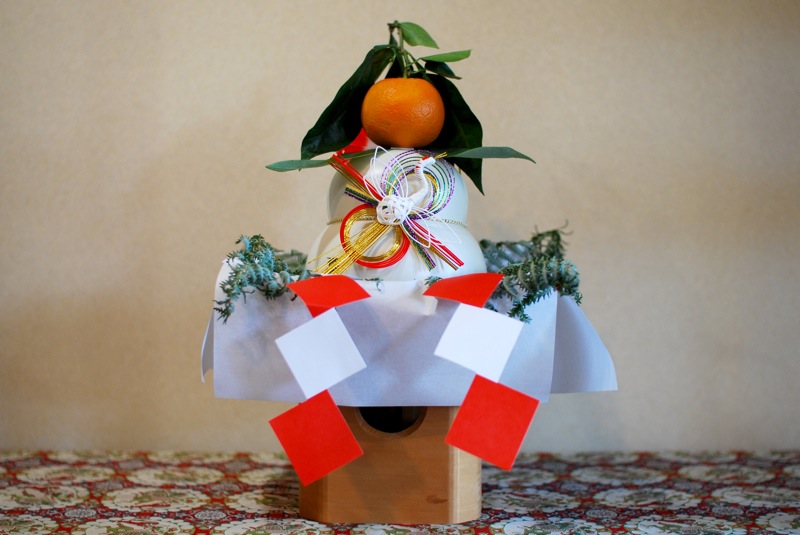
- Kagami mochi is a special New Year decoration made of mochi
What is Mochi?
Mochi is a soft, sticky cake made from glutinous rice, known for its chewy and elastic texture. The rice is steamed, then pounded into a smooth, stretchy paste and shaped into balls or blocks. Plain mochi is white, but it can be colored or filled for seasonal or festive versions. It is mildly sweet or neutral in taste, often dusted with cornstarch to prevent sticking. Mochi can be eaten as is, grilled, or added to soups and desserts.
Where does Mochi come from?
Mochi has deep roots in Japanese culture, with homemade production increasing from the 6th century when steaming became common. Early mochi used red rice, and legends from the Nara period connect it with spiritual power. By the Heian period, mochi was part of Shinto rituals and celebrations such as childbirth and weddings. Its role in New Year's festivities dates back to the Imperial court, where it symbolized long life. Over time, sweetened mochi became popular as sugar became more available.
How is Mochi made?
Traditional mochi is made by soaking glutinous rice overnight, steaming it, and then pounding it with wooden mallets in a mortar. This process, called mochitsuki, requires teamwork and rhythm. The sticky mass is then shaped by hand. Modern methods use sweet rice flour mixed with water and cooked until sticky, sometimes with machines to automate pounding and shaping. Cornstarch is used to keep the pieces from sticking together.



How and when is Mochi eaten?
Mochi is eaten throughout the year in Japan, but it is especially associated with the New Year, when it is used in rituals and special dishes. It can be enjoyed plain, grilled, or in soups like zōni. Sweet versions are filled or coated, such as kinako mochi (with soy flour) or sakuramochi (with red bean paste and cherry leaf). Mochi is also part of celebrations like Children's Day and Girls' Day, with special shapes and colors for each occasion.
Kinds of Mochi
There are many seasonal and regional types of mochi. Kagami mochi is a New Year's decoration of two stacked cakes with a bitter orange on top. Kinako mochi is roasted and coated in soy flour for luck at New Year. Sakuramochi is pink, filled with sweet bean paste, and wrapped in a cherry leaf for spring. Kashiwa-mochi, wrapped in oak leaves, is made for Children's Day. Hishi mochi, with colored layers, is offered for Girls' Day.
What Mochi means
Mochi is central to Japanese New Year customs and is seen as a symbol of good fortune and longevity. The making of mochi, especially by hand, is a community event in rural areas and temples. Decorative kagami mochi is placed on family altars and later eaten in a ritual. Different mochi types mark seasonal festivals and family milestones, reflecting its role in both daily life and special occasions.
When Mochi is on the table
Questions people ask about Mochi
What is mochi made of?
Mochi is made from glutinous short-grain rice, sometimes with added water, sugar, and cornstarch. The rice is steamed and pounded into a sticky, elastic paste, then shaped into cakes.
Where does mochi come from?
Mochi comes from Japan, where it has been made for centuries and is deeply connected to traditional celebrations and rituals, especially during the New Year.
How is mochi traditionally made?
Traditionally, mochi is made by soaking and steaming glutinous rice, then pounding it with wooden mallets in a mortar until smooth. The sticky mass is then shaped by hand.
When is mochi usually eaten?
Mochi is eaten year-round in Japan but is especially important during the New Year. It is also made for festivals like Children's Day and Girls' Day, and used in both sweet and savory dishes.
What does mochi taste and feel like?
Mochi has a chewy, stretchy texture and a mild, slightly sweet taste. It can be eaten plain, filled, or coated with sweet or savory toppings.
Good reading and sources
- The Japan Times - News On Japan, Business News, Opinion, Sports, Entertainment And MoreThe Japan Times, Article
- Dietary carbohydrate compositionFAO, Article
- Delicious but deadly mochi: The Japanese rice cakes that killBBC, Article
- Japan confronts mochi rice-cake death-trap with technological solutionThe Guardian, Article
The facts on this page come from the Wikipedia article "Mochi", written by its contributors and used under the CC BY-SA 4.0 licence, and from its Wikidata record (CC0). Thali rewrote the text in its own words, with AI assistance, and compares every page with the article to make sure no passage is copied. It may be reused under the same CC BY-SA 4.0 licence with a link back.
It may contain mistakes, and it is not dietary or allergy advice: recipes differ from cook to cook. If something is wrong, tell us. Last refreshed 2026-10-03.
More from Japan
All the food of Japan Pizza
🇮🇹 Italy and 4 moreFlatbread topped with tomato, cheese and baked at high heat
Main dish, Lunch, Dinner
Pizza
🇮🇹 Italy and 4 moreFlatbread topped with tomato, cheese and baked at high heat
Main dish, Lunch, Dinner
 Ice cream
🇺🇸 United States and 5 moreA frozen dessert made from sweetened, flavoured milk or cream
Sweet or dessert, Snacks
Ice cream
🇺🇸 United States and 5 moreA frozen dessert made from sweetened, flavoured milk or cream
Sweet or dessert, Snacks
 Sushi寿司
🇯🇵 JapanVinegared rice paired with seafood, vegetables or other toppings
Main dish, Lunch, Dinner
TofuVegan豆腐
🇨🇳 China and 5 moreSoft white blocks made by curdling soy milk and pressing the curds
Main dish
Sushi寿司
🇯🇵 JapanVinegared rice paired with seafood, vegetables or other toppings
Main dish, Lunch, Dinner
TofuVegan豆腐
🇨🇳 China and 5 moreSoft white blocks made by curdling soy milk and pressing the curds
Main dish
Its cousins elsewhere
All sweets and desserts Hot chocolate
🇲🇽 Mexico and 5 moreA warm drink made from chocolate or cocoa, milk or water, and sugar
Drink, Breakfast, Snacks
Hot chocolate
🇲🇽 Mexico and 5 moreA warm drink made from chocolate or cocoa, milk or water, and sugar
Drink, Breakfast, Snacks
 SimaVegan
🇫🇮 FinlandFinnish sparkling lemon drink, lightly fermented and sweet
Drink, Snacks
SimaVegan
🇫🇮 FinlandFinnish sparkling lemon drink, lightly fermented and sweet
Drink, Snacks
 BriocheVegetarianune brioche
🇫🇷 FranceFrench bread made with eggs and butter, often shaped in rounds or loaves
Bread, Breakfast, Snacks
BriocheVegetarianune brioche
🇫🇷 FranceFrench bread made with eggs and butter, often shaped in rounds or loaves
Bread, Breakfast, Snacks
 Pain au chocolatVegetarian
🇫🇷 France and 2 moreA flaky pastry filled with bars of dark chocolate
Pie or savoury pastry, Breakfast, Snacks
Pain au chocolatVegetarian
🇫🇷 France and 2 moreA flaky pastry filled with bars of dark chocolate
Pie or savoury pastry, Breakfast, Snacks