
Fabada asturiana
In its own language: Fabada
Asturian white bean stew with pork and sausage
Fabada asturiana is a hearty stew from Asturias in northern Spain, made with large white beans, pork, chorizo, and blood sausage. Traditionally eaten hot at midday, especially in winter, it is now enjoyed across Spain and in Spanish restaurants worldwide.
- Uses large white beans called fabes de la Granja
- Includes chorizo and Asturian blood sausage (morcilla)
- First mentioned in print in 1884
- Eaten mainly at lunch, especially in winter
- Similar to French cassoulet and Portuguese feijoada
What is Fabada asturiana?
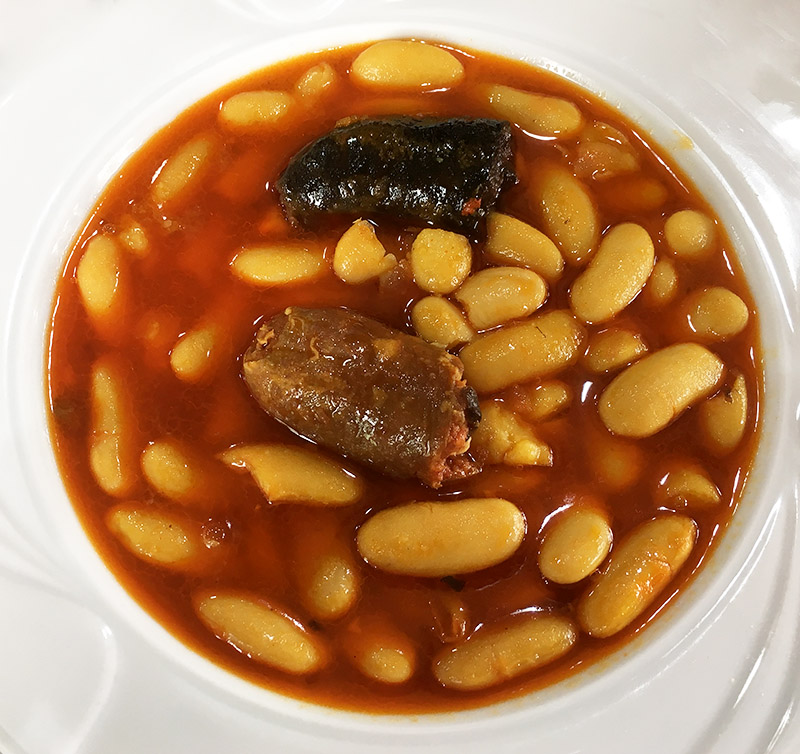
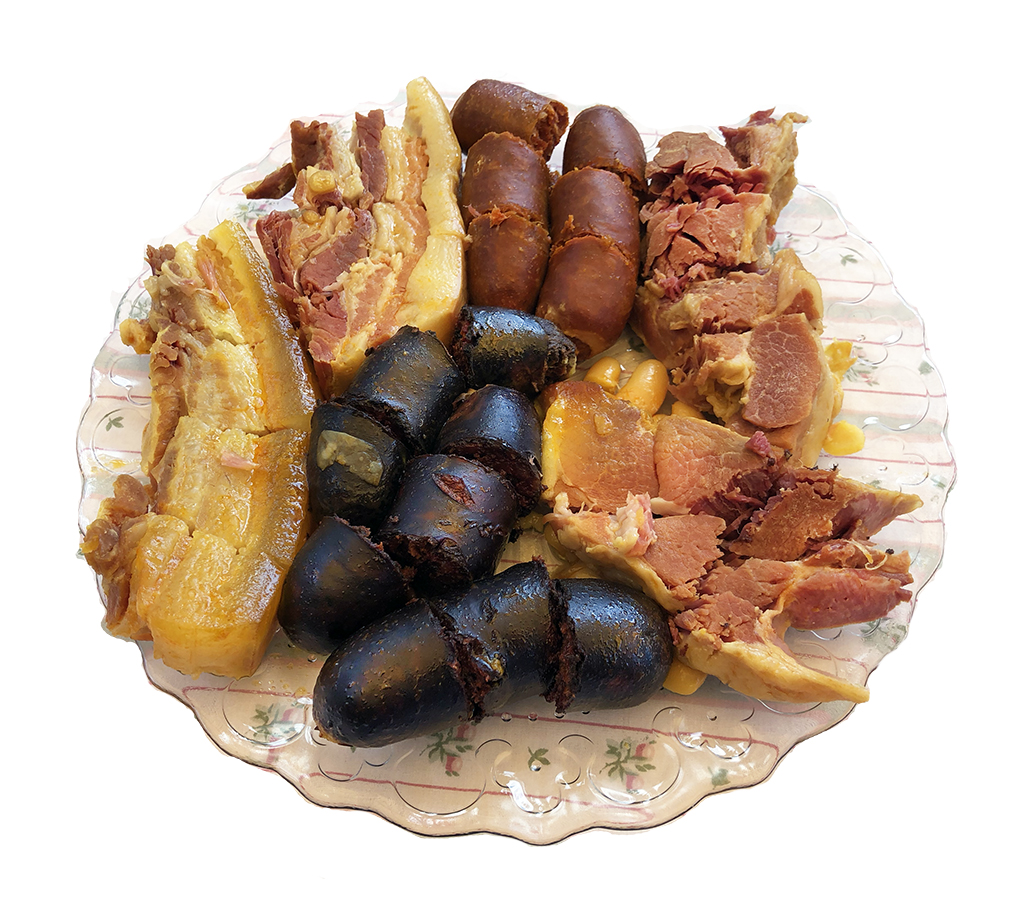
Fabada asturiana is a robust stew built around large, creamy white beans called fabes de la Granja. These beans are slow-cooked with various pork cuts, including shoulder, bacon or pancetta, spicy chorizo, and morcilla, a dark blood sausage. The dish is seasoned with olive oil, sweet paprika, garlic, and salt. The result is a thick, warming meal with rich flavors from the beans and meats, often served in a clay pot. Its appearance is rustic, with the beans and meats visible in a reddish broth.
Where does Fabada asturiana come from?
The use of white beans in Asturias dates back to the 1500s, but the stew itself likely appeared between the 1800s and early 1900s. While some believe fabada began in rural areas, others think it started in Asturian cities. The first known mention in print was in a Gijón newspaper in 1884, though recipes only appeared in the early 20th century. Some suggest the dish may have been influenced by French cassoulet, which could have reached Spain via the Camino de Santiago.
How is Fabada asturiana made?
To prepare fabada asturiana, the special white beans are soaked overnight to soften them. The beans are then simmered with pork shoulder, bacon or pancetta, chorizo, and morcilla. Olive oil, paprika, garlic, and salt are added for flavor. The stew cooks slowly until the beans are tender and the meats have flavored the broth. It is usually served hot, often in a traditional clay dish.


How and when is Fabada asturiana eaten?
Fabada asturiana is most often eaten at midday as the main meal, especially during the colder months. It is filling and served hot, making it a popular choice for winter lunches. While it can be a starter, it often stands alone as a main course. The dish is now common throughout Spain and is also available canned in supermarkets.
Kinds of Fabada asturiana
Similar bean and meat stews can be found outside Asturias, such as olla podrida in other parts of Spain, cassoulet in southern France, and feijoada in Portugal and Brazil. In Colombia, bandeja paisa is a local adaptation that uses red beans and includes additional meats, rice, and egg. These dishes share the idea of beans cooked with pork and sausage, but each has its own local touches.
What Fabada asturiana means
Fabada asturiana is a symbol of Asturian cooking and is widely recognized across Spain. Its humble roots reflect rural traditions, but today it is enjoyed in homes and restaurants alike. The dish is closely tied to the region’s identity and is a point of pride for Asturians, often featured in celebrations of local cuisine.
Questions people ask about Fabada asturiana
What is fabada asturiana made of?
It is made with large white beans, pork shoulder, pancetta or bacon, chorizo, morcilla (blood sausage), olive oil, sweet paprika, garlic, and salt.
Where does fabada asturiana come from?
Fabada asturiana comes from Asturias, a region in northern Spain, and is now popular throughout the country.
When is fabada asturiana usually eaten?
It is most often eaten at lunch, especially in winter, as it is a filling and warming dish.
Are there similar dishes in other countries?
Yes, similar stews include cassoulet in France, feijoada in Portugal and Brazil, and olla podrida in Spain.
Is fabada asturiana vegetarian?
No, it contains several types of pork and sausage, so it is not vegetarian.
Good reading and sources
- Fabada asturiana on WikipediaEncyclopedia
- More photos on Wikimedia CommonsPhotos
- Wikidata recordOpen data
The facts on this page come from the Wikipedia article "Fabada asturiana", written by its contributors and used under the CC BY-SA 4.0 licence, and from its Wikidata record (CC0). Thali rewrote the text in its own words, with AI assistance, and compares every page with the article to make sure no passage is copied. It may be reused under the same CC BY-SA 4.0 licence with a link back.
It may contain mistakes, and it is not dietary or allergy advice: recipes differ from cook to cook. If something is wrong, tell us. Last refreshed 2026-10-03.
More from Spain
All the food of Spain Paella
🇪🇸 Spain and 1 moreRice cooked with meat, seafood or vegetables in a wide shallow pan from Valencia
Main dish, Lunch
Paella
🇪🇸 Spain and 1 moreRice cooked with meat, seafood or vegetables in a wide shallow pan from Valencia
Main dish, Lunch
 Oxtail stewMeat
🇮🇹 Italy and 4 moreStew made with oxtail, found in many world cuisines
Stew or curry, Lunch, Dinner
Oxtail stewMeat
🇮🇹 Italy and 4 moreStew made with oxtail, found in many world cuisines
Stew or curry, Lunch, Dinner
 MolleteVegetarian
🇲🇽 Mexico and 6 moreOpen-faced Mexican sandwich with refried beans and melted cheese
Bread, Breakfast, Snacks
MolleteVegetarian
🇲🇽 Mexico and 6 moreOpen-faced Mexican sandwich with refried beans and melted cheese
Bread, Breakfast, Snacks
 TocinoMeat
🇵🇭 Philippines and 5 moreCured or fried pork enjoyed in Spain, the Philippines, and the Caribbean
Main dish, Breakfast, Lunch
TocinoMeat
🇵🇭 Philippines and 5 moreCured or fried pork enjoyed in Spain, the Philippines, and the Caribbean
Main dish, Breakfast, Lunch
Its cousins elsewhere
All stews and curries Kala bhunaMeat
🇧🇩 BangladeshA dark, richly spiced beef curry from Chittagong, Bangladesh
Main dish, Lunch, Dinner
RendangMeatRandang
🇮🇩 Indonesia and 4 moreMeat simmered with coconut and spices until coated in a rich, dry sauce
Main dish, Lunch, Dinner
Kala bhunaMeat
🇧🇩 BangladeshA dark, richly spiced beef curry from Chittagong, Bangladesh
Main dish, Lunch, Dinner
RendangMeatRandang
🇮🇩 Indonesia and 4 moreMeat simmered with coconut and spices until coated in a rich, dry sauce
Main dish, Lunch, Dinner
 Ful medamesVeganفول مدمس
🇪🇬 Egypt and 5 moreStew of slow-cooked fava beans with olive oil and spices, a staple across Egypt
Main dish, Breakfast
Ful medamesVeganفول مدمس
🇪🇬 Egypt and 5 moreStew of slow-cooked fava beans with olive oil and spices, a staple across Egypt
Main dish, Breakfast
 CioppinoFish or seafood
🇺🇸 United StatesSan Francisco seafood stew with tomato and wine
Stew or curry, Dinner
CioppinoFish or seafood
🇺🇸 United StatesSan Francisco seafood stew with tomato and wine
Stew or curry, Dinner