
Falooda
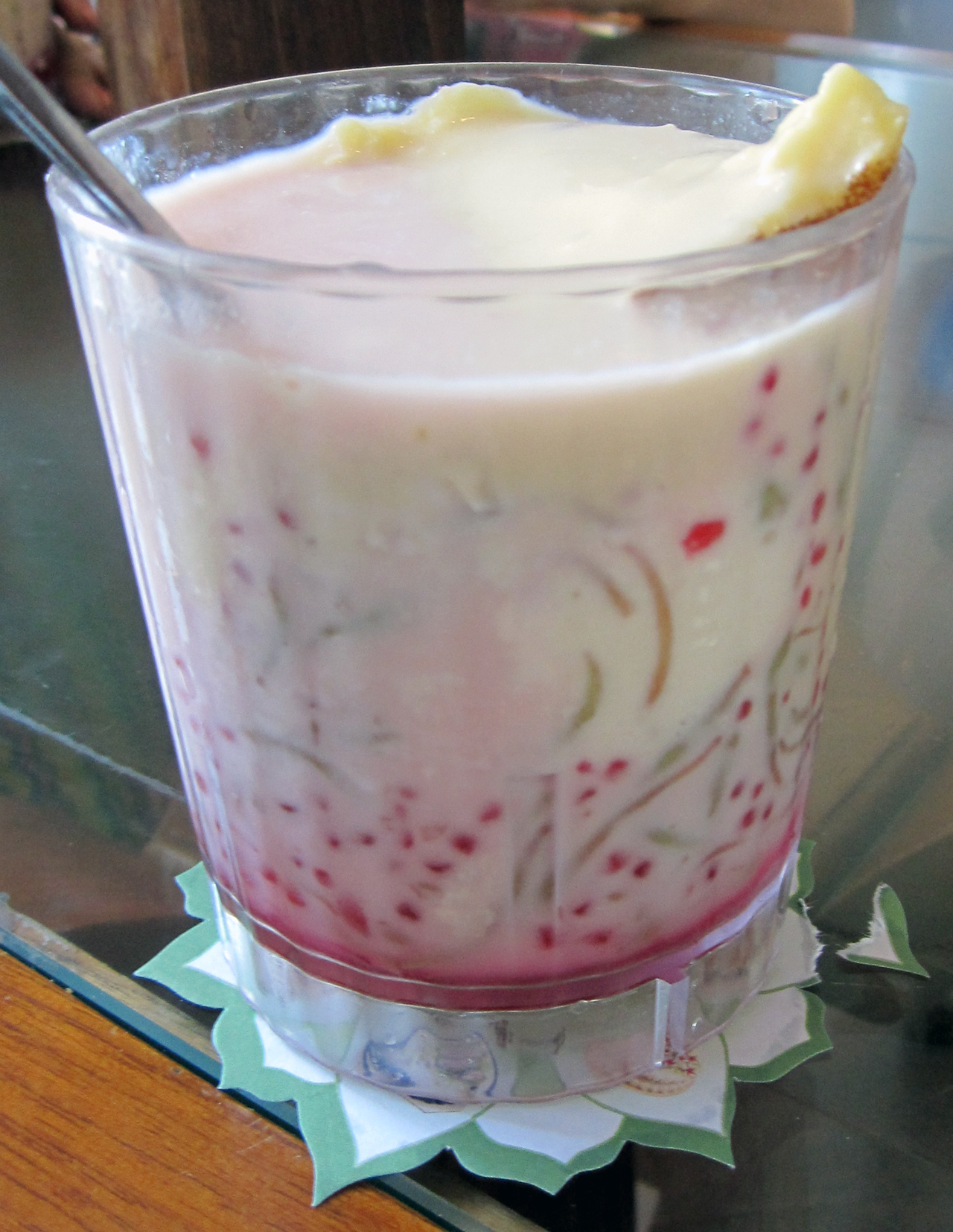
Chilled rose milk layered with tender vermicelli, basil seeds, and ice cream
Falooda is a chilled South Asian dessert drink with Persian roots, made from milk, vermicelli, sweet basil seeds and floral rose syrup. Popular across India, Pakistan, Sri Lanka and neighbouring countries, it is often topped with ice cream or kulfi and enjoyed on festive occasions.
- Originated in ancient Persia and evolved into its modern form under India's Mughal Empire.
- Combines vermicelli noodles, soaked sweet basil seeds, rose syrup, and chilled milk.
- Often topped with kulfi, a dense traditional ice cream, and eaten with a spoon and straw.
- Inspired a Hindustani idiom where having one's honour turned to falooda means losing reputation.
What is Falooda?
Falooda is a layered cold sweet drink that doubles as a dessert across South Asia. Built in a tall glass, it blends cold milk with fragrant rose syrup, slippery noodles, and plump, soaked seeds from the sweet basil plant. The thin vermicelli gives the drink a chewy texture, contrasting with the soft, jelly-like coating of the hydrated seeds. A pink hue runs through the milk, perfumed by floral notes. It is frequently finished with a scoop of kulfi, a dense traditional ice cream, which melts slowly into the sweet liquid. Depending on the maker, the noodles may be prepared from wheat, cornstarch, sago, or arrowroot, giving each mouthful a combination of rich dairy creaminess, floral sweetness, and tender, slippery strands.
Where does Falooda come from?
The dessert traces its ancestry to Persia, where a traditional frozen confection called faloodeh remains widespread. Between the sixteenth and eighteenth centuries, Central Asian dynasties migrated into northern India, bringing these royal culinary customs with them. The recipe evolved significantly under the Mughal Empire, taking its contemporary form before spreading across imperial territories. When regional Persianate courts succeeded the Mughals, their rulers continued to foster and modify the beverage, most notably within the Carnatic region and the court of Hyderabad Deccan. Over subsequent generations, the drink became firmly rooted throughout Pakistan, Afghanistan, India, Bangladesh, Sri Lanka, and Myanmar.
How is Falooda made?
To prepare the drink, sweet basil seeds are first soaked in water until they swell and develop a translucent, gelatinous outer layer. Vermicelli is separately cooked until tender; these thin strands can be produced using wheat starch, cornstarch, sago, or arrowroot. Rose syrup is poured into the serving glass, followed by the softened noodles, soaked seeds, and chilled milk. As the liquids combine, they create an aromatic, brightly tinted blend. The preparation is typically crowned with a generous portion of kulfi or ice cream, allowing the dairy fat to enrich the mixture as the diner stirs the layers together.


How and when is Falooda eaten?
Falooda is enjoyed cold as a rich refreshment, especially during hot weather and celebratory gatherings. It is served in homes, roadside stalls, and banquets, and often appears at weddings and special parties across the Indian subcontinent. Because it sits halfway between a beverage and a sundae, people consume it using a combination of a spoon for the dense toppings and noodles, and a straw to sip the fragrant milk. In Sri Lanka, it is widely appreciated as a cooling daily dairy drink, while throughout northern and southern India it is frequently chosen after a meal as a sweet finish.
Kinds of Falooda
Local adaptations flourish across Asia and beyond. Pakistani recipes often highlight clear wheat-starch noodles in flavoured syrups. In Myanmar, phaluda combines vanilla ice cream with grass jelly, egg pudding, and sometimes fruit. Southern Bangladeshi cooks enrich their version with pandan, creamed coconut, sago, pistachios, mango, and even black tea. Sri Lankan faluda often incorporates jelly cubes and can be flavoured with gooseberry or mango. Iraqi Kurds prepare it with thicker vermicelli strands, while in Guyana a set, gelatinous version uses condensed milk. Related drinks include the Mauritian alouda, Thailand's nam maenglak, Southeast Asian bandung, and South Africa's Bombay crush.
What Falooda means
Beyond banquet tables and dessert shops, falooda holds a distinct place in popular language. In Hindustani, the noodles inspired an idiom referring to something torn apart or ruined: a person who suffers public humiliation or loses their standing might remark that their izzat, or honour, has been reduced to falooda. The dessert also represents centuries of shared courtly culture across South Asia, persisting as a beloved treat shared across diverse communities, languages, and regional cuisines from Sri Lanka to the Afghan frontier.
Questions people ask about Falooda
What is falooda made of?
It is traditionally made by combining chilled milk, floral rose syrup, vermicelli noodles, and soaked sweet basil seeds. The noodles are typically crafted from wheat, cornstarch, arrowroot, or sago, and the drink is often crowned with a scoop of kulfi or ice cream.
Where does falooda come from?
The dessert originated in Persia as faloodeh before being introduced to South Asia by Central Asian dynasties between the sixteenth and eighteenth centuries. It developed into its current cold dessert form under the Mughal Empire, spreading widely across India, Pakistan, and surrounding regions.
What does falooda taste like?
Falooda is creamy, rich, and distinctly sweet, with a pronounced floral perfume from rose syrup. The texture is varied and playful, balancing soft, chewy vermicelli noodles and jelly-coated basil seeds against velvety chilled milk and melting kulfi.
How do different regions prepare it?
Versions vary widely: Sri Lankan recipes feature colourful jelly and fruit syrups, southern Bangladeshi versions may include coconut cream, pandan, and tea, while Myanmar's phaluda includes egg pudding and grass jelly.
Good reading and sources
The facts on this page come from the Wikipedia article "Falooda", written by its contributors and used under the CC BY-SA 4.0 licence, and from its Wikidata record (CC0). EveryThali rewrote the text in its own words, with AI assistance, and compares every page with the article to make sure no passage is copied. It may be reused under the same CC BY-SA 4.0 licence with a link back.
It may contain mistakes, and it is not dietary or allergy advice: recipes differ from cook to cook. If something is wrong, tell us. Last refreshed 2026-10-04.
More from Iran
All the food of Iran TeaVegan茶
🇨🇳 China and 5 moreA drink made by soaking tea leaves in hot or cold water
Drink
Halvaحَلَاوَة
🇮🇷 Iran and 5 moreDense sweet made from seeds, grains, or vegetables, found across Asia, Africa, and Europe
Sweet or dessert, Snacks, Tea time
TeaVegan茶
🇨🇳 China and 5 moreA drink made by soaking tea leaves in hot or cold water
Drink
Halvaحَلَاوَة
🇮🇷 Iran and 5 moreDense sweet made from seeds, grains, or vegetables, found across Asia, Africa, and Europe
Sweet or dessert, Snacks, Tea time
 BaklavaVegetarianباقلوا
🇹🇷 Turkey and 5 moreThin pastry filled with nuts and soaked in sweet syrup
Sweet or dessert, Tea time, Snacks
BaklavaVegetarianباقلوا
🇹🇷 Turkey and 5 moreThin pastry filled with nuts and soaked in sweet syrup
Sweet or dessert, Tea time, Snacks
 AyranVegetarian
🇹🇷 Turkey and 5 moreChilled yogurt drink mixed with water and salt, popular in Turkey and beyond
Drink, Breakfast, Lunch
AyranVegetarian
🇹🇷 Turkey and 5 moreChilled yogurt drink mixed with water and salt, popular in Turkey and beyond
Drink, Breakfast, Lunch
Its cousins elsewhere
All sweets and desserts Chocolate
🇨🇮 Ivory Coast and 5 moreA sweet or bitter food made from processed cocoa beans, enjoyed in many forms worldwide
Sweet or dessert, Snacks
Chocolate
🇨🇮 Ivory Coast and 5 moreA sweet or bitter food made from processed cocoa beans, enjoyed in many forms worldwide
Sweet or dessert, Snacks
 Ice cream
🇺🇸 United States and 5 moreA frozen dessert made from sweetened, flavoured milk or cream
Sweet or dessert, Snacks
Ice cream
🇺🇸 United States and 5 moreA frozen dessert made from sweetened, flavoured milk or cream
Sweet or dessert, Snacks
 Doughnut
🇺🇸 United States and 5 moreSweet fried or baked rings or balls, often glazed or filled
Sweet or dessert, Breakfast, Snacks
Doughnut
🇺🇸 United States and 5 moreSweet fried or baked rings or balls, often glazed or filled
Sweet or dessert, Breakfast, Snacks
 Hot chocolate
🇲🇽 Mexico and 5 moreA warm drink made from chocolate or cocoa, milk or water, and sugar
Drink, Breakfast, Snacks
Hot chocolate
🇲🇽 Mexico and 5 moreA warm drink made from chocolate or cocoa, milk or water, and sugar
Drink, Breakfast, Snacks