Halo-halo
A layered Filipino dessert of crushed ice, milk, and sweetened fruits and beans
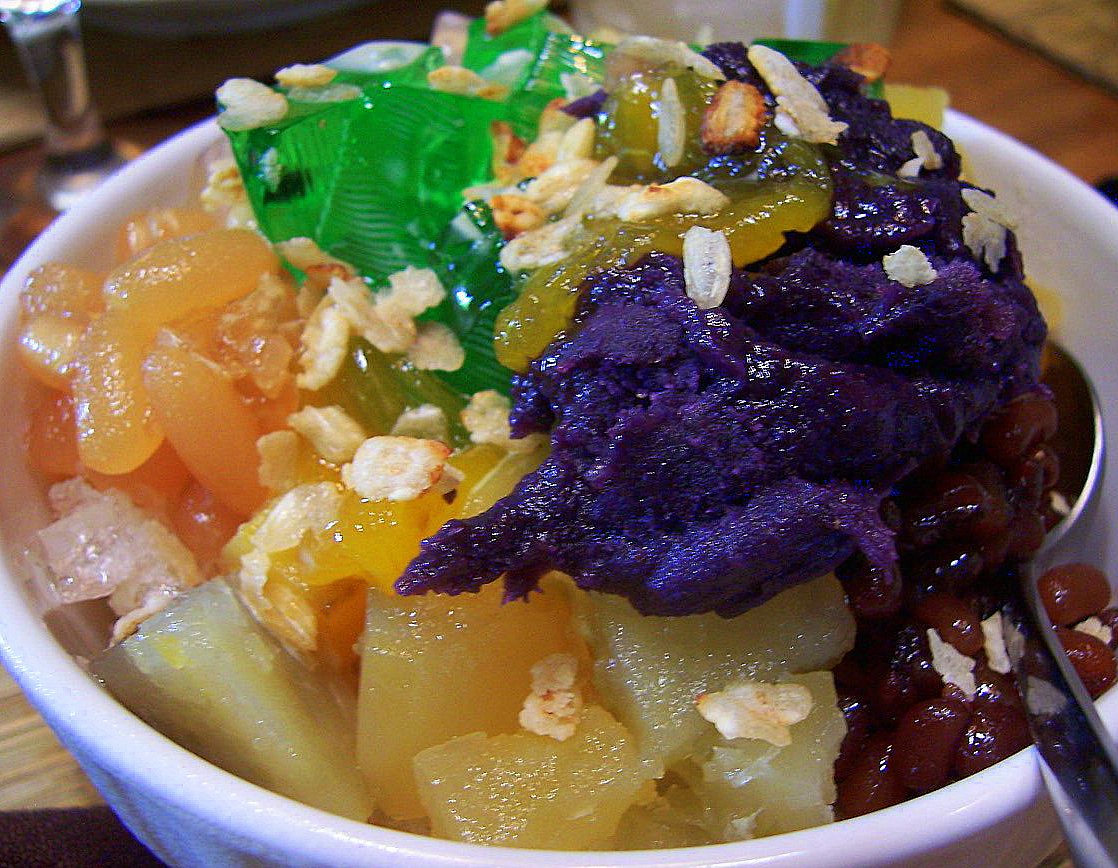
Halo-halo is a cold dessert from the Philippines made by layering crushed ice, evaporated or coconut milk, and a mix of sweetened fruits, beans, jellies, and root crops. Often topped with ube (purple yam) jam, flan, or ice cream, it is served in a tall glass and enjoyed especially in hot weather.
- Halo-halo means 'mix-mix' in Filipino
- No fixed recipe; ingredients vary by region and taste
- Often topped with ube ice cream or leche flan
- Inspired by Japanese kakigōri desserts
- Served in a tall glass with a long spoon
What is Halo-halo?
Halo-halo is a Filipino dessert made by layering crushed or shaved ice with sweetened fruits, beans, jellies, and root crops in a tall glass. Evaporated milk or coconut milk is poured over the mixture. Common additions include ube jam (purple yam), flan, coconut strips, sago (tapioca pearls), gulaman (agar jelly), and fruit preserves. It is often topped with a scoop of ice cream, usually ube, but sometimes other flavors like melon or coconut. The dessert is served cold, with a long spoon for mixing before eating. The taste is a blend of creamy, sweet, and fruity flavors with a variety of textures.
Where does Halo-halo come from?
Halo-halo traces its roots to Japanese kakigōri, a shaved ice dessert brought by Japanese migrants to the Philippines before World War II. Early versions, like monggo con hielo, used only mung beans cooked in syrup with ice and milk. Over time, Filipinos added local ingredients such as sweetened fruits, beans, and root crops, creating the modern, colorful halo-halo. The dessert's name comes from the Filipino word for 'mix,' reflecting its combination of many ingredients. The practice of layering ingredients under the ice, rather than on top, distinguishes it from its Japanese ancestor.
How is Halo-halo made?
To make halo-halo, sweetened fruits, beans, and jellies are placed at the bottom of a tall glass. Crushed or shaved ice is added next, followed by a generous pour of evaporated or coconut milk. Toppings like ube jam, leche flan, and sometimes a scoop of ice cream are added last. The dessert is served with a long spoon, allowing the eater to mix the layers together. There is no fixed recipe, and ingredients can vary widely depending on region and personal preference.


How and when is Halo-halo eaten?
Halo-halo is enjoyed as a refreshing treat, especially in hot weather. It is commonly found in food stalls, restaurants, and fast-food chains across the Philippines. The dessert is served in a tall, clear glass to show off its colorful layers, and eaten with a long spoon to reach all the ingredients. Some people eat the ice cream topping first, while others mix everything together. Halo-halo is not tied to any particular meal or occasion and is eaten as a snack or dessert.
Kinds of Halo-halo
There are many regional and local versions of halo-halo across the Philippines, each using different combinations of fruits, beans, and toppings. Some versions include sweetened wintermelon, durian, or strawberry ice cream. The Visayan dessert binignit, also called ginataáng halo-halo, uses similar ingredients but is served hot and cooked in coconut milk. Ingredients and toppings can be adjusted based on what is available or personal taste.
What Halo-halo means
Halo-halo is widely regarded as the unofficial national dessert of the Philippines. It is a symbol of Filipino creativity and resourcefulness, combining a variety of local ingredients. The dessert is popular in everyday life and has been featured in international media, including television shows and food guides. Filipino fast-food chains and upscale restaurants alike serve halo-halo, making it accessible to people from all walks of life.
Questions people ask about Halo-halo
What is halo-halo made of?
Halo-halo is made by layering crushed ice, evaporated or coconut milk, and a mix of sweetened fruits, beans, jellies, and root crops. Common toppings include ube jam, flan, and sometimes ice cream.
Where does halo-halo come from?
Halo-halo comes from the Philippines. Its origins are linked to Japanese shaved ice desserts brought by Japanese migrants before World War II, which evolved with the addition of local Filipino ingredients.
Is there a standard recipe for halo-halo?
There is no standard recipe for halo-halo. The ingredients can vary widely, but usually include sweetened fruits, beans, jellies, and root crops layered with ice and milk. Toppings and specific ingredients depend on region and preference.
How is halo-halo served?
Halo-halo is served cold in a tall, clear glass, often with a long spoon. The ingredients are layered, and it is typically mixed together before eating to combine the flavors and textures.
Is halo-halo always topped with ice cream?
Halo-halo is often topped with a scoop of ube or fruit-based ice cream, but it can also be served without ice cream. Some prefer it without ice cream to avoid making the dessert too sweet or creamy.
Good reading and sources
The facts on this page come from the Wikipedia article "Halo-halo", written by its contributors and used under the CC BY-SA 4.0 licence, and from its Wikidata record (CC0). Thali rewrote the text in its own words, with AI assistance, and compares every page with the article to make sure no passage is copied. It may be reused under the same CC BY-SA 4.0 licence with a link back.
It may contain mistakes, and it is not dietary or allergy advice: recipes differ from cook to cook. If something is wrong, tell us. Last refreshed 2026-10-03.
More from the Philippines
All the food of the Philippines Hot chocolate
🇲🇽 Mexico and 5 moreA warm drink made from chocolate or cocoa, milk or water, and sugar
Drink, Breakfast, Snacks
Hot chocolate
🇲🇽 Mexico and 5 moreA warm drink made from chocolate or cocoa, milk or water, and sugar
Drink, Breakfast, Snacks
 Rice pudding
🇮🇳 India and 4 moreSweetened rice cooked in milk, found in many forms worldwide
Sweet or dessert, Breakfast, Lunch
Rice pudding
🇮🇳 India and 4 moreSweetened rice cooked in milk, found in many forms worldwide
Sweet or dessert, Breakfast, Lunch
 BreadfruitVegan
🇵🇭 Philippines and 4 moreLarge tropical fruit cooked as a starchy staple in many island cuisines
Main dish, Lunch, Dinner
BreadfruitVegan
🇵🇭 Philippines and 4 moreLarge tropical fruit cooked as a starchy staple in many island cuisines
Main dish, Lunch, Dinner
 Puto bumbóngVegetarian
🇵🇭 PhilippinesPurple Filipino rice cake steamed in bamboo tubes for Christmas
Sweet or dessert, Breakfast, Snacks
Puto bumbóngVegetarian
🇵🇭 PhilippinesPurple Filipino rice cake steamed in bamboo tubes for Christmas
Sweet or dessert, Breakfast, Snacks
Its cousins elsewhere
All sweets and desserts Habichuelas con dulceVegetarian
🇩🇴 Dominican RepublicDominican sweet dessert soup made from red beans, coconut milk and spices
Sweet or dessert, Snacks, Tea time
Habichuelas con dulceVegetarian
🇩🇴 Dominican RepublicDominican sweet dessert soup made from red beans, coconut milk and spices
Sweet or dessert, Snacks, Tea time
 Tres leches cakeVegetarianTres Leches
🇲🇽 Mexico and 5 moreAiry sponge cake soaked in three types of milk and topped with cream
Sweet or dessert, Tea time, Snacks
Tres leches cakeVegetarianTres Leches
🇲🇽 Mexico and 5 moreAiry sponge cake soaked in three types of milk and topped with cream
Sweet or dessert, Tea time, Snacks
 PapanașiVegetarian
🇷🇴 Romania and 1 moreCheese-based doughnuts or dumplings topped with cream and fruit preserves
Pie or savoury pastry
PapanașiVegetarian
🇷🇴 Romania and 1 moreCheese-based doughnuts or dumplings topped with cream and fruit preserves
Pie or savoury pastry
 PamonhaVegetarian
🇧🇷 Brazil and 1 moreSweet corn paste boiled in corn husks, a specialty from Brazil
Sweet or dessert, Snacks
PamonhaVegetarian
🇧🇷 Brazil and 1 moreSweet corn paste boiled in corn husks, a specialty from Brazil
Sweet or dessert, Snacks