
Khichdi
Rice and lentils cooked together, often with vegetables and spices
Khichdi is a dish from the Indian subcontinent made by cooking rice and lentils together, sometimes with vegetables and spices. It is widely eaten in India, Bangladesh, Nepal, and Pakistan, and is known for its simplicity and comfort. Khichdi is often one of the first solid foods given to babies and is enjoyed at any meal.
- Khichdi is often the first solid food for babies in northern India
- It is made by cooking rice and lentils together, sometimes with vegetables
- Historical records mention khichdi as early as the 4th century BCE
- Many regional versions use different grains or add vegetables
- Khichdi inspired the Anglo-Indian dish kedgeree
What is Khichdi?
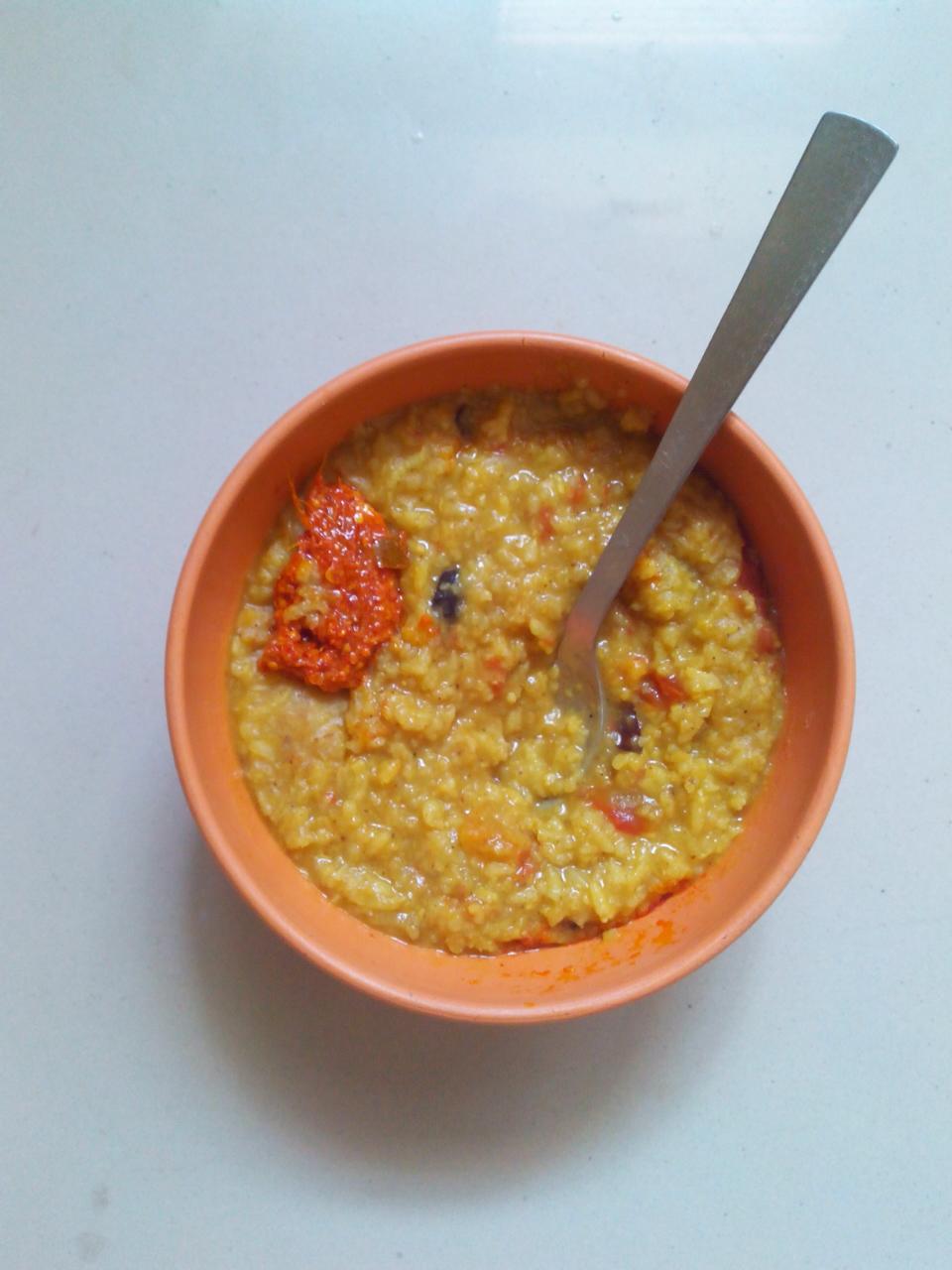
Khichdi is a simple, comforting dish where rice and lentils are cooked together, often with spices and sometimes with vegetables like cauliflower, potatoes, or green peas. The result is a soft, porridge-like meal that can range from plain to richly seasoned, depending on the region and household. Its mild flavor and easy-to-digest texture make it a common choice for people of all ages, especially young children or those recovering from illness. Khichdi can be served on its own or with accompaniments such as pickles, yoghurt, or ghee (clarified butter).
Where does Khichdi come from?
Khichdi traces its roots to ancient India, with the name coming from the Sanskrit word 'khiccā', meaning a dish of rice and legumes. Historical records show that rice and pulses cooked together were popular in the Indian subcontinent as early as the time of Seleucus, a Greek king who campaigned in India in the 4th century BCE. The dish is mentioned by travelers like Ibn Battuta and Afanasiy Nikitin, and was favored by Mughal emperors. The 16th-century Ain-i-Akbari lists several recipes for khichdi, showing its long-standing presence and variety.
How is Khichdi made?
To make khichdi, rice and lentils are washed and cooked together in water, often with spices such as cumin, turmeric, or ginger. Many versions include chopped vegetables like potatoes, cauliflower, or peas. The mixture is simmered until both the rice and lentils are soft and have absorbed the flavors. Some regional recipes use different grains, such as millet, or add ghee for richness. The finished dish can be thick and porridge-like or looser, depending on preference.


How and when is Khichdi eaten?
Khichdi is eaten at any time of day—breakfast, lunch, or dinner. It is especially common as a light meal or comfort food, and is often served to young children or those who are unwell. In many homes, it is paired with pickles, yoghurt, or a drizzle of ghee. In some regions, it is offered to deities or eaten as part of religious observances. The dish is also a staple in rural areas and is valued for its simplicity and ease of digestion.
Kinds of Khichdi
There are many regional versions of khichdi. In Haryana, millet is used instead of rice. In the Bhojpuri region, a version called Khēcharē is made and offered on Saturdays. Some people make khichdi with mung dal (split mung beans), while others add vegetables or use grains like pearl millet or jowar. Sabudana khichdi, made from sago, is eaten during fasting by some Hindus. In Hyderabad, khichdi is part of a larger meal with ground meat and sour sauce.
What Khichdi means
Khichdi is deeply woven into the food culture of the Indian subcontinent. It is often the first solid food given to babies in northern India. The dish is sometimes associated with religious offerings and is a symbol of comfort and simplicity. In 2017, Indian media discussed khichdi as a possible 'national dish', though this was never made official. Khichdi has also inspired dishes like Anglo-Indian kedgeree and appears in popular media, including television and film.
Questions people ask about Khichdi
What is khichdi made of?
Khichdi is mainly made from rice and lentils cooked together, often with spices and sometimes with vegetables like potatoes, cauliflower, or peas.
Where does khichdi come from?
Khichdi comes from the Indian subcontinent and has a long history in India, Bangladesh, Nepal, and Pakistan.
Is khichdi vegetarian?
Yes, khichdi is typically vegetarian, though some regional variations may include other ingredients. The basic version uses rice, lentils, and vegetables.
When is khichdi usually eaten?
Khichdi can be eaten at breakfast, lunch, or dinner. It is a common comfort food and is often served to babies and people recovering from illness.
Are there different kinds of khichdi?
Yes, there are many regional variations. Some use different grains like millet, add vegetables, or are made for special occasions or religious fasting.
Good reading and sources
- From Kashmir to Karnataka, khichdi is the one true underestimated food of IndiaScroll.in, Article
- Nothing cooking: Khichdi not national dish, says minister after Twitter stormHindustan Times, Article
- Khichdi not national food, clarifies Harsimrat Kaur BadalThe Hindu, Article
The facts on this page come from the Wikipedia article "Khichdi", written by its contributors and used under the CC BY-SA 4.0 licence, and from its Wikidata record (CC0). Thali rewrote the text in its own words, with AI assistance, and compares every page with the article to make sure no passage is copied. It may be reused under the same CC BY-SA 4.0 licence with a link back.
It may contain mistakes, and it is not dietary or allergy advice: recipes differ from cook to cook. If something is wrong, tell us. Last refreshed 2026-10-03.
More from India
All the food of India Kebabكَبَاب
🇹🇷 Turkey and 5 moreGrilled or roasted meat, often on skewers, found across the Middle East and beyond
Main dish, Lunch, Dinner
Kebabكَبَاب
🇹🇷 Turkey and 5 moreGrilled or roasted meat, often on skewers, found across the Middle East and beyond
Main dish, Lunch, Dinner
 Biryani
🇮🇳 India and 5 moreRice and spiced meat or vegetables layered and cooked together
Main dish, Lunch, Dinner
Biryani
🇮🇳 India and 5 moreRice and spiced meat or vegetables layered and cooked together
Main dish, Lunch, Dinner
 French toast
🇫🇷 France and 5 moreBread soaked in egg and milk, pan-fried and served sweet or savoury
Main dish, Breakfast, Snacks
French toast
🇫🇷 France and 5 moreBread soaked in egg and milk, pan-fried and served sweet or savoury
Main dish, Breakfast, Snacks
 Fish and chipsFish or seafood
🇬🇧 United Kingdom and 8 moreBattered fried fish served hot with thick-cut chips
Main dish, Lunch, Dinner
Fish and chipsFish or seafood
🇬🇧 United Kingdom and 8 moreBattered fried fish served hot with thick-cut chips
Main dish, Lunch, Dinner
Its cousins elsewhere
All main dishes Cabbage roll
🇺🇦 Ukraine and 5 moreCooked cabbage leaves wrapped around seasoned fillings, simmered or baked
Main dish, Lunch, Dinner
Cabbage roll
🇺🇦 Ukraine and 5 moreCooked cabbage leaves wrapped around seasoned fillings, simmered or baked
Main dish, Lunch, Dinner
 Chicken soupMeat
🇺🇸 United States and 4 moreA hot soup of chicken simmered with vegetables, noodles or grains
Soup, Lunch, Dinner
Chicken soupMeat
🇺🇸 United States and 4 moreA hot soup of chicken simmered with vegetables, noodles or grains
Soup, Lunch, Dinner
 Lentil soupVegan
🇪🇬 Egypt and 5 moreA hearty soup made from lentils, often with vegetables and spices
Soup, Lunch, Dinner
Lentil soupVegan
🇪🇬 Egypt and 5 moreA hearty soup made from lentils, often with vegetables and spices
Soup, Lunch, Dinner
 Stuffed peppers
🇧🇬 Bulgaria and 5 moreBell peppers filled with seasoned mixtures and cooked until tender
Main dish, Lunch, Dinner
Stuffed peppers
🇧🇬 Bulgaria and 5 moreBell peppers filled with seasoned mixtures and cooked until tender
Main dish, Lunch, Dinner