
Kuih
In its own language: 粿 / کوءيه / kue
Bite-sized sweet or savoury snacks made from rice or glutinous rice flour
Kuih refers to a wide range of small snacks or desserts found in Malaysia, Indonesia, Singapore, Brunei, and parts of China. Made mainly from rice or glutinous rice flour, kuih can be sweet or savoury, steamed or fried, and are enjoyed throughout the day, especially during festivals and celebrations.
- Kuih covers both sweet and savoury snacks and desserts
- Main ingredients are rice or glutinous rice flour and coconut milk
- Steamed, fried, and layered kuih are all common
- Kuih is central to festivals like Hari Raya and Chinese New Year
- Hundreds of varieties exist across Southeast Asia
What is Kuih?
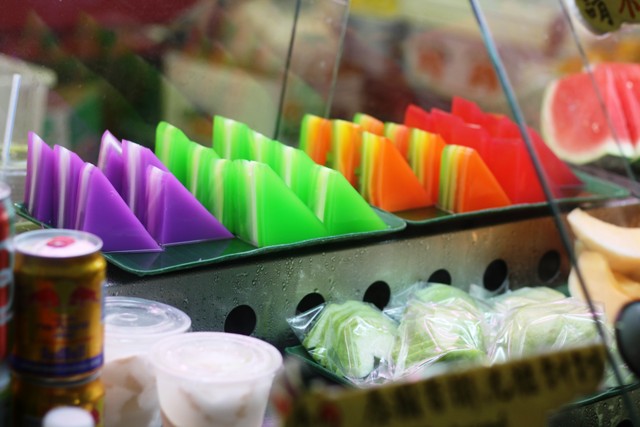
Kuih is a collective term for bite-sized snacks or desserts, often colourful and made from rice or glutinous rice flour. Some are steamed and have a soft, pudding-like texture, while others are fried and crunchy. Kuih can be sweet, using ingredients like palm sugar and coconut, or savoury, filled with vegetables, meats, or seafood. Many kuih are layered or shaped in distinctive ways, such as kuih lapis (layered cake) or onde onde (glutinous rice balls with palm sugar filling). The flavours range from sweet and fragrant, thanks to pandan and coconut, to savoury and spicy, depending on the filling.
Where does Kuih come from?
The history of kuih dates back to at least the 15th century in Southeast Asia, shaped by local traditions and influences from traders and colonisers. The word itself comes from Southern Min Chinese dialects, and the concept spread and evolved across Malaysia, Indonesia, Singapore, Brunei, and parts of China and Taiwan. Over time, each community developed its own versions, using available ingredients and methods. The Peranakan (Nyonya) community in Malaysia and Singapore is especially known for its kuih, blending Chinese and Malay elements.
How is Kuih made?
Most kuih are made by mixing rice or glutinous rice flour with coconut milk and flavourings like pandan leaf or palm sugar. The batter or dough is shaped, sometimes coloured, and either steamed, fried, or baked. Some kuih are layered, such as kuih lapis, while others are filled, like kuih kochi (with sweet paste) or kuih gulung (with coconut and palm sugar). Traditional methods often rely on touch and experience rather than precise measurements, and recipes are passed down through families.


How and when is Kuih eaten?
Kuih is eaten as a snack at any time of day, not tied to a specific meal. It is common at markets, street stalls, and during social gatherings. Kuih plays a central role in festivals such as Hari Raya and Chinese New Year, where it is shared among family and friends. Some varieties are linked to specific regions or occasions, and a few are served at weddings or baby celebrations. Kuih can be enjoyed with tea or coffee, and is often presented on banana leaves or in small portions.
Kinds of Kuih
There are hundreds of kuih varieties, with differences in ingredients, preparation, and appearance across regions and communities. In northern Malaysia, kuih tends to be sweeter, while central and southern areas offer more savoury options. Indigenous groups in Borneo favour fried, crunchy kuih, unlike the steamed versions common in Peninsular Malaysia and Singapore. Chinese, Malay, Indian, and Peranakan communities each have signature kuih, such as ang ku kueh, kuih lapis, and putu piring.
What Kuih means
Kuih is woven into the fabric of daily and festive life in Malaysia, Indonesia, Singapore, and Brunei. It is a symbol of hospitality and celebration, especially during major festivals. Certain kuih, like kuih makmur and ti kueh, are associated with Eid and Chinese New Year. The making of kuih is often a communal or family activity, with recipes and techniques handed down through generations. Some types, like kuih lidah, have protected status in their regions.
When Kuih is on the table
Questions people ask about Kuih
What is kuih made of?
Kuih is usually made from rice flour or glutinous rice flour, coconut milk, pandan leaf, palm sugar, and sometimes tapioca or mung bean flour. Some versions include eggs, grated coconut, or savoury fillings.
Where does kuih come from?
Kuih originated in China and spread throughout Southeast Asia, especially Malaysia, Indonesia, Singapore, Brunei, and Taiwan. Each region and community has its own traditional kuih.
Is kuih always sweet?
No, kuih can be either sweet or savoury. Sweet kuih often uses palm sugar and coconut, while savoury types may have fillings like vegetables, prawns, or meat.
When is kuih eaten?
Kuih can be eaten at any time of day as a snack. It is also an important part of festive celebrations such as Hari Raya and Chinese New Year.
Are there different types of kuih?
Yes, there are hundreds of kuih varieties, including steamed, fried, layered, and filled types. Each ethnic group and region has its own specialities.
Good reading and sources
The facts on this page come from the Wikipedia article "Kuih", written by its contributors and used under the CC BY-SA 4.0 licence, and from its Wikidata record (CC0). Thali rewrote the text in its own words, with AI assistance, and compares every page with the article to make sure no passage is copied. It may be reused under the same CC BY-SA 4.0 licence with a link back.
It may contain mistakes, and it is not dietary or allergy advice: recipes differ from cook to cook. If something is wrong, tell us. Last refreshed 2026-10-03.
More from Malaysia
All the food of Malaysia BreadfruitVegan
🇵🇭 Philippines and 4 moreLarge tropical fruit cooked as a starchy staple in many island cuisines
Main dish, Lunch, Dinner
BreadfruitVegan
🇵🇭 Philippines and 4 moreLarge tropical fruit cooked as a starchy staple in many island cuisines
Main dish, Lunch, Dinner
 Mooncake月饼 / 月餅
🇨🇳 China and 5 moreA round Chinese pastry with sweet or nutty filling, eaten at the Mid-Autumn Festival
Pie or savoury pastry, Tea time, Snacks
Mooncake月饼 / 月餅
🇨🇳 China and 5 moreA round Chinese pastry with sweet or nutty filling, eaten at the Mid-Autumn Festival
Pie or savoury pastry, Tea time, Snacks
 Nian gaoVegan年糕
🇨🇳 China and 5 moreSticky rice cake enjoyed at Chinese New Year for good luck
Sweet or dessert, Snacks
Nian gaoVegan年糕
🇨🇳 China and 5 moreSticky rice cake enjoyed at Chinese New Year for good luck
Sweet or dessert, Snacks
 Tangyuan汤圆 / 湯圓
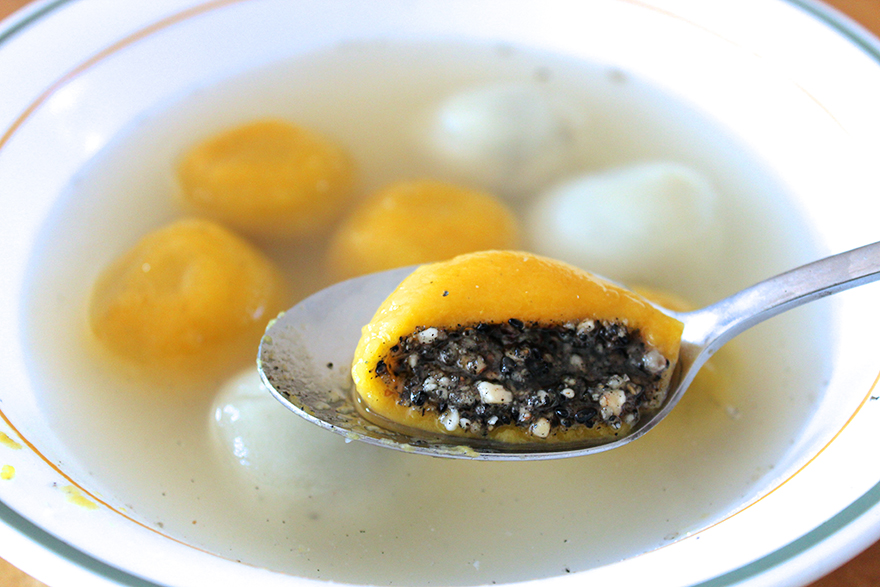
🇨🇳 China and 5 moreGlutinous rice balls, often filled, served in sweet or savory broth
Sweet or dessert, Snacks
Tangyuan汤圆 / 湯圓
🇨🇳 China and 5 moreGlutinous rice balls, often filled, served in sweet or savory broth
Sweet or dessert, Snacks
Its cousins elsewhere
All pies and savoury pastries SachertorteVegetarian
🇦🇹 Austria and 1 moreAustrian chocolate sponge cake with apricot jam and a glossy chocolate glaze
Sweet or dessert, Tea time, Snacks
SachertorteVegetarian
🇦🇹 Austria and 1 moreAustrian chocolate sponge cake with apricot jam and a glossy chocolate glaze
Sweet or dessert, Tea time, Snacks
 Pie
🇬🇧 United Kingdom and 5 moreA baked dish with a pastry crust and sweet or savoury filling
Main dish, Lunch, Dinner
Pie
🇬🇧 United Kingdom and 5 moreA baked dish with a pastry crust and sweet or savoury filling
Main dish, Lunch, Dinner
 Chocolate brownieVegetarianBrownie
🇺🇸 United States and 2 moreDense chocolate squares baked as a bar, often served warm or with toppings
Sweet or dessert, Snacks, Tea time
Chocolate brownieVegetarianBrownie
🇺🇸 United States and 2 moreDense chocolate squares baked as a bar, often served warm or with toppings
Sweet or dessert, Snacks, Tea time
 Cheesecake
🇬🇷 Greece and 5 moreA chilled dessert of sweetened soft cheese on a crumb or pastry base
Sweet or dessert, Snacks
Cheesecake
🇬🇷 Greece and 5 moreA chilled dessert of sweetened soft cheese on a crumb or pastry base
Sweet or dessert, Snacks