
Kutia
Sweet grain porridge with honey, poppy seeds and nuts for winter feasts
Kutia is a ceremonial sweet porridge made from wheat or barley, honey, poppy seeds, and nuts, often with dried fruits. It is served in Belarus, Lithuania, Poland, Ukraine, Armenia and parts of Russia, especially at Christmas and New Year, and sometimes at funerals. The dish marks important religious and family gatherings.
- Kutia is eaten at Christmas and New Year in Eastern Europe and Armenia
- The main ingredients are wheat, poppy seeds, honey, and nuts
- In Ukraine, kutia opens the Christmas Eve meal and is offered to ancestors
- Armenian anoush abour is decorated with pomegranate seeds
- Polish kutia is linked to fortune-telling customs
What is Kutia?
Kutia is a sweet porridge made by combining cooked grains such as wheatberries or barley with honey, poppy seeds, and nuts. Raisins or other dried fruits are often added for extra sweetness and texture. The mixture is sometimes flavored with vanilla or spices, and in Armenia, rose water and cinnamon are used. The dish is glossy and thick, with a chewy bite from the grains and a mix of crunchy and soft elements from the seeds and fruit.
Where does Kutia come from?
Kutia has deep roots in Slavic and Armenian traditions, with some tracing its origins to ancient pre-Christian rituals. The name comes from Greek words for 'bean' or 'grain.' In Armenia, the dish is called anoush abour, meaning 'sweet porridge,' and is linked to a legend about Noah's family making a meal from leftover grains after the flood. Over time, kutia became tied to Christian holidays and family commemorations across Eastern Europe.
How is Kutia made?
To prepare kutia, whole grains like wheatberries or barley are soaked and cooked until soft. Poppy seeds are often ground, sometimes using a special bowl called a makutra. The grains are mixed with honey, ground poppy seeds, and chopped nuts such as walnuts, hazelnuts, or almonds. Dried fruits, sugar, and flavorings like vanilla or cinnamon may be added. In Armenia, pomegranate seeds are sometimes used for decoration.
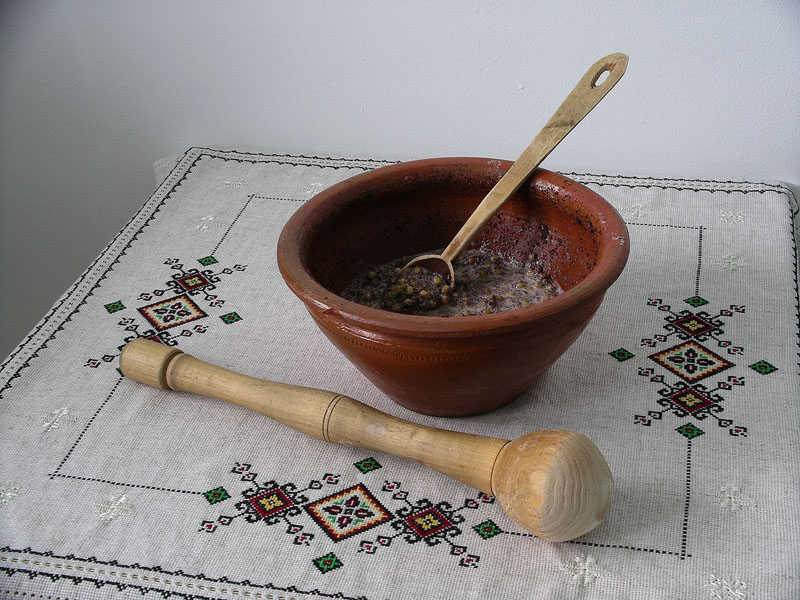


How and when is Kutia eaten?
Kutia is most often served at Christmas Eve dinners, especially in Ukraine and Poland, where it opens the meal. In Armenia, it appears at Christmas, New Year, baptisms, weddings, and house blessings. The dish is shared among family and sometimes distributed to neighbors or the poor. In Ukraine, special customs involve offering kutia to ancestors and leaving some out overnight. In Poland, fortune-telling rituals are sometimes practiced with kutia.
Kinds of Kutia
Regional versions use different grains: wheat, barley, millet, rice, or kasha. Armenian anoush abour may skip poppy seeds and is flavored with rose water and spices. Polish recipes might include milk or cream, while Ukrainian kutia is strictly dairy-free during fasting. Decorations and added fruits or nuts vary by family and occasion.
What Kutia means
Kutia is more than food; it is a symbol of family, remembrance, and religious tradition. In Ukraine and Poland, it marks Christmas Eve and connects generations through ritual. In Armenia, it is shared to celebrate milestones and express gratitude. Customs around kutia, such as inviting ancestors or predicting the year’s fortunes, reflect its role in marking the passage of time and honoring both faith and heritage.
When Kutia is on the table
Questions people ask about Kutia
What is kutia made of?
Kutia is made from cooked grains such as wheatberries or barley, mixed with honey, poppy seeds, nuts, and often dried fruits. Some versions add spices or vanilla, and Armenian recipes may include rose water and pomegranate seeds.
Where does kutia come from?
Kutia is traditional in Belarus, Lithuania, Poland, Ukraine, Armenia, and parts of Russia. It has roots in both Slavic and Armenian cultures and is linked to ancient rituals and Christian celebrations.
When is kutia usually eaten?
Kutia is most commonly served at Christmas Eve dinners, but also appears at New Year, baptisms, weddings, funerals, and other important family or religious gatherings, depending on the country.
Is kutia always vegetarian?
Kutia is typically vegetarian, especially when served during fasting periods, as it contains no meat or dairy. Some Polish recipes may add milk or cream, but most versions are dairy-free.
Are there different versions of kutia?
Yes, the grains, nuts, fruits, and flavorings can vary by region and family. Armenian anoush abour omits poppy seeds and uses rose water, while some Polish and Ukrainian recipes use different grains or add cream.
Good reading and sources
The facts on this page come from the Wikipedia article "Kutia", written by its contributors and used under the CC BY-SA 4.0 licence, and from its Wikidata record (CC0). Thali rewrote the text in its own words, with AI assistance, and compares every page with the article to make sure no passage is copied. It may be reused under the same CC BY-SA 4.0 licence with a link back.
It may contain mistakes, and it is not dietary or allergy advice: recipes differ from cook to cook. If something is wrong, tell us. Last refreshed 2026-10-03.
More from Belarus
All the food of Belarus BigosMeat
🇵🇱 Poland and 5 morePolish stew of mixed meats, sauerkraut and cabbage, simmered with spices
Stew or curry, Breakfast, Dinner
BigosMeat
🇵🇱 Poland and 5 morePolish stew of mixed meats, sauerkraut and cabbage, simmered with spices
Stew or curry, Breakfast, Dinner
 Potato pancakeVegetarian
🇧🇾 Belarus and 5 moreShallow-fried pancakes made from grated or mashed potato, common across Europe
Main dish, Lunch, Dinner
Potato pancakeVegetarian
🇧🇾 Belarus and 5 moreShallow-fried pancakes made from grated or mashed potato, common across Europe
Main dish, Lunch, Dinner
 Bliniблины
🇷🇺 Russia and 3 moreThin Russian pancakes made with yeast or unyeasted batter
Main dish, Breakfast, Lunch
Bliniблины
🇷🇺 Russia and 3 moreThin Russian pancakes made with yeast or unyeasted batter
Main dish, Breakfast, Lunch
 KamaVegetarianталқан
🇪🇪 Estonia and 5 moreRoasted grain and legume flour mixed with milk or buttermilk
Main dish, Breakfast, Snacks
KamaVegetarianталқан
🇪🇪 Estonia and 5 moreRoasted grain and legume flour mixed with milk or buttermilk
Main dish, Breakfast, Snacks
Its cousins elsewhere
All sweets and desserts BaklavaVegetarianباقلوا
🇹🇷 Turkey and 5 moreThin pastry filled with nuts and soaked in sweet syrup
Sweet or dessert, Tea time, Snacks
Majounمعجون
🇲🇦 MoroccoA Moroccan sweet paste or fudge often made with cannabis and dried fruits
Sweet or dessert, Snacks
BaklavaVegetarianباقلوا
🇹🇷 Turkey and 5 moreThin pastry filled with nuts and soaked in sweet syrup
Sweet or dessert, Tea time, Snacks
Majounمعجون
🇲🇦 MoroccoA Moroccan sweet paste or fudge often made with cannabis and dried fruits
Sweet or dessert, Snacks
 KahkVegetarianكحك
🇪🇬 EgyptEgyptian shortbread biscuits dusted with powdered sugar, made for Eid and other feasts
Sweet or dessert, Snacks, Tea time
KahkVegetarianكحك
🇪🇬 EgyptEgyptian shortbread biscuits dusted with powdered sugar, made for Eid and other feasts
Sweet or dessert, Snacks, Tea time
 ZaazaaVegetarianزعزع
🇲🇦 MoroccoMoroccan avocado milkshake parfait, layered with fruit, sauces and toppings
Drink, Snacks
ZaazaaVegetarianزعزع
🇲🇦 MoroccoMoroccan avocado milkshake parfait, layered with fruit, sauces and toppings
Drink, Snacks