
Labskaus
In its own language: labskovs
Mashed potatoes and salted meat, a northern German sailor's dish
Labskaus is a traditional dish from northern Germany, especially Bremen, Hamburg, and Lübeck. It combines salted meat or corned beef, potatoes, and onion, sometimes with beetroot, gherkin, or herring mixed in or served on the side. Once common among sailors, it is now found mainly in coastal restaurants.
- A sailor's dish from northern Germany
- Mashed salted meat, potatoes, and onions
- Often served with beetroot, gherkin, or pickled herring
- Still found in Hamburg, Bremen, and Lübeck
- Similar dishes exist in Denmark, Sweden, and Norway
What is Labskaus?
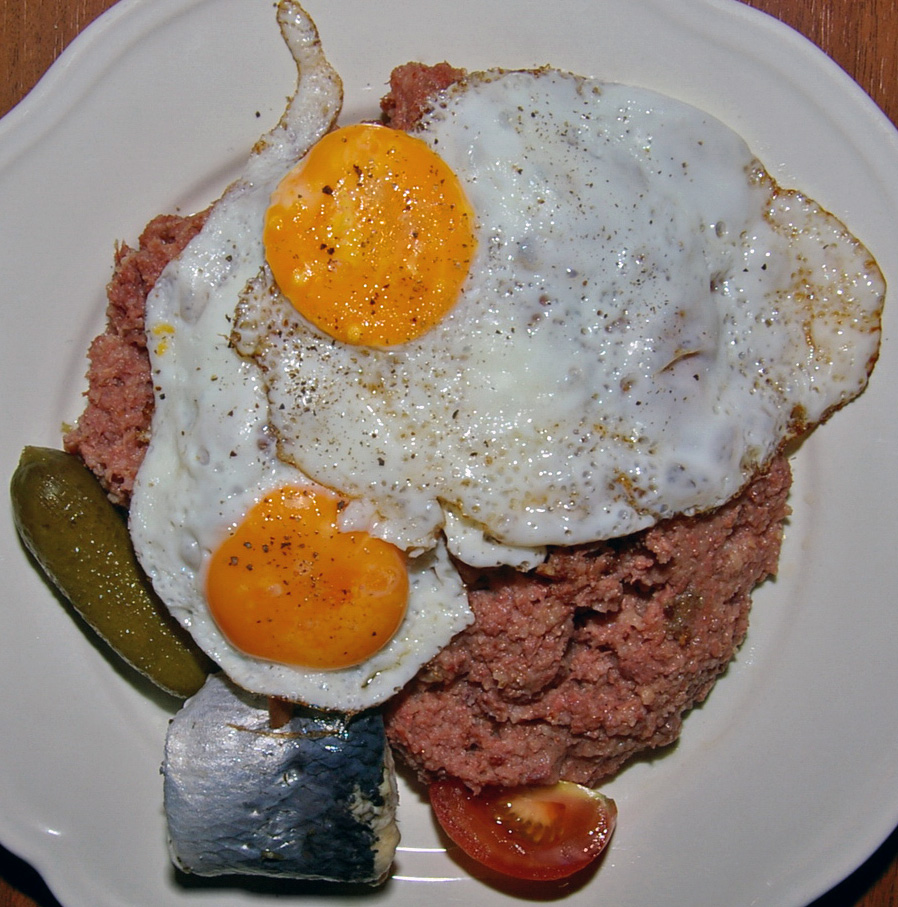
Labskaus is a mashed meal of salted meat or corned beef, potatoes, and onions, sometimes mixed with beetroot or herring. The texture is soft and hearty, with a pinkish color if beetroot is included. Gherkin and pickled herring (rollmops) are often served on the side. The taste is savory, slightly tangy from pickles or beetroot, and rich from the meat. It is filling and was made to be practical for long journeys at sea.
Where does Labskaus come from?
Labskaus comes from northern Germany, especially Bremen, Hamburg, and Lübeck. Its name may come from Latvian or Lithuanian words meaning 'good bowl' or 'hotpot,' but this is uncertain. The dish became popular among sailors during the Age of Sail, when salted meat and potatoes were common shipboard foods. Labskaus helped stretch limited meat supplies and was practical for long voyages. Today, it is mostly found in restaurants along the northern German coast and in some Danish establishments.
How is Labskaus made?
To make Labskaus, beef is first boiled in broth, then minced together with beetroot, onions, boiled potatoes, and sometimes herring. The mixture is fried in lard and seasoned with spices like nutmeg, pepper, coriander, or allspice. Some recipes use ham instead of beef. In Bremen, the corned beef, onions, and mashed potatoes are fried together, with beetroot and pickled herring served on the side. The dish is adaptable, with many local versions.
How and when is Labskaus eaten?
Labskaus is usually eaten as a main meal, for lunch or dinner. It is often served with a fried egg on top, and sides like pickled gherkin, sliced beetroot, or rollmops (pickled herring fillets). The dish is hearty and filling, making it suitable for cold weather or after hard work. It is now a regional specialty, mostly enjoyed in northern German cities and some Scandinavian countries.
Kinds of Labskaus
Labskaus has many regional and national variations. In Bremen, beetroot and herring are served on the side. Danish versions are similar to Bremen's but often skip the herring and may include gravy. In Sweden, lapskojs is a stew of beef and mashed potatoes. In Norway, lapskaus refers to a beef stew with gravy, sometimes with other meats. The core idea is always meat and potatoes, but the details vary.
What Labskaus means
Labskaus is closely tied to the maritime history of northern Germany, reflecting the practical needs of sailors. It is a symbol of the region's seafaring past and is now a local specialty found in coastal restaurants. The dish is not tied to any particular festival or religious event but is part of everyday food culture in its home cities. Its name and variations are also found in Scandinavian countries.
Questions people ask about Labskaus
What is Labskaus made of?
Labskaus is made from salted meat or corned beef, potatoes, and onions. Some recipes add beetroot, pickled gherkin, or herring, either mixed in or served on the side.
Where does Labskaus come from?
Labskaus comes from northern Germany, especially the cities of Bremen, Hamburg, and Lübeck. It is also found in Denmark, Norway, and Sweden with local variations.
How is Labskaus served?
Labskaus is usually served as a main meal, often with a fried egg on top and sides like pickled gherkin, beetroot, or rollmops (pickled herring fillets).
Is Labskaus always made with herring?
No, herring is optional. Some recipes include herring in the mash, while others serve it as a side or leave it out entirely, especially in Danish and Scandinavian versions.
What does Labskaus taste like?
Labskaus is savory and hearty, with a rich meat flavor. The beetroot and pickles add a tangy note, and the texture is soft and mashed.
Good reading and sources
The facts on this page come from the Wikipedia article "Labskaus", written by its contributors and used under the CC BY-SA 4.0 licence, and from its Wikidata record (CC0). Thali rewrote the text in its own words, with AI assistance, and compares every page with the article to make sure no passage is copied. It may be reused under the same CC BY-SA 4.0 licence with a link back.
It may contain mistakes, and it is not dietary or allergy advice: recipes differ from cook to cook. If something is wrong, tell us. Last refreshed 2026-10-03.
More from Germany
All the food of Germany HamburgerMeat
🇺🇸 United States and 1 moreA hot ground meat patty in a sliced bun, often with salad and sauces
Main dish, Lunch, Dinner
HamburgerMeat
🇺🇸 United States and 1 moreA hot ground meat patty in a sliced bun, often with salad and sauces
Main dish, Lunch, Dinner
 Hot dogMeat
🇺🇸 United States and 2 moreA sausage in a sliced bun, topped with condiments and eaten hot
Street food, Lunch, Dinner
Hot dogMeat
🇺🇸 United States and 2 moreA sausage in a sliced bun, topped with condiments and eaten hot
Street food, Lunch, Dinner
 Peking duckMeat北京烤鸭
🇨🇳 China and 4 moreCrisp-skinned roast duck from Beijing, carved and served with pancakes and condiments
Main dish, Dinner, Lunch
Peking duckMeat北京烤鸭
🇨🇳 China and 4 moreCrisp-skinned roast duck from Beijing, carved and served with pancakes and condiments
Main dish, Dinner, Lunch
 Doner kebab
🇹🇷 Turkey and 5 moreMeat roasted on a vertical spit, sliced and served in bread or on a plate
Main dish, Lunch, Dinner
Doner kebab
🇹🇷 Turkey and 5 moreMeat roasted on a vertical spit, sliced and served in bread or on a plate
Main dish, Lunch, Dinner
Its cousins elsewhere
All main dishes Rocoto rellenoMeat
🇵🇪 PeruPeruvian stuffed rocoto peppers baked with meat and cheese
Main dish, Lunch, Dinner
Rocoto rellenoMeat
🇵🇪 PeruPeruvian stuffed rocoto peppers baked with meat and cheese
Main dish, Lunch, Dinner
 Seafood boil
🇺🇸 United States and 1 moreShellfish and sides cooked together for a communal feast
Main dish, Lunch, Dinner
Seafood boil
🇺🇸 United States and 1 moreShellfish and sides cooked together for a communal feast
Main dish, Lunch, Dinner
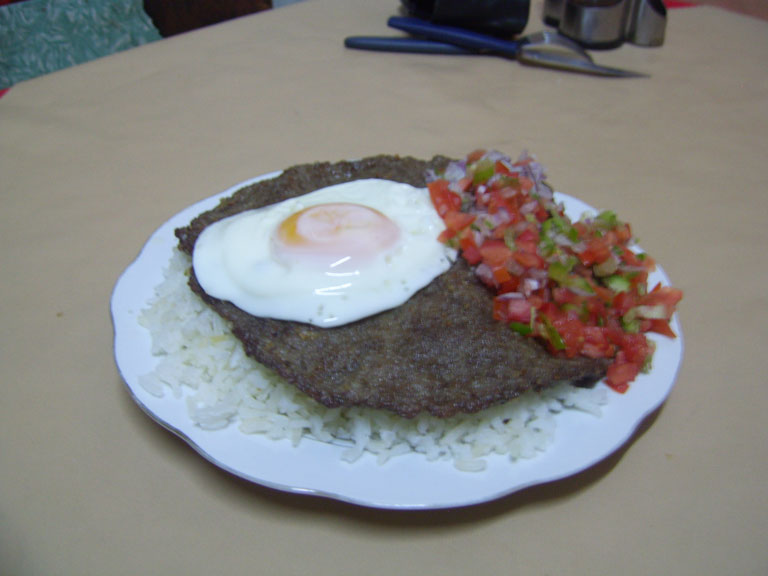 SilpanchoMeatSillp'anchu
🇧🇴 BoliviaLayered Bolivian meal with rice, potatoes, breaded meat, and fried eggs
Main dish, Lunch, Dinner
SilpanchoMeatSillp'anchu
🇧🇴 BoliviaLayered Bolivian meal with rice, potatoes, breaded meat, and fried eggs
Main dish, Lunch, Dinner
 Misalमिसळ
🇮🇳 IndiaSpicy sprouted bean curry layered with toppings, served hot with bread
Main dish, Breakfast, Snacks
Misalमिसळ
🇮🇳 IndiaSpicy sprouted bean curry layered with toppings, served hot with bread
Main dish, Breakfast, Snacks