Silpancho
In its own language: Sillp'anchu
Layered Bolivian meal with rice, potatoes, breaded meat, and fried eggs
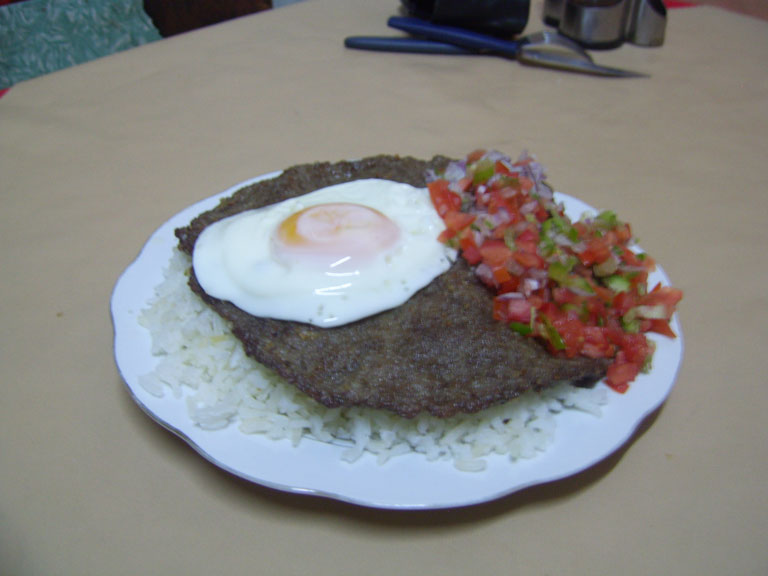
Silpancho is a hearty dish from Cochabamba, Bolivia, built in layers of rice, sliced potatoes, thin breaded meat, chopped tomato, and a mix of onion, beet, and parsley, all topped with fried eggs. It is known for being filling and is often eaten as a main meal.
- Silpancho comes from Cochabamba, Bolivia
- It is built in layers: rice, potatoes, breaded meat, and fried eggs
- A mix of onion, beet, and parsley is added on top
- There is a sandwich version called trancapecho
- Variants may use diced meat or pico de gallo
What is Silpancho?
Silpancho is a layered meal from Bolivia, especially linked to Cochabamba. It starts with a base of white rice, then boiled and sliced potatoes. On top of these sits a thin, breaded piece of meat that has been pounded flat. Chopped tomato is added, and a mixture of onion, beet, and parsley is scattered over. The whole dish is finished with one or two fried eggs placed on top. The combination brings together different textures and flavors in a single plate.
Where does Silpancho come from?
Silpancho comes from Cochabamba, a city in Bolivia. Its name comes from the Quechua word 'Sillp'anchu.' The dish is well known in Bolivia as a filling and satisfying meal. Over time, it has become a staple of local food culture, especially valued for its generous portions and mix of ingredients. The sources do not mention a specific date or person of origin.
How is Silpancho made?
To make silpancho, white rice is cooked and spread as the first layer. Potatoes are boiled, sliced, and arranged over the rice. A piece of meat is pounded thin, breaded, and cooked, then placed on top of the potatoes. Chopped tomato is added, followed by a mix of onion, beet, and parsley. Finally, one or two eggs are fried and laid over everything. Some versions dice and cook the meat instead of using it as a steak, or marinate it with soy sauce.
How and when is Silpancho eaten?
Silpancho is usually eaten for lunch or dinner as a main meal. It is served on a plate with all the layers visible, making it a visually appealing and substantial dish. People may eat it on its own or, in some cases, find all the ingredients inside a sandwich called trancapecho, which even includes the rice. It is an everyday food, enjoyed at home or in local eateries.
Kinds of Silpancho
Some versions of silpancho use diced meat cooked over the rice instead of a whole steak. Another variation replaces the topping of parsley, onion, and beet with pico de gallo, a fresh tomato salsa. There are also recipes where the meat is marinated with soy sauce before being breaded and cooked. The trancapecho is a sandwich version that includes all the standard ingredients, even the rice.
What Silpancho means
Silpancho is a well-loved dish in Bolivia, especially in Cochabamba. It is seen as a filling and satisfying meal for everyday eating. The dish is notable for its combination of carbohydrates and fats, making it popular among those looking for a substantial plate. Its layered presentation and the option to enjoy it as a sandwich show its adaptability in Bolivian food culture.
Questions people ask about Silpancho
What is silpancho made of?
Silpancho is made with layers of white rice, boiled and sliced potatoes, thin breaded meat, chopped tomato, a mix of onion, beet, and parsley, and is topped with one or two fried eggs.
Where does silpancho come from?
Silpancho comes from Cochabamba, a city in Bolivia, and is a popular part of Bolivian food culture.
How is silpancho served?
It is served as a layered dish on a plate, with all the ingredients stacked, and sometimes as a sandwich called trancapecho that includes all the same elements.
Are there variations of silpancho?
Yes, some versions use diced meat or marinate the meat with soy sauce, and some replace the usual topping with pico de gallo. The trancapecho is a sandwich version.
Is silpancho a vegetarian dish?
No, silpancho contains breaded meat and fried eggs, so it is not vegetarian.
Good reading and sources
The facts on this page come from the Wikipedia article "Silpancho", written by its contributors and used under the CC BY-SA 4.0 licence, and from its Wikidata record (CC0). Thali rewrote the text in its own words, with AI assistance, and compares every page with the article to make sure no passage is copied. It may be reused under the same CC BY-SA 4.0 licence with a link back.
It may contain mistakes, and it is not dietary or allergy advice: recipes differ from cook to cook. If something is wrong, tell us. Last refreshed 2026-10-03.
More from Bolivia
All the food of Bolivia MolleteVegetarian
🇲🇽 Mexico and 6 moreOpen-faced Mexican sandwich with refried beans and melted cheese
Bread, Breakfast, Snacks
MolleteVegetarian
🇲🇽 Mexico and 6 moreOpen-faced Mexican sandwich with refried beans and melted cheese
Bread, Breakfast, Snacks
 Huatia
🇵🇪 Peru and 2 moreAndean food cooked in a traditional earth oven of heated stones
Main dish
Huatia
🇵🇪 Peru and 2 moreAndean food cooked in a traditional earth oven of heated stones
Main dish
 Pique machoMeat
🇧🇴 Bolivia and 1 moreA Bolivian platter of beef, sausage, fries, vegetables and spicy sauces
Main dish, Dinner, Lunch
Pique machoMeat
🇧🇴 Bolivia and 1 moreA Bolivian platter of beef, sausage, fries, vegetables and spicy sauces
Main dish, Dinner, Lunch
 Arepa
🇨🇴 Colombia and 5 moreCornmeal flatbread from Colombia and Venezuela, often split and filled
Bread, Breakfast, Lunch
Arepa
🇨🇴 Colombia and 5 moreCornmeal flatbread from Colombia and Venezuela, often split and filled
Bread, Breakfast, Lunch
Its cousins elsewhere
All main dishes Maqlubaمقلوبة
🇵🇸 Palestine and 5 moreRice, meat and fried vegetables cooked in layers and served upside down
Main dish, Lunch, Dinner
Maqlubaمقلوبة
🇵🇸 Palestine and 5 moreRice, meat and fried vegetables cooked in layers and served upside down
Main dish, Lunch, Dinner
 SaltahMeatسلتة
🇾🇪 YemenYemen’s national stew of meat broth, fenugreek froth, and spicy salsa
Stew or curry, Lunch
Pastéis de BacalhauFish or seafood
🇵🇹 PortugalDeep-fried Portuguese cakes of salted cod and potato
Main dish, Lunch, Dinner
SaltahMeatسلتة
🇾🇪 YemenYemen’s national stew of meat broth, fenugreek froth, and spicy salsa
Stew or curry, Lunch
Pastéis de BacalhauFish or seafood
🇵🇹 PortugalDeep-fried Portuguese cakes of salted cod and potato
Main dish, Lunch, Dinner
 Bacalhau à BrásFish or seafood
🇵🇹 PortugalSalted cod, onions, and fried potatoes bound with eggs, from Lisbon
Main dish, Lunch, Dinner
Bacalhau à BrásFish or seafood
🇵🇹 PortugalSalted cod, onions, and fried potatoes bound with eggs, from Lisbon
Main dish, Lunch, Dinner