
Macaron
Almond meringue sandwich cookie with a creamy or jam filling
A macaron is a sweet sandwich cookie from France, made with almond meringue shells and a creamy or jam filling. The Parisian-style macaron, with its smooth top and ruffled 'foot', comes in many flavors and is enjoyed as a confection or dessert. It is known for its delicate texture and melt-in-the-mouth quality.
- Parisian macarons have a smooth top and a ruffled 'foot' around the edge
- Made from almond meal, egg whites, and sugar, with a creamy or jam filling
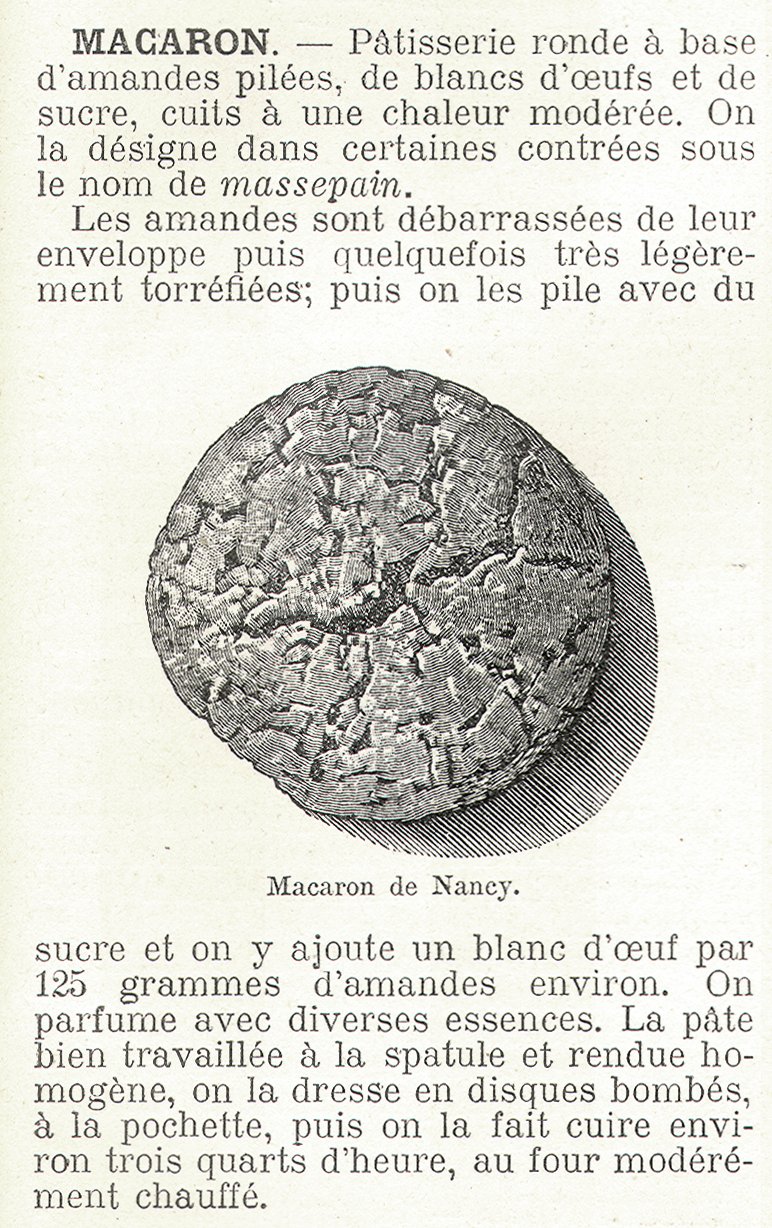
- Nancy, Montmorillon, and Amiens in France have their own historic macarons
- South Korea's 'fat-carons' are macarons with extra-thick fillings
- Vegan macarons use aquafaba instead of egg whites
What is Macaron?
A macaron is a small, round sandwich cookie made from almond meal, whipped egg whites, and sugar, often tinted with food colouring. Two meringue-based shells are joined by a layer of buttercream, ganache, or jam. The outside is smooth and slightly crisp, while the inside is moist and tender. Each macaron has a ruffled edge called the 'foot'. Flavours range from classic raspberry or chocolate to more unusual or even savoury varieties.
Where does Macaron come from?
The modern macaron as a filled sandwich cookie was developed in Paris in the early 20th century, with both Pierre Desfontaines of Ladurée and Claude Gerbet credited for its creation. Earlier forms date back centuries, with almond-based sweets brought to Sicily by Arab invaders and later spreading through Europe. In France, macarons were first made without filling, and became popular in places like Nancy, where two nuns famously sold them during the French Revolution. The Parisian-style macaron, as known today, appeared in the 1930s.
How is Macaron made?
Macarons are made by beating egg whites into a stiff meringue, then folding in sifted almond meal and powdered sugar. The mixture is piped into rounds and left to rest, forming a skin before baking. There are two main techniques: the French method, which uses uncooked meringue, and the Italian method, which involves hot sugar syrup. After baking, the shells are cooled and paired with a filling such as buttercream, ganache, or jam. Vegan versions use aquafaba instead of egg whites.


How and when is Macaron eaten?
Macarons are typically enjoyed as a snack or with tea, often as a treat in cafés or at celebrations. They are served at room temperature, though they may be chilled. In France, they are a common sight in patisseries and are also given as gifts. The variety of colours and flavours makes them popular for festive occasions and as decorative desserts at parties or weddings.
Kinds of Macaron
Different regions in France have their own traditional macarons, such as the honey and fruit-filled Macarons d'Amiens or the Montmorillon macaron, which has a dedicated museum. In Switzerland, the Luxemburgerli is a lighter, smaller version. In India, Thoothukudi macaroons use cashew nuts instead of almonds. Japan offers peanut-based and wagashi-style versions, while South Korea is known for 'fat-carons', macarons with extra-thick fillings. In the US, pastry chefs experiment with a wide range of flavours.
What Macaron means
Macarons are a symbol of French patisserie and are closely associated with Parisian cafés like Ladurée. The treat is linked to stories of nuns and royal courts, and in some cities, such as Nancy, local history is celebrated through the macaron. Macarons are featured in fashion and pop culture, especially in Japan, and are sold internationally, including at McCafés in several countries. Their colourful appearance and delicate texture have made them a global icon of French baking.
Questions people ask about Macaron
What is a macaron made of?
A macaron is made from whipped egg whites, almond meal, icing sugar, granulated sugar, and often food colouring. The filling is usually buttercream, ganache, or jam.
Where does the macaron come from?
The macaron in its current sandwich form comes from France, especially Paris, but earlier almond-based versions have roots in Sicily and Spain.
How is a macaron different from a macaroon?
A macaron is a French almond meringue sandwich cookie, while a macaroon is a different sweet, often made with coconut. The names are sometimes confused, but they refer to distinct treats.
Are there different flavours of macarons?
Yes, macarons come in many flavours, from traditional ones like raspberry and chocolate to savoury options such as foie gras. Regional and modern versions also use a variety of fillings.
Are macarons always made with almonds?
Most macarons use almond meal, but some regional versions, like the Thoothukudi macaroon in India, use cashew nuts, and Japanese versions may use peanut flour.
Good reading and sources
The facts on this page come from the Wikipedia article "Macaron", written by its contributors and used under the CC BY-SA 4.0 licence, and from its Wikidata record (CC0). Thali rewrote the text in its own words, with AI assistance, and compares every page with the article to make sure no passage is copied. It may be reused under the same CC BY-SA 4.0 licence with a link back.
It may contain mistakes, and it is not dietary or allergy advice: recipes differ from cook to cook. If something is wrong, tell us. Last refreshed 2026-10-03.
More from France
All the food of France Ice cream
🇺🇸 United States and 5 moreA frozen dessert made from sweetened, flavoured milk or cream
Sweet or dessert, Snacks
Ice cream
🇺🇸 United States and 5 moreA frozen dessert made from sweetened, flavoured milk or cream
Sweet or dessert, Snacks
 Candy
🇺🇸 United States and 5 moreSmall sweet treats made mainly from sugar or sweeteners
Sweet or dessert, Snacks
Candy
🇺🇸 United States and 5 moreSmall sweet treats made mainly from sugar or sweeteners
Sweet or dessert, Snacks
 CroissantVegetarian
🇫🇷 France and 5 moreA crescent-shaped, flaky pastry made from layered yeast dough and butter
Pie or savoury pastry, Breakfast, Tea time
CroissantVegetarian
🇫🇷 France and 5 moreA crescent-shaped, flaky pastry made from layered yeast dough and butter
Pie or savoury pastry, Breakfast, Tea time
 French toast
🇫🇷 France and 5 moreBread soaked in egg and milk, pan-fried and served sweet or savoury
Main dish, Breakfast, Snacks
French toast
🇫🇷 France and 5 moreBread soaked in egg and milk, pan-fried and served sweet or savoury
Main dish, Breakfast, Snacks
Its cousins elsewhere
All sweets and desserts PavlovaVegetarian
🇳🇿 New Zealand and 1 moreMeringue dessert with a crisp shell, soft centre, and fruit and cream topping
Sweet or dessert
PavlovaVegetarian
🇳🇿 New Zealand and 1 moreMeringue dessert with a crisp shell, soft centre, and fruit and cream topping
Sweet or dessert
 ZefirVegetarianзефир
🇷🇺 RussiaRussian whipped fruit and egg white confection, soft like marshmallow
Sweet or dessert, Snacks
ZefirVegetarianзефир
🇷🇺 RussiaRussian whipped fruit and egg white confection, soft like marshmallow
Sweet or dessert, Snacks
 Nanaimo barVegetarian
🇨🇦 CanadaNo-bake Canadian bar with a crumb base, custard icing, and chocolate top
Sweet or dessert
Nanaimo barVegetarian
🇨🇦 CanadaNo-bake Canadian bar with a crumb base, custard icing, and chocolate top
Sweet or dessert