
Manti
Spiced meat dumplings wrapped in thin dough, steamed, boiled or baked
Manti are dumplings filled with spiced meat, usually lamb or beef, wrapped in thin dough and cooked by steaming, boiling, or baking. Found across Central Asia, Turkey, the Caucasus, and the Balkans, they vary in size, shape, and fillings by region. Manti are often served with yogurt or garlic sauces and appear in both everyday and festive meals.
- Manti are dumplings filled with spiced meat and wrapped in thin dough
- They are steamed, boiled, or baked, depending on the region
- Commonly served with yogurt, garlic, or butter-based sauces
- Popular from Central Asia to Turkey, the Caucasus, and the Balkans
- Fillings can include lamb, beef, pumpkin, or potato
What is Manti?
Manti are dumplings made by wrapping a spiced meat filling, usually lamb or beef, in a thin sheet of dough. The dumplings can be steamed, boiled, or baked, and their size and shape change from place to place. Some versions include vegetables like pumpkin or potato in the filling. Manti are often served with yogurt, garlic, or butter-based sauces, and may be topped with spices such as red pepper, sumac, or dried mint. The texture ranges from soft and juicy to crisp, depending on the cooking method.
Where does Manti come from?
The name 'manti' is thought to come from the Chinese 'mantou', which originally meant a meat-filled bun. Early records from China describe similar stuffed buns, and the dish likely traveled west along the Silk Road. Turkic and Mongol peoples are believed to have carried manti across Central Asia to Anatolia, where it evolved into local forms. Some researchers suggest a Middle Eastern origin, but most agree on Central Asian roots. The first Ottoman recipe for mantı appeared in the 15th century, featuring lamb and chickpeas, and was served with garlic-yogurt sauce.
How is Manti made?
To make manti, dough is rolled out thin and cut into small squares or circles. A spoonful of seasoned meat, often mixed with onion and sometimes vegetables like pumpkin, is placed in the center. The dough is folded and sealed, often with a twist or pinch. In Central Asia, manti are usually steamed in a special multi-level pot. In Turkey and Armenia, they may be boiled or baked until golden. The finished dumplings are served hot, often with yogurt, garlic, melted butter, or spiced sauces.


How and when is Manti eaten?
Manti are eaten as a main dish for lunch or dinner, both at home and as street food. In Central Asia, they are topped with butter, sour cream, or onion sauce, and sometimes sprinkled with hot pepper. In Turkey and Armenia, yogurt and garlic sauces are common, with spices added at the table. Afghan mantu is served with yogurt and sometimes a tomato-based sauce. In Bosnia, manti are served with yogurt and garlic, or baked together and topped with yogurt after baking. The dish is shared at family meals and festive gatherings.
Kinds of Manti
Regional versions of manti differ in size, filling, and cooking method. Central Asian manti are large and steamed, with fillings like lamb, beef, or pumpkin. Turkish Kayseri mantısı is tiny and served with yogurt and spiced butter. Armenian manti are always baked and crunchy, while Afghan mantu is small, steamed, and topped with yogurt and sometimes tomato sauce. In Bosnia, klepe are boiled and served with yogurt, while mantije are baked together in a tray. Cheese-filled versions exist among Bukharian Jews.
What Manti means
Manti are a symbol of hospitality and family gatherings in many cultures. In Turkey, Kayseri mantısı is a point of local pride. The dish is linked to festive occasions and is often prepared in large batches for celebrations. Its spread along the Silk Road reflects centuries of cultural exchange. In Armenia and the Caucasus, manti are part of both everyday and holiday meals. The dish has also become popular in post-Soviet countries, often sold as street food.
Questions people ask about Manti
What is manti made of?
Manti are made by filling thin sheets of dough with spiced meat, usually lamb or beef, and sometimes vegetables like pumpkin or potato. The dumplings are then steamed, boiled, or baked and served with sauces such as yogurt or garlic.
Where does manti come from?
Manti originated in Central Asia and spread westward along the Silk Road. It is now found in the cuisines of Turkey, Armenia, Uzbekistan, Kazakhstan, Kyrgyzstan, Afghanistan, and the Balkans.
How is manti cooked?
Depending on the region, manti can be steamed in a special multi-level pot, boiled in water, or baked in the oven. The cooking method affects the texture, making them soft, juicy, or crisp.
What sauces are served with manti?
Manti are commonly served with yogurt and garlic sauce, melted butter, or spiced sauces. In some regions, they may also be topped with sour cream, onion sauce, or tomato-based sauces.
Are there vegetarian versions of manti?
While most manti are filled with meat, some regional varieties use fillings like pumpkin, potato, cabbage, or cheese, especially among Bukharian Jews and in some Central Asian recipes.
Good reading and sources
The facts on this page come from the Wikipedia article "Manti (food)", written by its contributors and used under the CC BY-SA 4.0 licence, and from its Wikidata record (CC0). Thali rewrote the text in its own words, with AI assistance, and compares every page with the article to make sure no passage is copied. It may be reused under the same CC BY-SA 4.0 licence with a link back.
It may contain mistakes, and it is not dietary or allergy advice: recipes differ from cook to cook. If something is wrong, tell us. Last refreshed 2026-10-03.
More from Uzbekistan
All the food of Uzbekistan Pilaf
🇺🇿 Uzbekistan and 5 moreRice cooked in stock with spices, meat or vegetables, with each grain kept separate
Main dish, Lunch, Dinner
Pilaf
🇺🇿 Uzbekistan and 5 moreRice cooked in stock with spices, meat or vegetables, with each grain kept separate
Main dish, Lunch, Dinner
 BeshbarmakMeat
🇰🇬 Kyrgyzstan and 4 moreCentral Asian noodles with chopped boiled meat and onion sauce, eaten with the hands
Main dish, Lunch, Dinner
BeshbarmakMeat
🇰🇬 Kyrgyzstan and 4 moreCentral Asian noodles with chopped boiled meat and onion sauce, eaten with the hands
Main dish, Lunch, Dinner
 Samsa
🇺🇿 Uzbekistan and 5 moreBaked Central Asian pastry filled with meat or vegetables
Pie or savoury pastry, Snacks
Samsa
🇺🇿 Uzbekistan and 5 moreBaked Central Asian pastry filled with meat or vegetables
Pie or savoury pastry, Snacks
 LaghmanMeatلەغمەن
🇨🇳 China and 5 moreHand-pulled noodles with meat and vegetables in a savoury broth
Noodle or pasta dish, Lunch, Dinner
LaghmanMeatلەغمەن
🇨🇳 China and 5 moreHand-pulled noodles with meat and vegetables in a savoury broth
Noodle or pasta dish, Lunch, Dinner
Its cousins elsewhere
All dumplings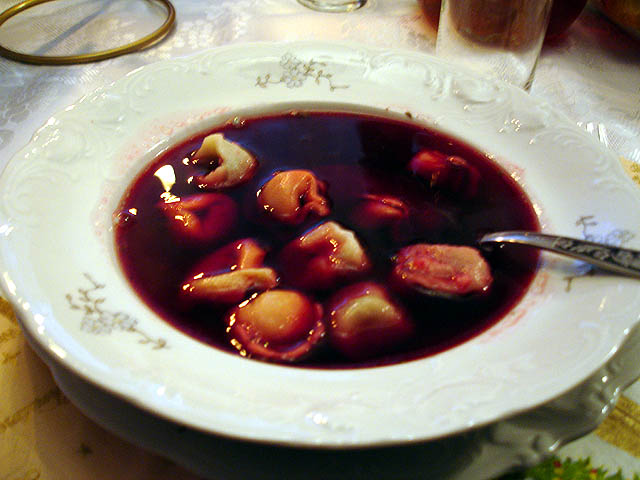 Uszka
🇵🇱 Poland and 2 moreSmall twisted dumplings filled with mushrooms or meat, often served in borscht
Dumpling, Dinner
Pierogi
🇵🇱 Poland and 6 moreDumplings of unleavened dough filled with savory or sweet mixtures
Dumpling, Lunch, Dinner
Uszka
🇵🇱 Poland and 2 moreSmall twisted dumplings filled with mushrooms or meat, often served in borscht
Dumpling, Dinner
Pierogi
🇵🇱 Poland and 6 moreDumplings of unleavened dough filled with savory or sweet mixtures
Dumpling, Lunch, Dinner
 Kopytka
🇵🇱 Poland and 2 moreSoft potato dumplings shaped like small hooves, found in Poland and nearby regions
Dumpling
Kopytka
🇵🇱 Poland and 2 moreSoft potato dumplings shaped like small hooves, found in Poland and nearby regions
Dumpling
 Gnocchi
🇮🇹 Italy and 5 moreSoft dumplings of dough, often made with potato, flour and egg
Dumpling, Lunch, Dinner
Gnocchi
🇮🇹 Italy and 5 moreSoft dumplings of dough, often made with potato, flour and egg
Dumpling, Lunch, Dinner