Uszka
Small twisted dumplings filled with mushrooms or meat, often served in borscht
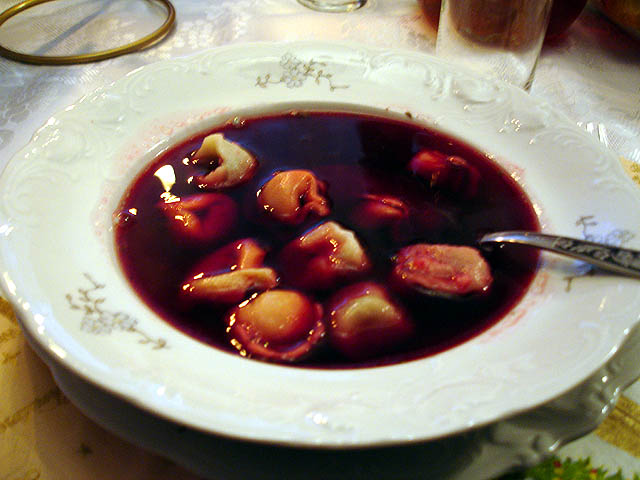
Uszka are small dumplings from Poland, shaped like little ears and filled with wild mushrooms or minced meat. They are most often served in beetroot borscht, especially during Christmas Eve in Poland, Belarus, and Ukraine, but can also be enjoyed with melted butter and chives.
- Uszka means 'little ears' in Polish
- Filled with wild mushrooms or minced meat
- Traditionally served in beetroot borscht
- A key part of Christmas Eve meals in Poland, Belarus, and Ukraine
What is Uszka?
Uszka are small dumplings, their name meaning 'little ears' because of their twisted shape. The dough is unleavened and thin, wrapped around a filling that can be either wild forest mushrooms or minced meat. Sometimes onions are used in the vegetarian version. They are usually served floating in clear beetroot borscht, but can also be eaten on their own with melted butter and chopped chives. The dumplings are bite-sized and have a soft, tender texture.
Where does Uszka come from?
Uszka come from Poland, where they are a traditional food, and are also known in Belarus and Ukraine. The name refers to their ear-like shape. They are closely related to pierogi, but are smaller and more tightly twisted. Uszka have long been part of Christmas Eve meals in these countries, especially in their vegetarian form, which fits the custom of avoiding meat on that night.
How is Uszka made?
To make uszka, unleavened dough is rolled out thin and cut into small squares. A spoonful of filling—either finely chopped wild mushrooms, minced meat, or onion—is placed in the center. The dough is folded over to form a triangle, then the two corners are pinched together to create the signature ear shape. The dumplings are boiled until they float.

How and when is Uszka eaten?
Uszka are most often served in clear beetroot borscht, especially during Christmas Eve dinner in Poland, Belarus, and Ukraine. They may also be served simply with melted butter and a sprinkle of fresh chives. At festive meals, they are either added directly to the soup or served on the side. Outside of holidays, uszka can be enjoyed as a comforting dinner dish.
Kinds of Uszka
There are two main types of uszka: those filled with wild mushrooms and those with minced meat. The vegetarian mushroom version is traditional for Christmas Eve, while meat-filled uszka are eaten at other times. Some versions use onion in the filling. The dumplings may be served in soup or on their own with butter and herbs.
What Uszka means
Uszka hold a special place in Christmas Eve traditions in Poland, Belarus, and Ukraine, where the vegetarian version is part of the meatless holiday meal. They are a symbol of festive family gatherings and are often made together at home. Uszka are also enjoyed throughout the year as a comforting dish, especially in combination with borscht.
When Uszka is on the table
Questions people ask about Uszka
What are uszka made of?
Uszka are made from thin unleavened dough filled with either wild mushrooms, minced meat, or sometimes onion. The filling is wrapped in small pieces of dough and shaped into little ear-like dumplings.
Where do uszka come from?
Uszka originate from Poland and are also traditional in Belarus and Ukraine. They are especially associated with Polish cuisine and are part of Christmas Eve meals in these countries.
How are uszka usually served?
Uszka are most often served in clear beetroot borscht, especially during Christmas Eve. They can also be eaten on their own with melted butter and chopped chives.
Are uszka always vegetarian?
No, uszka can be filled with either wild mushrooms for a vegetarian version or with minced meat. The vegetarian kind is traditional for Christmas Eve.
What do uszka look like?
Uszka are small, twisted dumplings, shaped to resemble little ears. They are bite-sized and usually soft and tender after boiling.
Good reading and sources
The facts on this page come from the Wikipedia article "Uszka", written by its contributors and used under the CC BY-SA 4.0 licence, and from its Wikidata record (CC0). Thali rewrote the text in its own words, with AI assistance, and compares every page with the article to make sure no passage is copied. It may be reused under the same CC BY-SA 4.0 licence with a link back.
It may contain mistakes, and it is not dietary or allergy advice: recipes differ from cook to cook. If something is wrong, tell us. Last refreshed 2026-10-03.
More from Poland
All the food of Poland Borscht
🇺🇦 Ukraine and 5 moreA sour soup of beetroot and vegetables, served hot or cold across Eastern Europe
Soup, Lunch, Dinner
Pierogi
🇵🇱 Poland and 6 moreDumplings of unleavened dough filled with savory or sweet mixtures
Dumpling, Lunch, Dinner
Borscht
🇺🇦 Ukraine and 5 moreA sour soup of beetroot and vegetables, served hot or cold across Eastern Europe
Soup, Lunch, Dinner
Pierogi
🇵🇱 Poland and 6 moreDumplings of unleavened dough filled with savory or sweet mixtures
Dumpling, Lunch, Dinner
 Knödel
🇦🇹 Austria and 6 moreBoiled dumplings made from potato, bread or flour, common in Central Europe
Dumpling
Knödel
🇦🇹 Austria and 6 moreBoiled dumplings made from potato, bread or flour, common in Central Europe
Dumpling
 Varenykyвареники
🇺🇦 Ukraine and 1 moreUkrainian dumplings filled with sweet or savoury ingredients
Dumpling, Lunch, Dinner
Varenykyвареники
🇺🇦 Ukraine and 1 moreUkrainian dumplings filled with sweet or savoury ingredients
Dumpling, Lunch, Dinner
Its cousins elsewhere
All dumplings Pelmeniпельмени
🇷🇺 RussiaRussian dumplings filled with seasoned meat and wrapped in thin dough
Dumpling, Lunch, Dinner
Pelmeniпельмени
🇷🇺 RussiaRussian dumplings filled with seasoned meat and wrapped in thin dough
Dumpling, Lunch, Dinner
 MantiMeat
🇺🇿 Uzbekistan and 5 moreSpiced meat dumplings wrapped in thin dough, steamed, boiled or baked
Dumpling, Lunch, Dinner
MantiMeat
🇺🇿 Uzbekistan and 5 moreSpiced meat dumplings wrapped in thin dough, steamed, boiled or baked
Dumpling, Lunch, Dinner
 Khinkaliხინკალი
🇬🇪 GeorgiaGeorgian dumplings with spiced meat or vegetable filling and a juicy broth inside
Dumpling, Lunch, Dinner
Khinkaliხინკალი
🇬🇪 GeorgiaGeorgian dumplings with spiced meat or vegetable filling and a juicy broth inside
Dumpling, Lunch, Dinner
 Shumai烧卖 / 燒賣
🇨🇳 China and 5 moreChinese dumplings filled with seasoned meat, often served as dim sum
Dumpling, Breakfast, Lunch
Shumai烧卖 / 燒賣
🇨🇳 China and 5 moreChinese dumplings filled with seasoned meat, often served as dim sum
Dumpling, Breakfast, Lunch