
Marzipan
Sweet almond paste shaped or used in cakes, especially at Christmas and weddings
Marzipan is a sweet paste made mainly from ground almonds and sugar, sometimes with almond oil or extract. It is shaped into fruits, animals, or figures, used as icing for cakes, or eaten as small sweets. Marzipan is especially popular in Spain and Germany, where it is tied to Christmas and other celebrations.
- Made from ground almonds and sugar, sometimes with almond oil
- Often shaped into fruits, animals, or figures for festivals
- Used as icing for cakes like Christmas cake and wedding cake
- Toledo and Lübeck marzipan have protected status in the EU
- Marzipan can be made with other nuts, like peanuts or cashews
What is Marzipan?
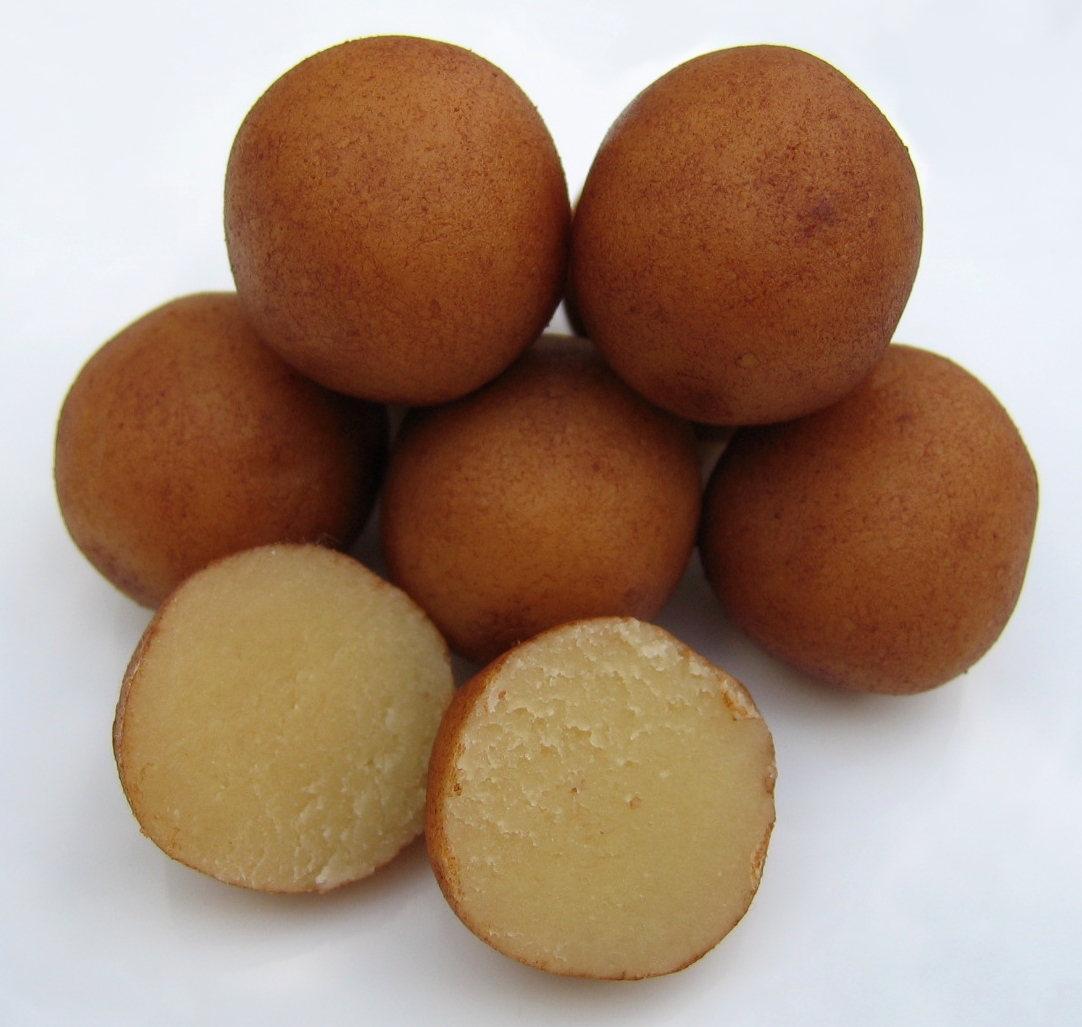
Marzipan is a sweet, pliable paste made from ground almonds and sugar, sometimes with almond oil or extract for extra flavor. It is often shaped by hand into small fruits, animals, or other figures, and can be colored with food dyes. Marzipan is also rolled out to cover cakes, especially for festive occasions. Its texture is smooth and slightly grainy, with a rich, nutty sweetness from the almonds. Some versions use other nuts or kernels, such as apricot or peach, instead of almonds.
Where does Marzipan come from?
Marzipan's origins are debated, with claims from both Spain and the northeast Mediterranean. In Spain, Toledo is famous for its marzipan, with records from the early 1500s, though some sources suggest even earlier roots during the time of Al-Andalus. The Hanseatic port cities of Lübeck in Germany and Tallinn in Estonia also became centers of marzipan making. The treat likely spread through Mediterranean trade, with possible influences from the Middle East and even China. Both Toledo and Lübeck marzipan have protected status in the European Union.
How is Marzipan made?
To make marzipan, ground almonds are mixed with sugar, sometimes with a little almond oil or extract. The mixture is kneaded into a smooth, moldable paste. In some places, egg yolk or rosewater is added for flavor or texture. Marzipan can be shaped into figures, rolled into sheets for covering cakes, or used as a filling in pastries. Some versions use other nuts or kernels, such as apricot or peach, especially in less expensive varieties. The almond content varies by region, with some traditional recipes requiring at least half almonds by weight.


How and when is Marzipan eaten?
Marzipan is enjoyed in many ways. It is eaten as small sweets, sometimes coated in chocolate or shaped into fruits and animals. In Spain and Portugal, it is a Christmas treat, while in northern Europe, marzipan pigs or eggs are given at Christmas and Easter. It is also used to cover cakes for weddings, birthdays, and Christmas, such as the British Christmas cake or Swedish princess cake. In some cultures, marzipan is a wedding sweet or a special gift for New Year's Day. Jewish communities use it as a Passover treat.
Kinds of Marzipan
Many countries have their own marzipan traditions. Spanish mazapán from Toledo and German Lübeck marzipan are protected names. Italian frutta martorana are fruit-shaped marzipan sweets, especially in Sicily. In Portugal's Algarve, marzipan is shaped and filled with sweetened egg yolk. In Mexico, marzipan is often made from peanuts. Goan marzipan uses cashew nuts. Persipan is a similar sweet made from apricot or peach kernels instead of almonds. Some marzipan is flavored with rosewater or orange-flower water.
What Marzipan means
Marzipan is closely tied to festivals and celebrations. In Spain and Germany, it is a classic Christmas sweet. In Italy and Portugal, it is part of Easter and All Souls' Day traditions. Marzipan is used in wedding feasts in Greece and Cyprus. It appears in cakes for special occasions in Britain and Scandinavia. Jewish communities use marzipan fruit at Passover. Some cities, like Lübeck and Toledo, are famous for their marzipan and have protected its name and recipe by law.
When Marzipan is on the table
Questions people ask about Marzipan
What is marzipan made of?
Marzipan is made mainly from ground almonds and sugar. Some recipes include almond oil or extract, and in some regions, egg yolk or rosewater is added. Variants may use other nuts or kernels, such as apricot or peach.
Where does marzipan come from?
Marzipan has strong traditions in Spain and Germany, especially in Toledo and Lübeck. Its origins are debated, with influences from the Mediterranean, Middle East, and possibly China.
How is marzipan used?
Marzipan is shaped into small sweets, fruits, or animals, used as icing or filling for cakes, and included in pastries. It is popular for Christmas, weddings, and other celebrations.
Is marzipan always made with almonds?
Traditional marzipan uses almonds, but some versions use other nuts, such as peanuts in Mexico or cashews in Goa. Cheaper varieties may use apricot or peach kernels.
Is marzipan eaten at special times?
Yes, marzipan is especially popular at Christmas, New Year's, Easter, and weddings in many countries. It is also a Passover treat in some Jewish communities.
Good reading and sources
- Encyclopaedia BritannicaArticle
- What Is Marzipan and How Do You Use It?Serious Eats, Article
- How to make the perfect battenberg cakeThe Guardian, Article
- Pepitoria - Arca del GustoSlow Food Foundation, Article
The facts on this page come from the Wikipedia article "Marzipan", written by its contributors and used under the CC BY-SA 4.0 licence, and from its Wikidata record (CC0). Thali rewrote the text in its own words, with AI assistance, and compares every page with the article to make sure no passage is copied. It may be reused under the same CC BY-SA 4.0 licence with a link back.
It may contain mistakes, and it is not dietary or allergy advice: recipes differ from cook to cook. If something is wrong, tell us. Last refreshed 2026-10-03.
More from Germany
All the food of Germany Doughnut
🇺🇸 United States and 5 moreSweet fried or baked rings or balls, often glazed or filled
Sweet or dessert, Breakfast, Snacks
Doughnut
🇺🇸 United States and 5 moreSweet fried or baked rings or balls, often glazed or filled
Sweet or dessert, Breakfast, Snacks
 SachertorteVegetarian
🇦🇹 Austria and 1 moreAustrian chocolate sponge cake with apricot jam and a glossy chocolate glaze
Sweet or dessert, Tea time, Snacks
SachertorteVegetarian
🇦🇹 Austria and 1 moreAustrian chocolate sponge cake with apricot jam and a glossy chocolate glaze
Sweet or dessert, Tea time, Snacks
 Cinnamon rollVegetarian
🇸🇪 Sweden and 4 moreA sweet rolled bun with cinnamon and sugar, baked and often topped with icing
Sweet or dessert, Breakfast, Tea time
Cinnamon rollVegetarian
🇸🇪 Sweden and 4 moreA sweet rolled bun with cinnamon and sugar, baked and often topped with icing
Sweet or dessert, Breakfast, Tea time
 Black Forest cakeVegetarianSchwarzwälder Kirschtorte
🇩🇪 Germany and 2 moreGerman chocolate and cherry layer cake with whipped cream and kirsch
Sweet or dessert, Tea time, Snacks
Black Forest cakeVegetarianSchwarzwälder Kirschtorte
🇩🇪 Germany and 2 moreGerman chocolate and cherry layer cake with whipped cream and kirsch
Sweet or dessert, Tea time, Snacks
Its cousins elsewhere
All sweets and desserts Turkish delightVegan
🇹🇷 Turkey and 5 moreSoft, chewy cubes of starch and sugar, often flavored or filled with nuts or fruit
Sweet or dessert, Snacks, Tea time
Turkish delightVegan
🇹🇷 Turkey and 5 moreSoft, chewy cubes of starch and sugar, often flavored or filled with nuts or fruit
Sweet or dessert, Snacks, Tea time
 Qamar al-DinVeganقمر الدين
🇸🇾 Syria and 3 moreThick apricot fruit leather and drink, especially served during Ramadan
Drink, Snacks
Qamar al-DinVeganقمر الدين
🇸🇾 Syria and 3 moreThick apricot fruit leather and drink, especially served during Ramadan
Drink, Snacks
 Pineapple cakeVegetarian王梨酥 ông-lâi-so͘
🇹🇼 TaiwanTaiwanese pastry with sweet pineapple jam inside a golden, crumbly shell
Sweet or dessert, Snacks, Tea time
Pineapple cakeVegetarian王梨酥 ông-lâi-so͘
🇹🇼 TaiwanTaiwanese pastry with sweet pineapple jam inside a golden, crumbly shell
Sweet or dessert, Snacks, Tea time
 BebincaVegetarian
🇮🇳 IndiaGoan layer cake made with coconut milk, ghee, egg yolk, flour and sugar
Sweet or dessert
BebincaVegetarian
🇮🇳 IndiaGoan layer cake made with coconut milk, ghee, egg yolk, flour and sugar
Sweet or dessert