
Napoleonka
Polish cream pie with layers of puff pastry and sweet cream filling
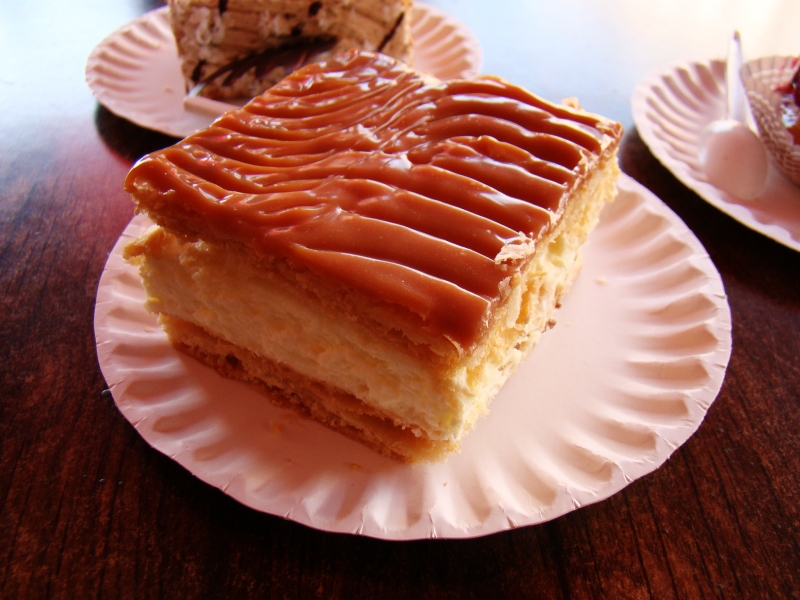
Napoleonka, also called kremówka, is a Polish dessert made from two layers of puff pastry with a creamy filling. The filling can be whipped cream, custard, milk-based cream, or sometimes egg white cream. Usually dusted with powdered sugar or topped with icing, it is enjoyed across Poland as a sweet treat.
- Known as napoleonka in some regions, kremówka in others
- Made with two layers of puff pastry and a creamy filling
- Popularized by Pope John Paul II's childhood memory
- Sometimes topped with powdered sugar or icing
What is Napoleonka?
Napoleonka is a sweet pastry from Poland, built from two crisp layers of puff pastry with a generous filling in between. The filling varies: it may be whipped cream, a rich custard (crème pâtissière, often made with whole eggs), thickened milk cream, or sometimes a light egg white cream. The top is usually dusted with powdered sugar, but some versions use icing or extra cream. The result is a dessert with a flaky, tender bite and a creamy, sweet center.
Where does Napoleonka come from?
Napoleonka is a Polish take on the French mille-feuille, a pastry of layered puff pastry and cream or jam. In Poland, it is known by two names: napoleonka and kremówka, with different regions preferring one or the other. The cake became especially famous after Pope John Paul II recalled eating it in his youth in Wadowice, sparking national interest and the creation of 'papal' kremówka. The original shop in Wadowice was run by an Austrian confectioner, and the exact recipe is now lost.
How is Napoleonka made?
To make napoleonka, bakers sandwich a thick layer of cream between two sheets of baked puff pastry. The cream can be whipped cream, a custard made with whole eggs, or a milk-based cream thickened with butter. Some versions use egg white cream. Once assembled, the top is finished with a dusting of powdered sugar, or sometimes a layer of icing or extra cream. The pastry is then cut into squares or rectangles for serving.

How and when is Napoleonka eaten?
Napoleonka is eaten as a dessert or sweet snack, often with tea or coffee. It is sold in bakeries and cafes across Poland, and is a familiar treat for everyday occasions. The pastry is typically served chilled or at room temperature, and is enjoyed for its contrast of crisp pastry and soft, sweet filling. There are no special rituals for eating it, but it is popular at gatherings and celebrations.
Kinds of Napoleonka
Regional names differ: some call it napoleonka, others kremówka. The filling can be custard, whipped cream, milk cream, or egg white cream. Some versions include alcohol, though the traditional cake does not. The 'papal' kremówka from Wadowice became famous after Pope John Paul II mentioned it, but it was made without alcohol, using a unique recipe now lost. Decorations may vary between powdered sugar, icing, or cream.
What Napoleonka means
The cake is at the center of a playful debate in Poland over its name. Its fame grew after Pope John Paul II reminisced about eating it with friends, leading to a surge in popularity and the baking of giant kremówkas for celebrations. The story of the Pope's fondness for the cake, and the 'papal' label, made it a symbol of Polish nostalgia and pride. It is a staple in Polish pastry shops.
Questions people ask about Napoleonka
What is napoleonka made of?
Napoleonka is made with two layers of puff pastry and a filling that can be whipped cream, custard (crème pâtissière), milk-based cream, or egg white cream. It is usually finished with powdered sugar or icing.
Where does napoleonka come from?
Napoleonka is from Poland. It is a local version of the French mille-feuille, adapted into Polish pastry tradition and known by different names in different regions.
What is the difference between napoleonka and kremówka?
They are the same cake, but the name varies by region in Poland. Some areas call it napoleonka, others kremówka. Both refer to the same cream-filled puff pastry dessert.
Is napoleonka vegetarian?
Yes, napoleonka is vegetarian. It contains dairy and eggs, but no meat or fish products.
Why is napoleonka called the 'papal' cream cake?
The cake became known as 'papal' after Pope John Paul II mentioned eating it in his hometown of Wadowice. This story made the dessert famous across Poland.
Good reading and sources
The facts on this page come from the Wikipedia article "Napoleonka", written by its contributors and used under the CC BY-SA 4.0 licence, and from its Wikidata record (CC0). Thali rewrote the text in its own words, with AI assistance, and compares every page with the article to make sure no passage is copied. It may be reused under the same CC BY-SA 4.0 licence with a link back.
It may contain mistakes, and it is not dietary or allergy advice: recipes differ from cook to cook. If something is wrong, tell us. Last refreshed 2026-10-03.
More from Poland
All the food of Poland CroissantVegetarian
🇫🇷 France and 5 moreA crescent-shaped, flaky pastry made from layered yeast dough and butter
Pie or savoury pastry, Breakfast, Tea time
CroissantVegetarian
🇫🇷 France and 5 moreA crescent-shaped, flaky pastry made from layered yeast dough and butter
Pie or savoury pastry, Breakfast, Tea time
 Pancake
🇺🇸 United States and 5 moreFlat cakes made from batter, cooked on a griddle or pan and served sweet or savoury
Main dish, Breakfast, Snacks
Pancake
🇺🇸 United States and 5 moreFlat cakes made from batter, cooked on a griddle or pan and served sweet or savoury
Main dish, Breakfast, Snacks
 Apple pieVegetarian
🇬🇧 United Kingdom and 5 moreA baked pie with apple filling and pastry crust, served hot or cold
Sweet or dessert, Snacks
Apple pieVegetarian
🇬🇧 United Kingdom and 5 moreA baked pie with apple filling and pastry crust, served hot or cold
Sweet or dessert, Snacks
Its cousins elsewhere
All sweets and desserts Eggnog
🇺🇸 United States and 5 moreA creamy, sweet drink of milk, eggs, sugar and spirits, served at Christmas
Drink, Snacks
Eggnog
🇺🇸 United States and 5 moreA creamy, sweet drink of milk, eggs, sugar and spirits, served at Christmas
Drink, Snacks
 Boortsog
🇰🇿 Kazakhstan and 5 moreGolden fried dough pieces from Central Asia and Mongolia, often served with tea or honey
Sweet or dessert, Snacks, Tea time
Boortsog
🇰🇿 Kazakhstan and 5 moreGolden fried dough pieces from Central Asia and Mongolia, often served with tea or honey
Sweet or dessert, Snacks, Tea time
 AnpanVegetarianあんパン
🇯🇵 JapanJapanese sweet roll filled with red bean paste or other fillings
Sweet or dessert, Snacks, Tea time
AnpanVegetarianあんパン
🇯🇵 JapanJapanese sweet roll filled with red bean paste or other fillings
Sweet or dessert, Snacks, Tea time
 Egg tartVegetarian蛋撻
🇨🇳 China and 5 moreA small pastry tart with a sweet egg custard filling, found in Cantonese cuisine
Pie or savoury pastry, Snacks, Tea time
Egg tartVegetarian蛋撻
🇨🇳 China and 5 moreA small pastry tart with a sweet egg custard filling, found in Cantonese cuisine
Pie or savoury pastry, Snacks, Tea time