
Anpan
In its own language: あんパン
Japanese sweet roll filled with red bean paste or other fillings
Anpan is a Japanese sweet roll most often filled with red bean paste, created in the 19th century by Yasubei Kimura in Ginza, Tokyo. It is made from a soft bread dough and can also include fillings like custard, chocolate, or salt-pickled cherry blossoms. Anpan is a staple in Japanese bakeries and is eaten as a snack or dessert.
- Created by a former samurai in Ginza, Tokyo in the 19th century
- Filled most often with sweet red bean paste
- Presented to Emperor Meiji in 1875, boosting its popularity
- Topped with poppy seeds, sesame, or a pickled cherry blossom
- Inspired the famous Japanese character Anpanman
What is Anpan?
Anpan is a round, soft bread roll with a sweet filling, most often made from red bean paste. The bread itself is light and slightly sweet, made from flour, milk, eggs, butter, sugar, salt, and yeast. The filling, called an, is smooth and sweet, giving the roll its distinctive taste. Some versions are topped with poppy seeds, white sesame seeds, or a salt-pickled cherry blossom. Modern varieties may include chocolate, custard, curry, or even pork. Anpan is usually palm-sized and eaten as a snack or dessert.
Where does Anpan come from?
Anpan was invented in the early Meiji era, between 1871 and 1875, by Yasubei Kimura, a former samurai who opened a bakery in Ginza, Tokyo. At a time when Western bread was new and not widely liked in Japan, Kimura created a bread inspired by Japanese sweets (wagashi) and filled it with red bean paste. The roll gained fame after being offered to Emperor Meiji in 1875, especially when decorated with a salt-pickled cherry blossom. Its popularity grew quickly, and by the late 19th century, it had become a symbol of modernization in Japan.
How is Anpan made?
To make anpan, a dough is prepared from wheat flour, milk, eggs, butter, sugar, salt, and yeast. The dough is shaped into small balls, filled with a portion of sweet red bean paste, and then sealed. Some versions are topped with sesame or poppy seeds, or a pickled cherry blossom. The rolls are then baked or sometimes fried until golden. Other fillings like custard or chocolate may be used in place of red bean paste in modern bakeries.

How and when is Anpan eaten?
Anpan is eaten as a snack or with tea, and is commonly found in bakeries and convenience stores across Japan. It is enjoyed at any time of day, often as a sweet treat between meals or as a light dessert. The bread is soft and easy to eat by hand, making it popular with children and adults alike. Anpan is also sometimes given as a gift or enjoyed during celebrations, especially on Anpan Day, April 4.
Kinds of Anpan
While the classic anpan is filled with red bean paste, bakeries now offer many other fillings such as custard, chocolate, curry, and even pork. Toppings can include poppy seeds, white sesame seeds, or a salt-pickled cherry blossom, the latter being a nod to the version presented to Emperor Meiji. Each bakery may have its own twist, and the bread can be baked or fried.
What Anpan means
Anpan became a symbol of Japan's modernization and Western influence during the Meiji era. Its association with Emperor Meiji helped spread its popularity nationwide. Anpan Day is celebrated on April 4. The bread has also inspired popular culture, most notably the character Anpanman, a superhero with a head made of anpan, featured in a long-running anime and picture book series. Anpan remains a staple in Japanese bakeries and is recognized as a classic example of Japanese bread.
Questions people ask about Anpan
What is anpan made of?
Anpan is made from a soft bread dough with a sweet filling, most commonly red bean paste. The dough includes flour, sugar, milk, eggs, butter, salt, and yeast.
Where did anpan originate?
Anpan was first made in Ginza, Tokyo, Japan by Yasubei Kimura in the late 19th century during the Meiji era.
Are there different types of anpan?
Yes, besides the classic red bean paste filling, anpan can have chocolate, custard, curry, or even pork. Toppings may include sesame seeds, poppy seeds, or a pickled cherry blossom.
When is anpan usually eaten?
Anpan is eaten as a snack or dessert and is popular at any time of day. It is also celebrated on April 4, known as Anpan Day in Japan.
Why is anpan important in Japanese culture?
Anpan became popular after being presented to Emperor Meiji, symbolizing Japan's modernization. It is now a staple in bakeries and has inspired cultural icons like Anpanman.
Good reading and sources
The facts on this page come from the Wikipedia article "Anpan", written by its contributors and used under the CC BY-SA 4.0 licence, and from its Wikidata record (CC0). Thali rewrote the text in its own words, with AI assistance, and compares every page with the article to make sure no passage is copied. It may be reused under the same CC BY-SA 4.0 licence with a link back.
It may contain mistakes, and it is not dietary or allergy advice: recipes differ from cook to cook. If something is wrong, tell us. Last refreshed 2026-10-03.
More from Japan
All the food of Japan Ice cream
🇺🇸 United States and 5 moreA frozen dessert made from sweetened, flavoured milk or cream
Sweet or dessert, Snacks
Naanनान
🇮🇳 India and 5 moreLeavened flatbread baked in a tandoor or on a pan, soft and spotted with golden brown
Bread, Lunch, Dinner
Ice cream
🇺🇸 United States and 5 moreA frozen dessert made from sweetened, flavoured milk or cream
Sweet or dessert, Snacks
Naanनान
🇮🇳 India and 5 moreLeavened flatbread baked in a tandoor or on a pan, soft and spotted with golden brown
Bread, Lunch, Dinner
 KabochaVeganカボチャ
🇯🇵 Japan and 5 moreA sweet, dense winter squash with edible skin, used in Japanese and Asian cooking
Main dish, Lunch, Dinner
KabochaVeganカボチャ
🇯🇵 Japan and 5 moreA sweet, dense winter squash with edible skin, used in Japanese and Asian cooking
Main dish, Lunch, Dinner
 Cheesecake
🇬🇷 Greece and 5 moreA chilled dessert of sweetened soft cheese on a crumb or pastry base
Sweet or dessert, Snacks
Cheesecake
🇬🇷 Greece and 5 moreA chilled dessert of sweetened soft cheese on a crumb or pastry base
Sweet or dessert, Snacks
Its cousins elsewhere
All sweets and desserts Crêpe
🇫🇷 FranceThin French pancakes, served sweet or savoury with a range of fillings
Main dish, Breakfast, Lunch
Crêpe
🇫🇷 FranceThin French pancakes, served sweet or savoury with a range of fillings
Main dish, Breakfast, Lunch
 Apple pieVegetarian
🇬🇧 United Kingdom and 5 moreA baked pie with apple filling and pastry crust, served hot or cold
Sweet or dessert, Snacks
Apple pieVegetarian
🇬🇧 United Kingdom and 5 moreA baked pie with apple filling and pastry crust, served hot or cold
Sweet or dessert, Snacks
 BriocheVegetarianune brioche
🇫🇷 FranceFrench bread made with eggs and butter, often shaped in rounds or loaves
Bread, Breakfast, Snacks
BriocheVegetarianune brioche
🇫🇷 FranceFrench bread made with eggs and butter, often shaped in rounds or loaves
Bread, Breakfast, Snacks
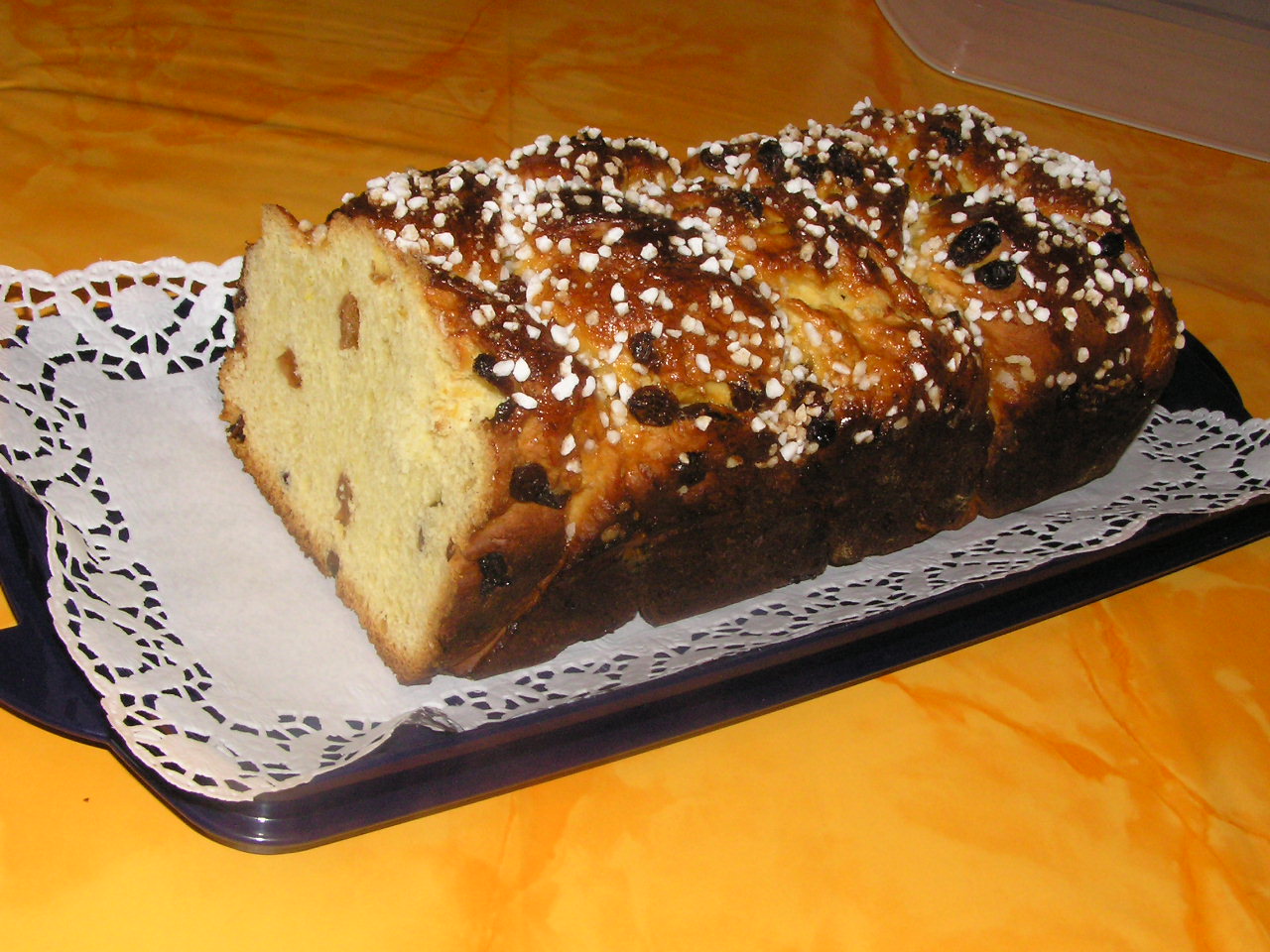 Cozonac
🇷🇴 Romania and 4 moreA sweet, enriched bread often filled with nuts or dried fruit, baked for Easter
Sweet or dessert, Tea time, Snacks
Cozonac
🇷🇴 Romania and 4 moreA sweet, enriched bread often filled with nuts or dried fruit, baked for Easter
Sweet or dessert, Tea time, Snacks